
Choosing between structural screws, nails, and bolts comes down to load direction, wood condition, and access. For most framing connections, nails work fast and shear well; screws hold better in withdrawal; bolts carry the heaviest loads where both sides are open. Structural fasteners are the metal connectors that transfer loads between framing members so the assembly acts as one system.
This guide compares the three options on shear, withdrawal, install speed, and cost, then maps each to the job it fits best. You will also see the mistakes that fail inspections and the point where a connection should be engineered rather than guessed.
What Structural Fastener Types Actually Mean + The Direct Answer
Structural fastener types for framing split into three families: nails, screws, and bolts. Each transfers load differently. Nails excel in shear across a joint; screws excel in withdrawal along the grain; bolts excel where the load is heaviest and both sides of the member are accessible. Choose by load direction first, then by access and wood condition.
A nail is a smooth or ring – shanked pin driven in one direction; it carries load well across the joint but can back out under cyclic movement.
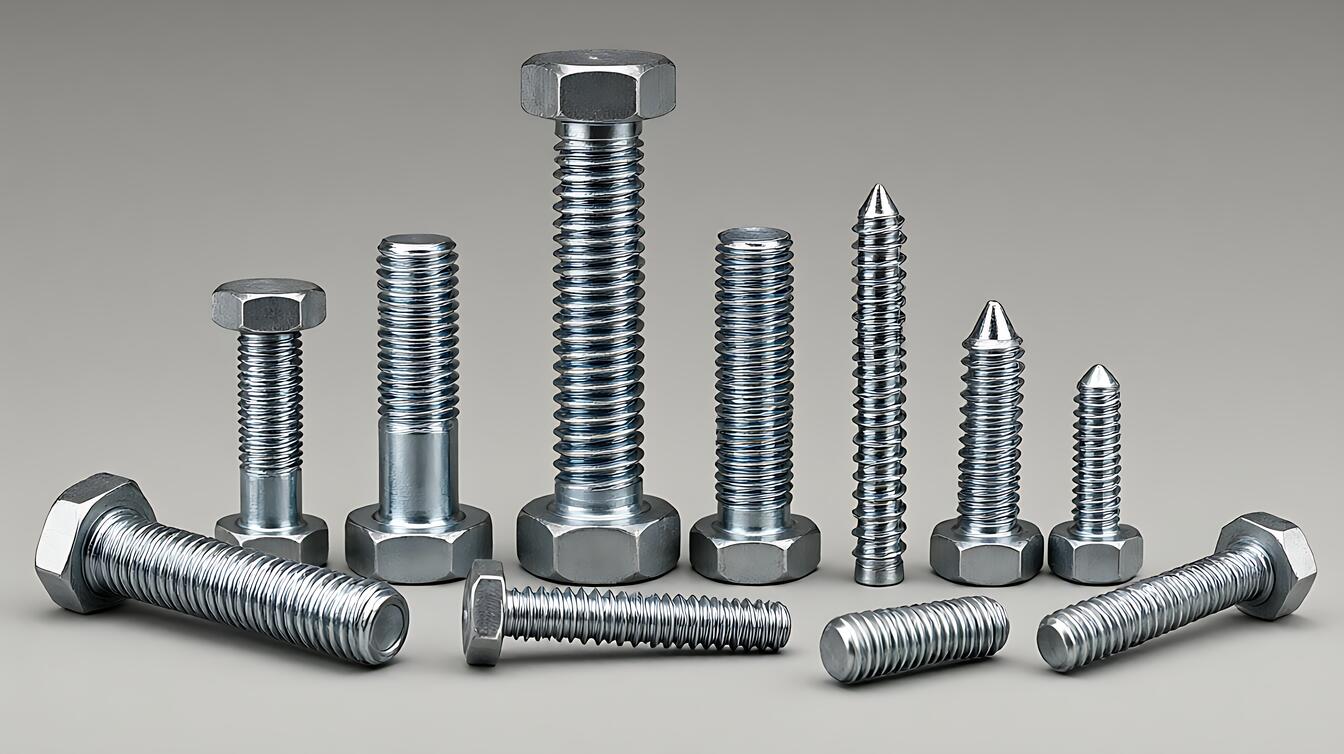
A screw is a threaded fastener that pulls members together and resists withdrawal; it installs slower but holds tighter in most wood. A bolt is a threaded rod with a nut that clamps members from both sides and carries the highest loads.
If a connection is already failing, the fastener is rarely the first question. Read foundation crack types before re – fastening so you fix the cause, not just the symptom.
What to Gather First (Tools + Materials)
Before comparing fasteners, gather the criteria that change the answer: load direction, wood species and moisture, member thickness, and whether both sides of the joint are reachable. Add a drill or impact driver, a framing nailer if using nails, a torque wrench for bolts, and the fastener spec sheet. The tool often decides the fastener.
Wood condition matters more than brand. Wet or pressure – treated lumber shrinks as it dries, which loosens smooth nails and can split green wood if you drive screws without a pilot hole. Check moisture content before choosing; a fastener that holds in dry stock may creep in wood that is still losing water.
- Drill or impact driver for screws and bolts
- Framing nailer for production nailing
- Torque wrench for bolted connections
- Fastener spec sheet for diameter, length, and coating
Step by Step (With Tolerances)
Work through the connection in this order: identify the dominant load, check access to both sides, then match the fastener to the load and the wood. If the load is mainly shear across the joint, nails or screws both work; if it is withdrawal or uplift, favor screws or bolts. Re – check after the wood dries or settles.
For a typical framing joint, drive nails fully and set the head just below the surface without crushing the wood fibers. For screws, use the diameter the spec sheet calls for and a pilot hole in hardwood or near an edge to prevent splitting. For bolts, tighten to the manufacturer’s specified torque and use washers under the head and nut.
| Attribute | Nails | Screws | Bolts |
|---|---|---|---|
| Best load | Shear | Withdrawal | Heavy / tension |
| Install speed | Fastest | Slower | Slowest |
| Access needed | One side | One side | Both sides |
| Cost | Lowest | Mid | Highest |
| Back – out risk | Higher | Low | Low (re – tighten) |
- Identify the dominant load direction: shear, withdrawal, or tension.
- Check access: both sides open favors bolts; one side favors nails or screws.
- Match the fastener to wood condition and member thickness.
- Install to the spec sheet, then re – check after drying or settling.
For adjacent protection details on a deck build, see deck sealant and stain types.
Common Mistakes and How to Avoid Them
The most common fastener mistake is choosing by habit instead of by load: nailing a connection that sees withdrawal, or screwing a shear connection that needs speed and ductility. Other traps include mixing incompatible metals, skipping pilot holes near edges, and over – torquing bolts until the wood crushes.
Galvanic corrosion is a real risk: steel fasteners in contact with copper – treated or aluminum components can corrode fast in damp conditions. Use the coating the spec sheet specifies for the treated lumber, and do not substitute a cheaper fastener that looks the same. A connection that looks fine can lose much of its capacity in a few seasons.
Another trap is ignoring the substrate. Fastening into end grain, into a knot, or within a couple of inches of a cut end gives far less hold than the same fastener in solid side grain. Move the fastener, enlarge the connection, or add a bracket instead of hoping the fastener carries it.
A sagging floor joist often traces back to a connection that was under – fastened or fastened into weak grain. See sagging floor joist for how to read the symptom.
Structural Fastener Types: Screws vs Nails vs Bolts [Guide] — Keputusan & Langkah Selanjutnya
Fasteners have hard limits. Nails and screws depend on wood quality and cannot replace a bolted or bracketed connection where the load is heavy or the member is compromised. When the load is large, the wood is damaged, or the connection is part of the primary structure, get an engineer or inspector involved before you choose.
The trade – off summary: nails are fastest and cheapest with good shear but lower withdrawal and more back – out risk. Screws cost more time and money but hold tighter in withdrawal and resist loosening. Bolts cost the most time and access but carry the highest loads and can be inspected and re – tightened. Match the fastener to the worst load the connection will see, not the average.
Choose nails when the load is mainly shear, access is one – sided, and speed matters. Choose screws when withdrawal or uplift governs. Choose bolts when the load is heavy, both sides are open, or the connection must be inspectable.
If the connection carries a primary load or the wood is damaged, stop and consult a licensed structural professional before choosing fasteners.
For related structural decisions, see basement renovation structural requirements.