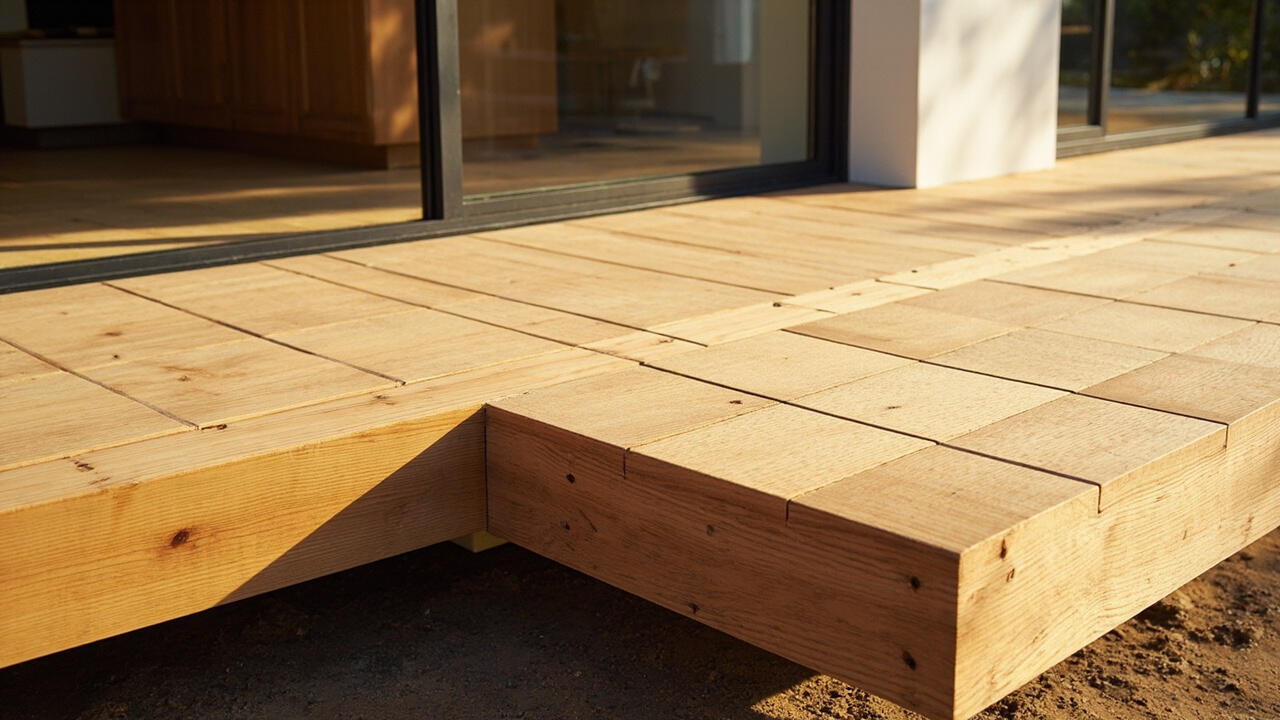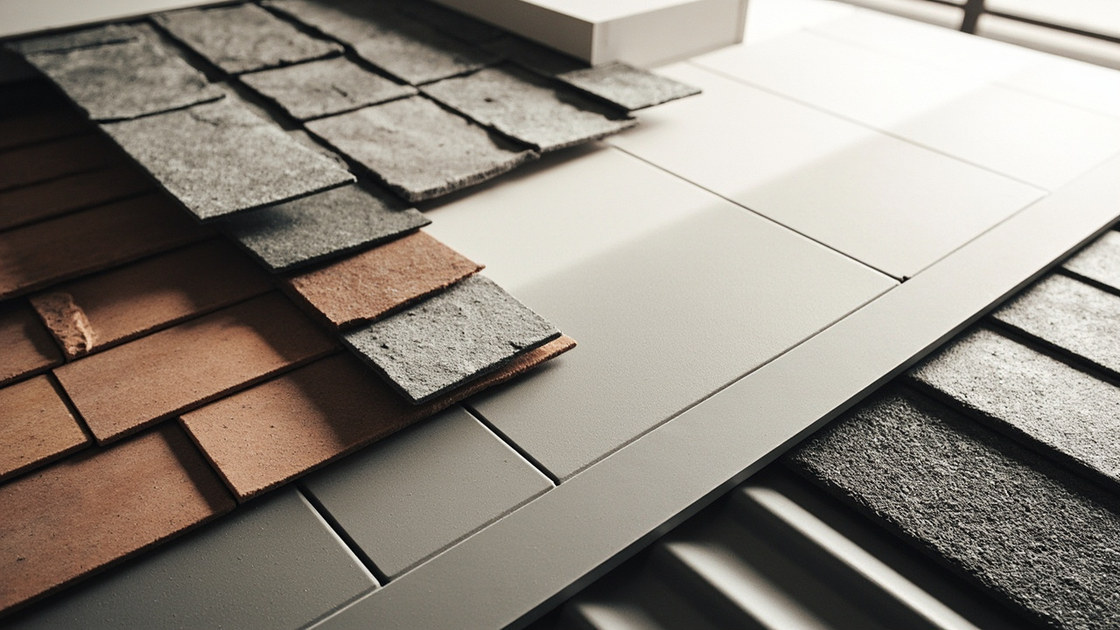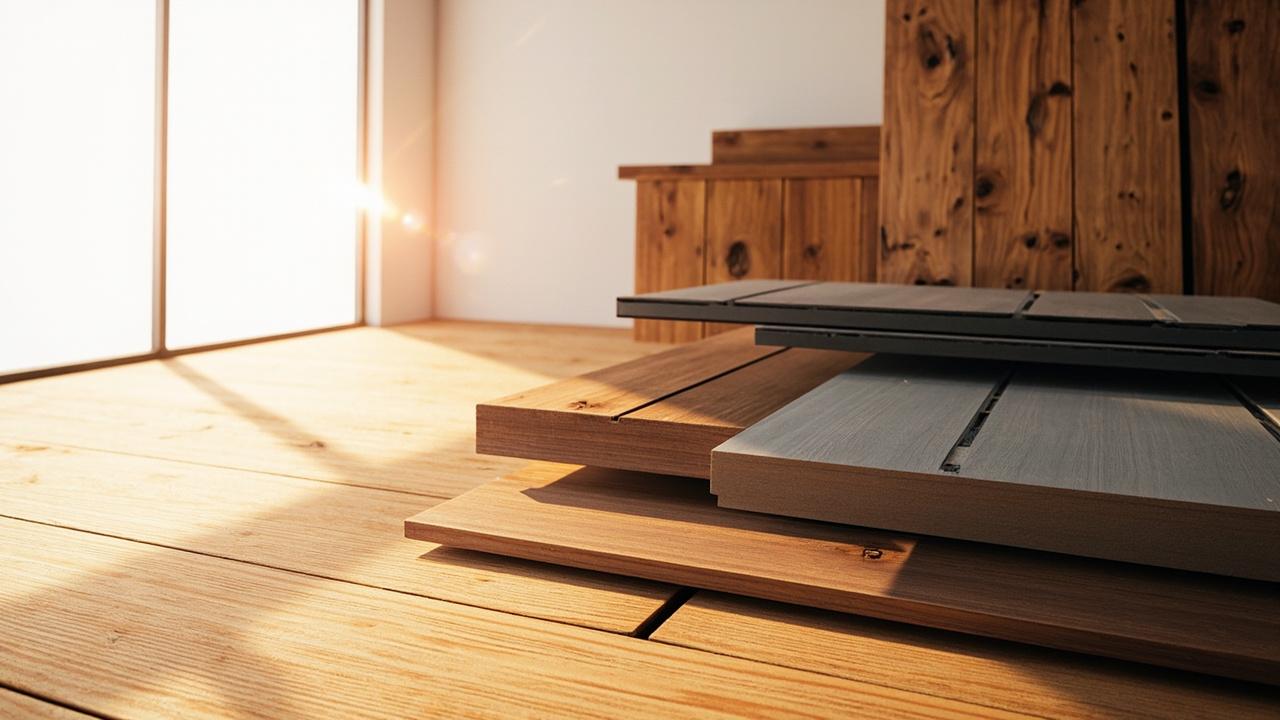

You’re standing in the stain aisle or comparing five browser tabs, and the words on every can look like a softer version of the same thing: transparent, semi-transparent, semi-solid, solid. They aren’t. Those four tiers sit on a single mechanical ladder, and the rung you pick determines whether your deck fades gracefully or peels in sheets by year three. Deck stain opacity tiers are a range of penetrating to film-forming finishes, where lower tiers soak into the wood grain and higher tiers build a surface film, and that difference is the only thing that predicts your next ten years of recoating.
What Deck Stain Opacity Actually Decides
The label tells you how much grain you’ll see. The can’s chemistry tells you how it fails. Every deck stain sits on one of two mechanical paths: penetrating stains soak into the cell structure and become part of the wood, while film-forming stains sit on top as a bonded coating that ages like paint.
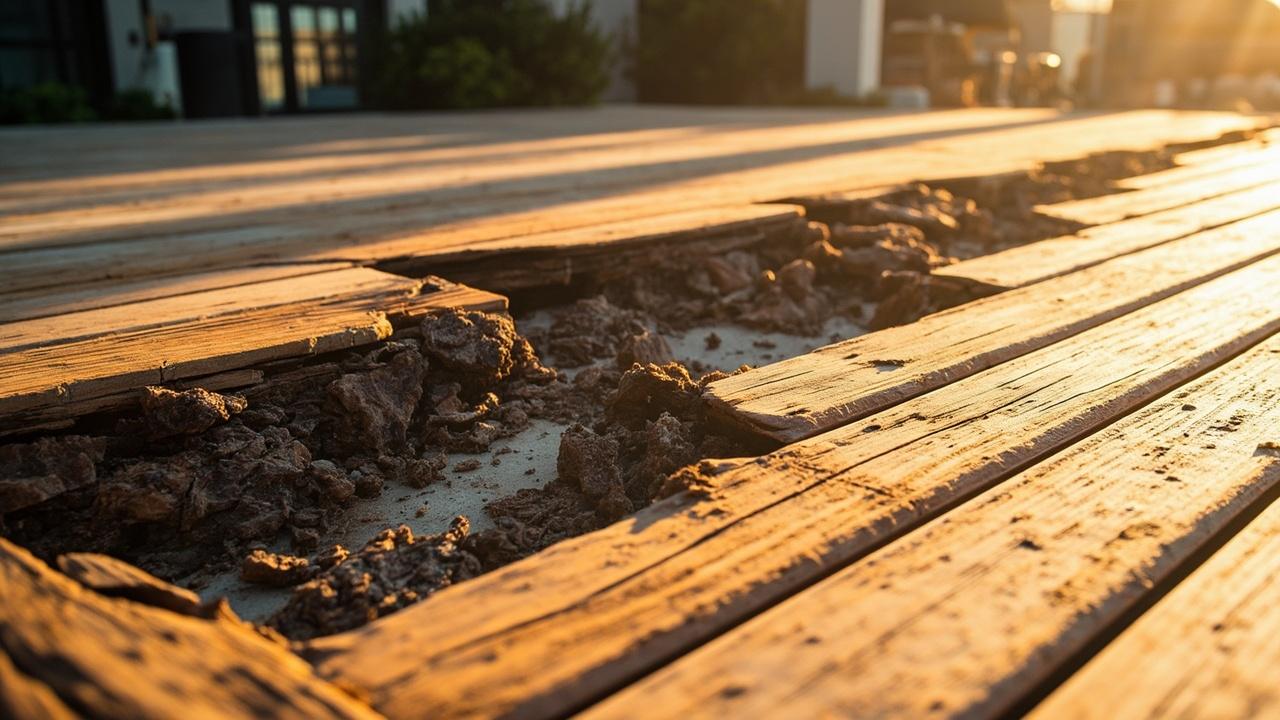
Penetrating stains fade. As the wood weathers and UV breaks the pigments down, the color washes out evenly and the next coat goes right over the last one with light prep. Film-forming stains peel. Once moisture or sun breaks the coating’s grip on the board, whole patches lift and the only fix is stripping back to bare wood. That single sentence is the lifespan ladder, and it runs about 1 – 2 years for penetrating, 2 – 4 for semi-solid, and 3 – 5+ years for solid before the film has had time to fail.
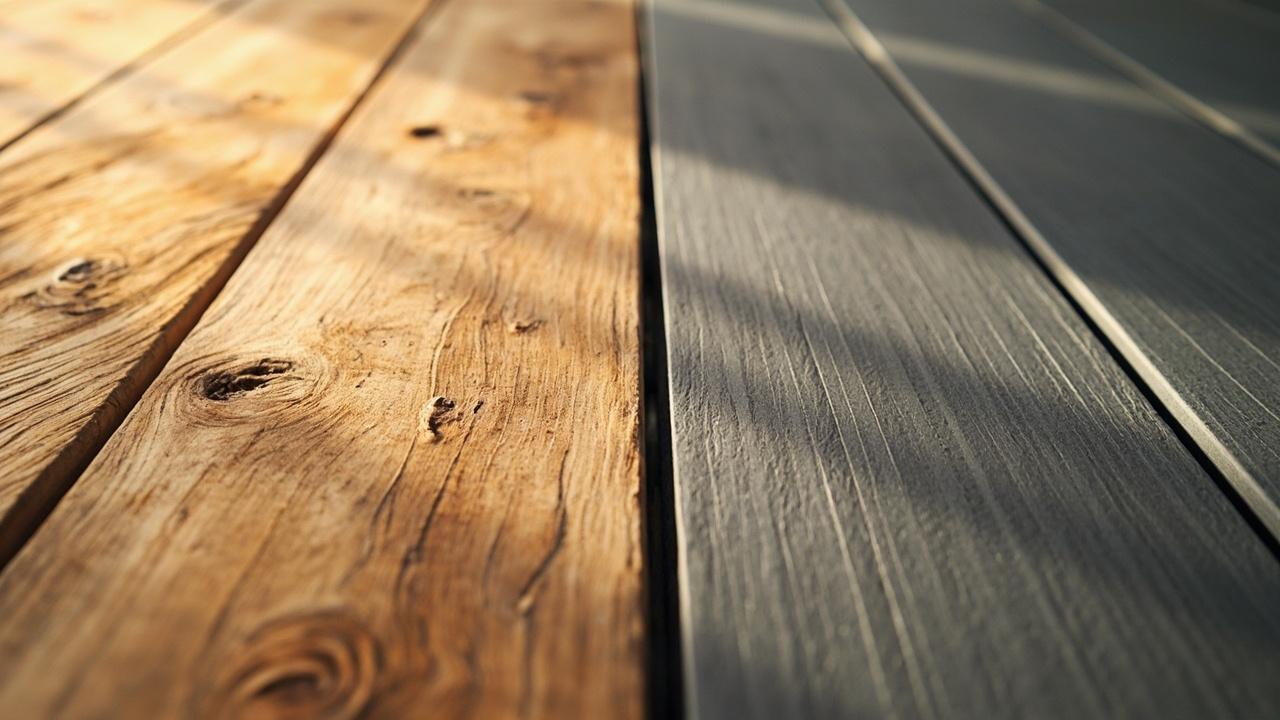
The opacity ladder follows the mechanism. Transparent and semi-transparent sit deep in the wood, so grain stays visible and the only failure mode is fading. Semi-solid still lets some grain through but starts carrying enough pigment to build a thin film. Solid is essentially paint: you can see wood texture, not wood color, and the failure mode is the same as painted siding, which means solid stain peel becomes a real line item in year five or six if prep was rushed.
The Four Tiers Side by Side
Here’s the comparison the retailer pages skip. The numbers below come from manufacturer technical sheets and confirmed across HomeAdvisor, Bob Vila, and the BuildMatInsight stain guide, so the cells are real ranges, not rounded marketing.
| Tier | Lifespan (yr) | UV Protection | Grain Visible | Failure Mode | Recoat |
|---|---|---|---|---|---|
| Transparent / clear | 1 – 2 | Low | Full | Fade only | Wash, recoat |
| Semi-transparent | 2 – 3 | Medium | Most | Fade, slight wear | Wash, recoat |
| Semi-solid | 3 – 4 | High | Hint | Thin film wear | Wash, recoat |
| Solid | 4 – 5+ | Very high | Texture only | Peel, flake | Strip, sand, recoat |
Read the right column first. Transparent recoat is a Saturday project. Solid recoat is a weekend with a sander and a chemical stripper, which is why the wrong-tier choice compounds for a decade.
Oil-Based vs Water-Based: It’s Not Preference, It’s Constraint
Pick your vehicle before your opacity, because the carrier changes everything from dry time to whether you can legally buy the can. Oil-based stains carry smaller pigment particles deeper into the wood, which is why old-school deck builders still reach for them on aged boards and hardwoods like ipe. Water-based acrylic stains sit closer to the surface, dry in 2 – 4 hours instead of 8 – 24, and clean up with soap.
The trade-off shows up in coverage and compliance. Oil-based labels read 250 – 300 sq ft per gallon, but textured railings and rough-sawn deck boards drink more, so plan a 1.5 – 1.8× multiplier on real lumber. Water-based sticks to its label more closely and brushes on without lap marks, which makes it the friendlier pick for a first-time DIYer staining in a single weekend.
Then there’s the regulatory angle most guides skip. California, New York, and several other states cap VOC content on deck coatings, and many oil-based cans don’t clear the bar at all. If you’re in a VOC-restricted region, water-based isn’t the greener choice, it’s the only legal one. Before you drive to the store, check the local air district rule or you’ll be returning the can.
For more on how the stain choice connects to the deck surface itself, see our deck building materials breakdown of wood versus composite substrates.
Cost Per Square Foot: DIY vs Pro, With the Prep Adders Nobody Quotes
Here’s the part retailer pages round off. The stain gallon is the cheapest line on the receipt. Materials run $0.50 – $1.50 per square foot for a DIYer across the major opacity tiers, and a pro install adds another $1 – $4 per square foot on top of materials for the labor, per HomeAdvisor, Bob Vila, and CarolinaRenew ranges. A typical 300 sq ft deck lands somewhere between $450 and $1,800 all-in depending on which path you take.
The adders are where budgets quietly double. Pressure washing runs $0.50 – $1.50/sq ft if you hire it out, sanding adds $1 – $4/sq ft for boards that need it, and chemical stripping costs $1.50 – $3/sq ft on its own, and that’s before the new coat goes on. A solid stain over a previously painted deck is the worst case: you may pay to strip twice if the first pass doesn’t reach bare wood.
If you’re working on a deck built before 1978, suspect lead paint before you sand or strip a single board. Older stock can contain lead-based coatings, and disturbing them without EPA RRP-certified containment puts your household at risk. In that case, hire a pro who holds the certification and budget another $1 – $2/sq ft for safe removal. The same caution applies to any deck over 6 ft off the ground, where stripper runoff and ladder work push this firmly out of DIY territory.
Pick the Right Tier for Your Deck: Conditional Decision Guide
The decision comes down to three things: the wood you have today, the wood you want to see in five years, and how often you’re willing to redo the work. Here’s the rule set that actually closes the choice.
Start with transparent or semi-transparent when the deck is new or near-new bare wood, you want the grain to stay visible, and you’d rather recoat every 1 – 2 years than ever strip. This is the only tier that gives you a fade-only failure mode, so the worst case is a Saturday wash and another coat, never a sander. Pick this when the boards still smell like cedar.
Move to semi-transparent when the deck is 1 – 3 years old, lightly weathered, and you want a balance of grain and color hold. This is the safe default for most decks in full sun with a homeowner who’ll commit to a 2-year recoat cycle. It still fades rather than peels, so you keep the easy-recoat property.
Step up to semi-solid when the boards are silver and rough but you still want a hint of grain, and you can commit to a 3 – 4 year cycle. This tier starts carrying a thin film, so prep matters more: wash, brighten, and spot-sand any fuzz before you brush. Skip it on shady north-facing decks where the film takes longer to fully cure and stays soft under furniture.
Choose solid only when the deck is old, the boards are too damaged to enjoy showing off, or you want maximum UV protection on full-sun southern exposure. It looks like paint, lasts like paint, and fails like paint, so budget the strip-and-start-over cycle into your decision. Going solid is also a one-way door: returning to a see-through tier later requires full chemical stripping down to bare wood, which on its own runs $1.50 – $3/sq ft. Once you go solid, plan to stay solid.
For aged or partially rotted boards that no stain will save, see our guide on deck rot damage repair before you commit to a finish. And if you’re still choosing between wood and composite for the substrate itself, the pressure treated vs composite decking comparison lays out which materials even need staining in the first place.
Quick decision rules: New bare wood, want grain → transparent or semi-transparent. Aged silvered deck, want grain → semi-transparent or semi-solid. Old damaged deck, want color and low upkeep → solid, and budget stripping into every future cycle. VOC-restricted state → water-based only. Deck over 6 ft or pre-1978 stock → hire an EPA RRP-certified pro for prep and staining.