
Why does your garage door feel heavy, slam shut, or sit crooked? The spring tension is out of balance. Garage door spring tension safety is the practice of keeping the spring force matched to the door’s weight through every inch of travel, which is what lets a heavy door lift with one hand and stop where you leave it.
Most residential doors installed in the past 20 years use torsion springs mounted above the door. Those springs are built for about 10,000 cycles, roughly 7 to 10 years of use. When tension drifts, the door gets heavy on the way up and fast on the way down. About 30% of garage door repairs are spring-related, so recognizing drift early prevents a snapped cable or a dropped door.
What Garage Door Spring Tension Safety Actually Means + The Direct Answer
Torsion spring tension safety means keeping the spring force matched to the door’s weight at every point of travel, so the door lifts smoothly and stops where you leave it. When tension drifts, the door fights you on the way up and drops on the way down.
Most residential doors installed in the past 20 years use torsion springs mounted above the door. Extension springs sit along the horizontal tracks instead. Both store energy when the door closes and release it when the door opens.
The goal of door balance is simple: at any height, the spring force roughly equals the door’s weight. When those two forces match, you can lift a heavy door with one hand and it stays put.
How It Works (With Real Numbers)
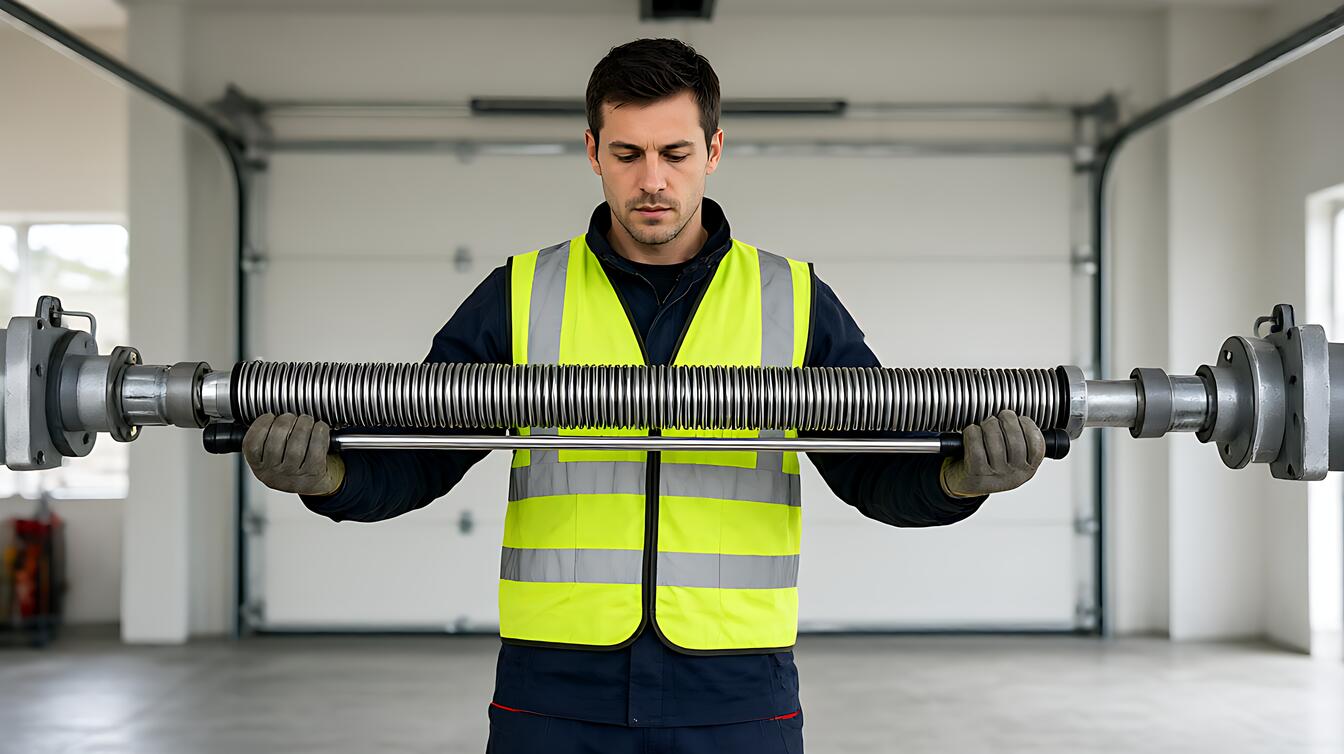
A torsion spring works like a wound clock spring: twisting it stores energy, and unwinding it delivers the lift. The winding bar in the cone sets how much twist is stored, which sets how much force the spring delivers at each height.
The safety cable runs through extension springs and catches the spring if it snaps, keeping a broken spring from whipping across the garage. Torsion springs above the door do not use a safety cable but rely on the shaft and drums to contain a break.
A balance test confirms the match in three steps.
- Pull the red emergency release cord to disconnect the opener; this takes under 2 minutes.
- Lift the door to about waist height by hand, then let go.
- Watch the door: a balanced door stays put, a heavy door falls, a light door rises on its own.
If the door moves on its own, tension is off and the spring needs adjustment before it fails.
When to Choose Which Option
Choose torsion springs when you want quieter operation and longer life; they mount above the door and need a pro to adjust. Choose extension springs when budget is tight and you accept sooner replacement, since they run along the tracks.
| Attribute | Torsion spring | Extension spring |
|---|---|---|
| Mounting | Above the door on a shaft | Along the horizontal tracks |
| Noise | Quieter | Louder |
| Standard life | About 10,000 cycles | About 10,000 cycles |
| Adjustment | Pro with winding bars | Less force, DIY-possible |
| Safety cable | Not used; shaft contains break | Required through the spring |
A spring’s cycle rating sets its life: standard springs handle about 10,000 cycles, roughly 7 to 10 years. High-cycle springs are rated for 20,000 to 50,000 cycles and cost 20 to 50 percent more.
At two cycles a day, a standard spring lasts roughly 13 to 14 years; at four cycles a day, about 7 years. A service call runs $75 to $150, with 15 to 30 minutes of actual adjustment labor.
Choosing the right door type changes spring load and cycle life, so review garage door types sectional insulated before ordering springs.
Real Job-Site Reality
On site, the telltale sign is a door that drifts: it slams shut, stops halfway, or one side sits higher than the other. A snapped garage door cable on one side pulls the door crooked and dumps the load onto the remaining spring.
A pro with 22 years of experience, Tim Sweeney, notes that a winding bar slipping is the moment most DIY injuries happen. Pulling the emergency release cord first isolates the door from the opener so you can test balance without motor interference. Never attempt to wind or unwind a torsion spring without proper bars and training; a slipping bar can release stored energy instantly, so consult a professional if you are unsure.
Expect 60 to 180 minutes for a tension adjustment depending on door size and experience, assuming a competent DIYer with basic mechanical skills and the right tools. Adjustment labor itself is only 15 to 30 minutes; most of the cost is the trip charge. Budget 20 to 30 percent more in major metro areas.
Wet floors and standing water rust springs and cables faster, so review waterproofing for garage floors before setting up a work area.
Garage Door Spring Tension: What To Check Before You Call A Pro
When tension drifts and the door no longer balances, stop and call a pro: a professional repair is the safe call for torsion springs, since the stored energy can release without warning.
Recheck door weight balance every season and after any cable or roller change. If the door is heavy on the way up or fast on the way down, the spring is drifting and needs attention before it fails.
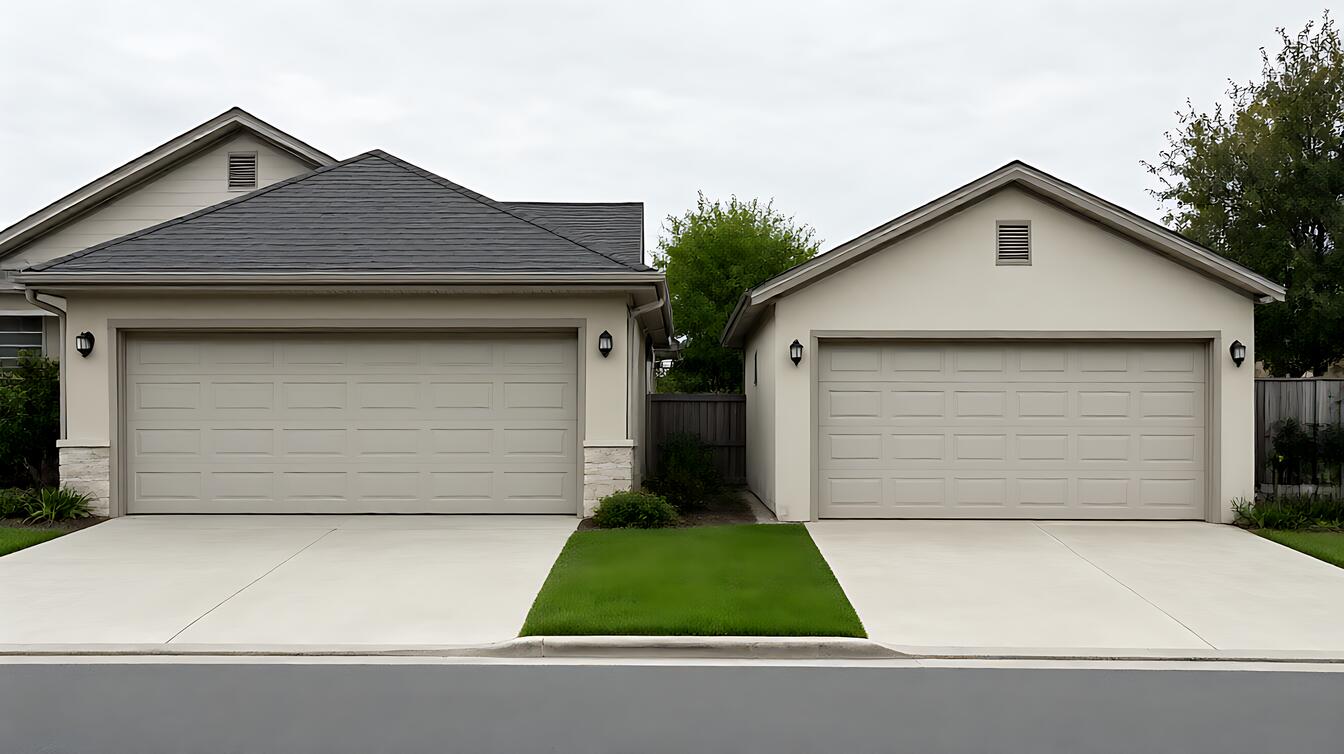
Watch for tension drift signs: a door that slams, stops halfway, or sits crooked. For new builds, compare garage building types attached detached since detached garages often need different spring sizing.
- Choose torsion springs if you want quieter operation and longer life, and budget for a pro.
- Choose extension springs if budget is tight and you accept sooner replacement.
- Choose high-cycle springs if the door runs four cycles a day or more.
- Call a pro if tension drifts and the door no longer balances, or if a winding bar slips.