
You need a repair plan, not another bucket list: determine whether water is moving under pressure, where it enters, and whether the wall needs a membrane, drainage board, or footing drain. The decisive attribute is pressure control. Foundation wall waterproofing is the assembly that blocks water and carries it away from below – grade walls.
What Foundation Wall Waterproofing Actually Controls
Foundation wall waterproofing manages water pressure at the wall, while wall drainage removes water that reaches the excavation. Together, they work only when the soil can drain and the outlet stays open.
This distinction matters because a coating can resist water crossing the wall without solving water collecting against it. For example, one specified masonry waterproofer is guaranteed to stop water up to 15 psi, but that product statement cannot replace sound grading, drainage board, or a footing drain.
Negative pressure occurs when wind or evaporation pulls water toward the wall. Hydrostatic head occurs when surrounding water pushes inward under pressure. Choose a system designed for the pressure direction and site conditions, rather than choosing a product by label alone.
For new work, review wall drainage details for new construction before concrete work starts. For an existing building, use wall drainage guidance for existing homes to address excavation and access constraints.
What to Gather Before Work Begins
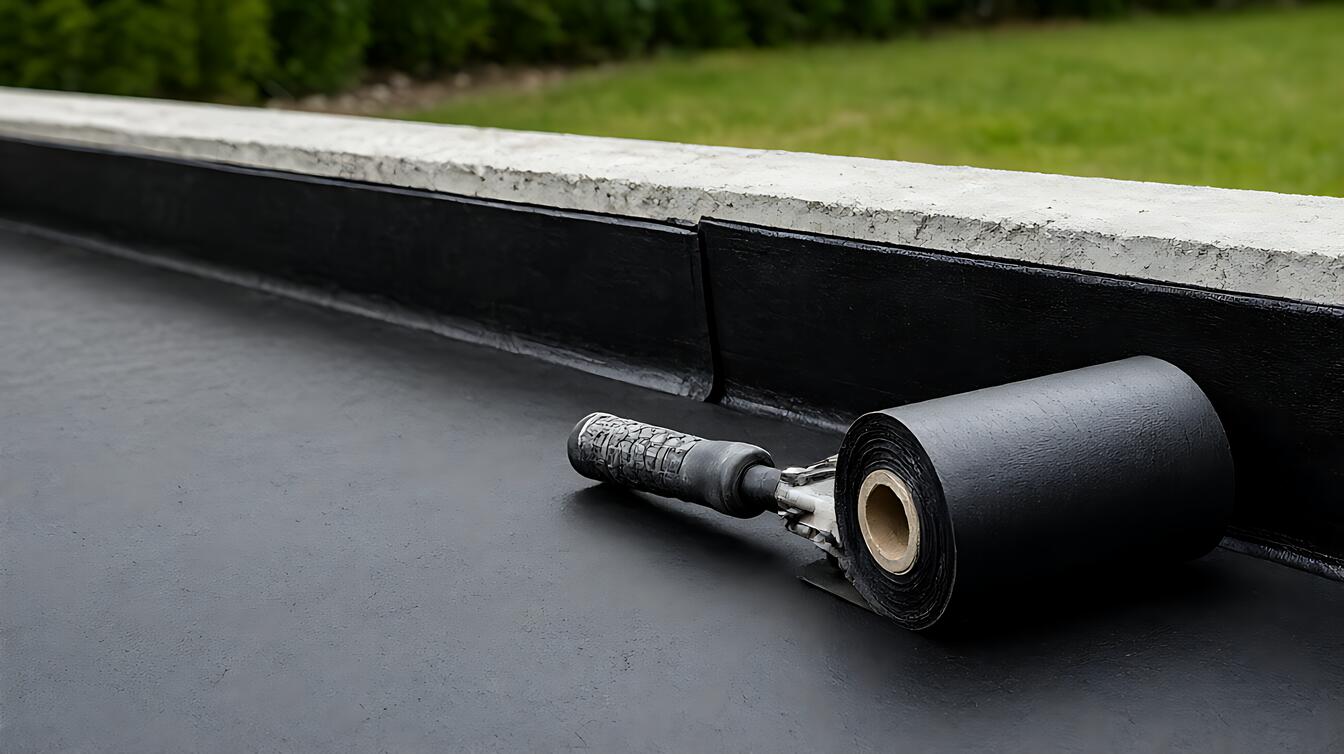
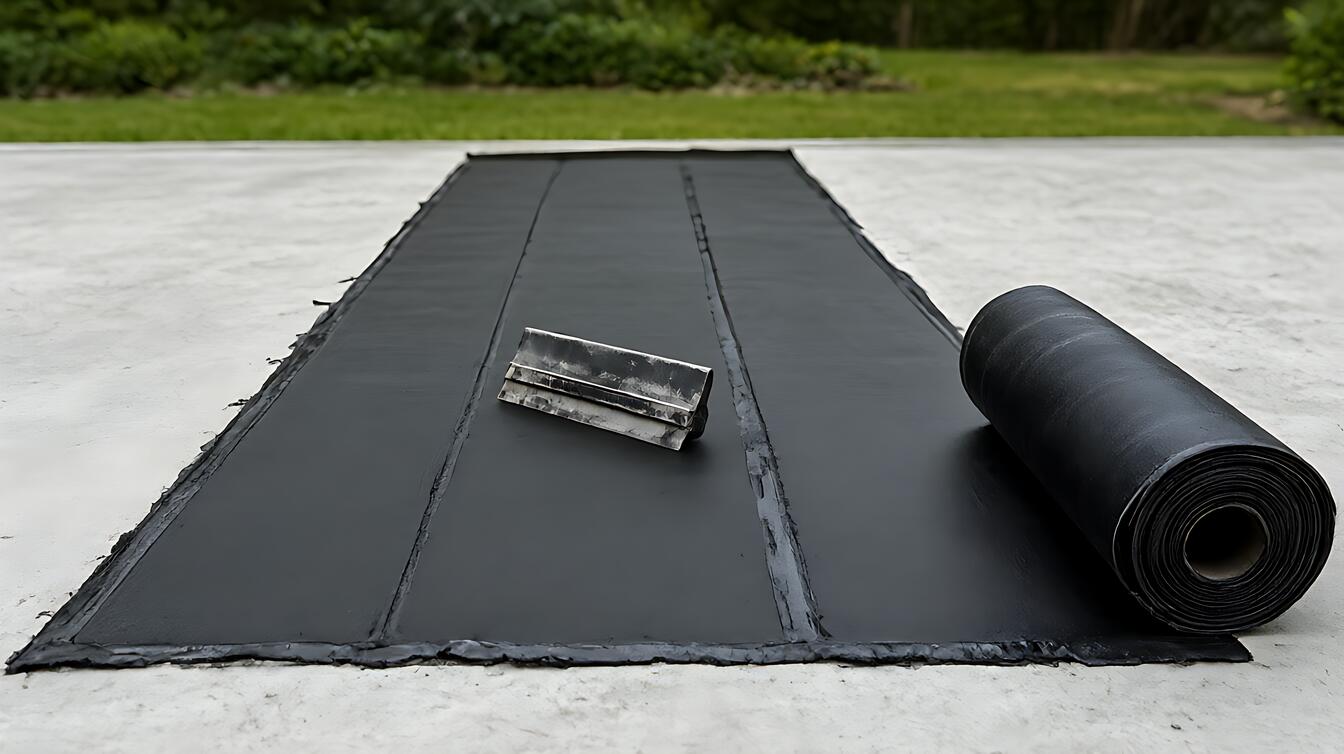
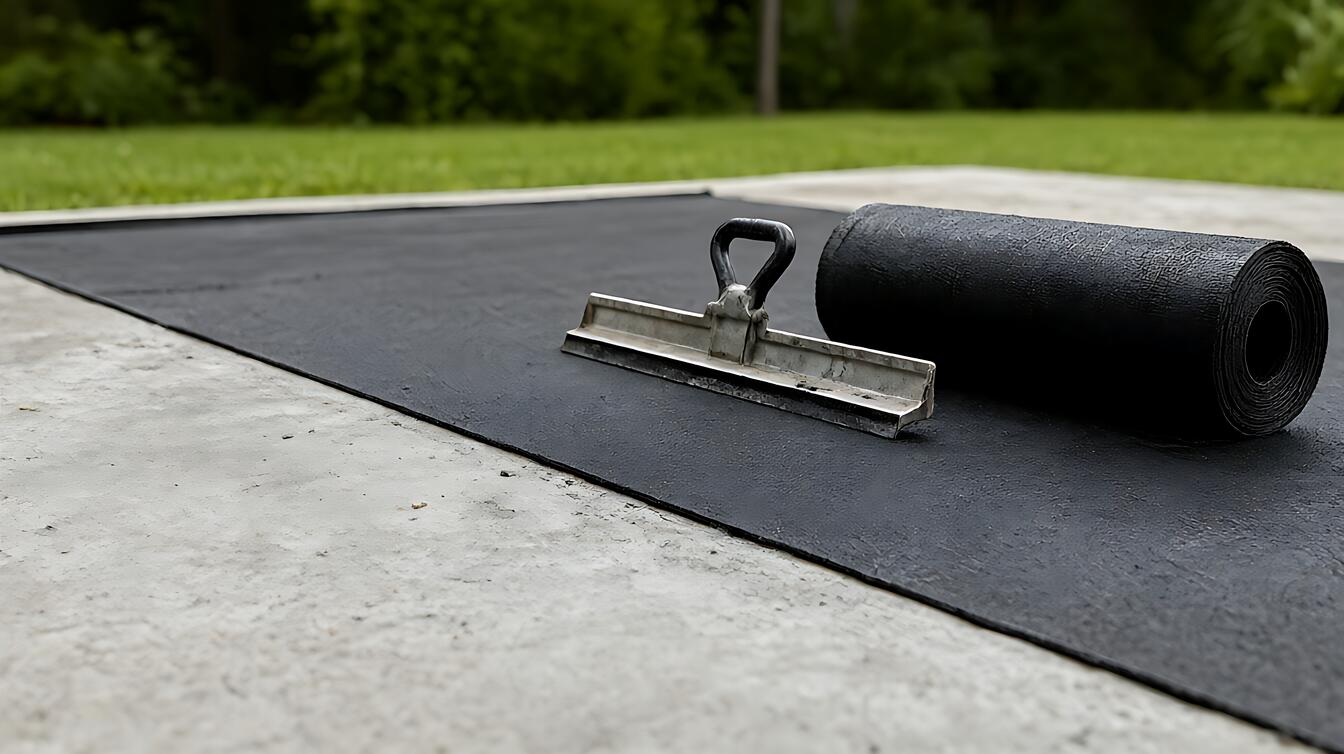
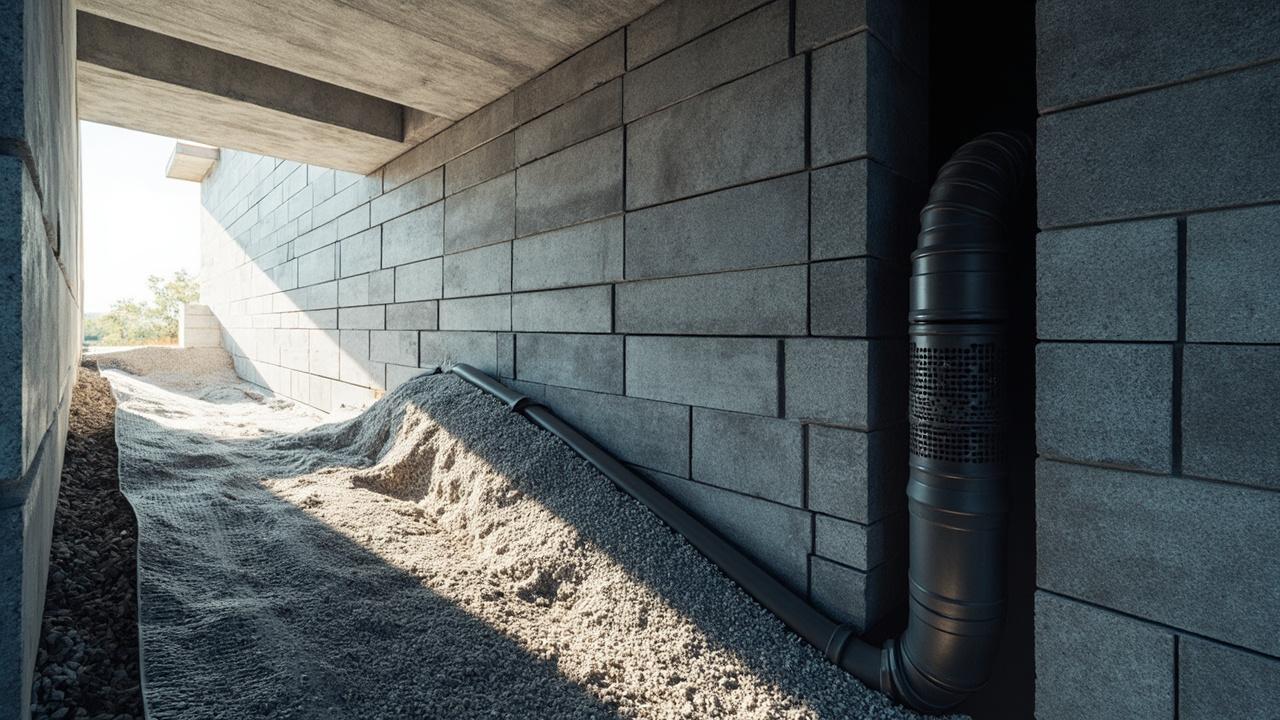
Waterproofing membrane forms the barrier, while an 8 mm drainage board creates a protected flow path. Membrane types and drainage board work as a system because water needs both a controlled entry point and somewhere to go.
Start by identifying the water source. Trace dampness after rain, inspect finished grade, gutters, downspouts, and nearby paving, then mark whether the wet area reaches the footing or rises above it. A damp strip along the floor points toward a different problem than a wet patch near a window.
Your materials and tools should follow the diagnosis. Membrane selection depends on the pressure condition and product requirements. Drainage board selection must match the membrane and footing detail, while repair methods depend on whether cracks are structural, moving, or merely leaking.
Use the manufacturer’s written instructions for coverage, cure conditions, and compatible primers. The grounding research confirms that a breathable masonry sealer should be applied only to clean, dry surfaces when no rain is expected for 24 hours. That dry – weather window is a preparation constraint, not a suggestion.
Foundation Wall Waterproofing Step by Step
Surface preparation determines whether the membrane bonds consistently, and footing drain performance determines whether collected water can leave the wall area. The sequence matters because sealing first does not justify leaving drainage unverified.
Begin with a diagnosis and dry working conditions. Then repair drainage routes, prepare the wall, install the selected layer, protect its edges, and test the completed system before closing the excavation.
- Identify the water entry point and pressure condition by tracing dampness after rain and checking whether water collects at the footing.
- Correct surface grading and discharge problems before covering the wall, because runoff can overwhelm membrane protection and overload drainage components.
- Prepare clean, dry masonry, removing loose material and addressing defects according to the membrane manufacturer’s written requirements.
- Apply the specified membrane system at the required coverage and overlap, using the manufacturer’s compatible primer, sealants, and termination details.
- Install 8 mm drainage board where the design requires it, with its outlets directed toward a functioning footing drain.
- Protect exposed membrane and drainage board from damage, then verify the assembly before backfill or final grade is restored.
For crack injection, use it when the crack admits water and the repair objective is to close that path. Choose another repair method when movement or structural damage makes injection unsuitable, and consult a professional when the cause remains uncertain.
Common Foundation Waterproofing Mistakes to Avoid
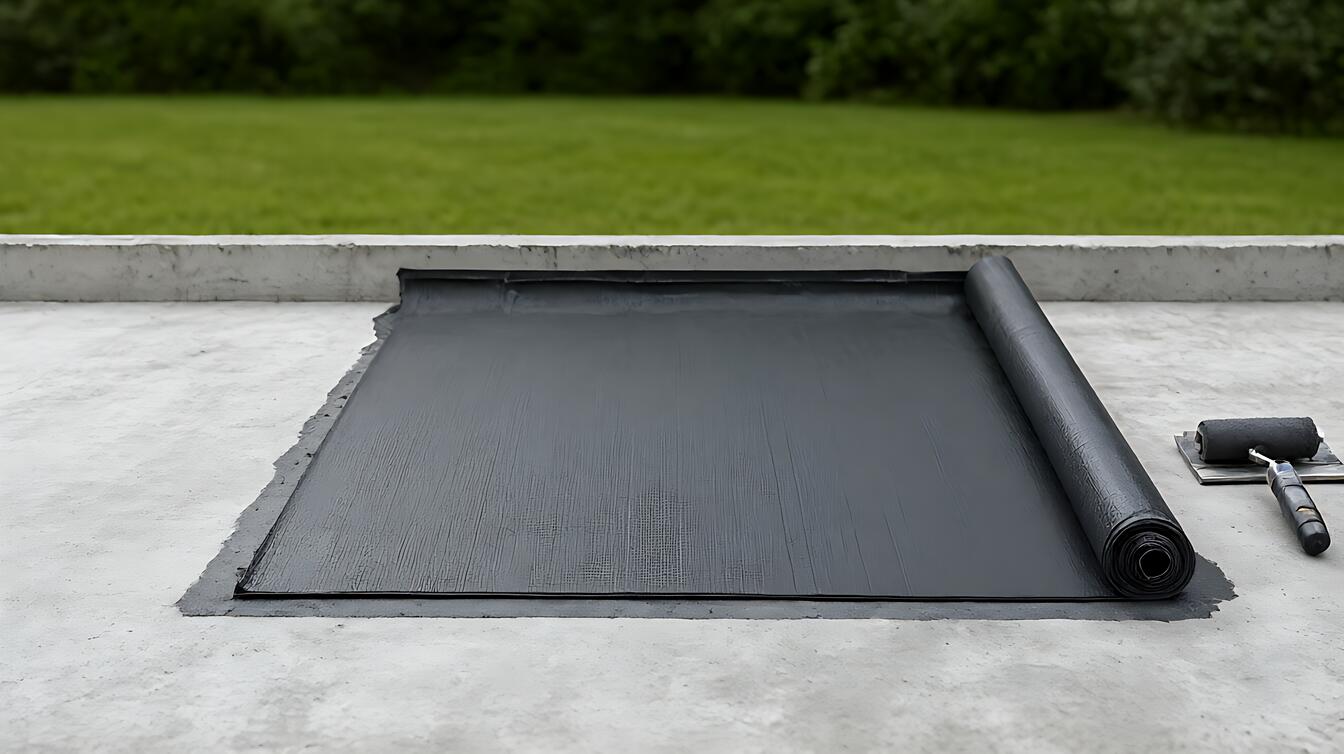
Waterproofing membrane failures often begin with shortcuts in preparation or termination details. Drainage board failures often begin when outlets are blocked, damaged, or connected to a drain that cannot carry the load.
Painting over damp masonry is the first mistake to catch. A breathable masonry sealer requires a clean, dry surface, and application requires 24 hours without expected rain. Moisture beneath the coating can prevent the treatment from working as intended.
The second mistake is confusing negative pressure with hydrostatic pressure. A sealer selected for one condition may not be suitable for inward water pressure. Compare the stated application conditions with the actual site exposure rather than relying on a generic product description.
The third mistake is sealing cracks without identifying their cause. Crack injection can stop leakage through a suitable crack, but it does not correct grade, drainage, or structural movement. If water still travels through another route, the repair will look inconsistent.
Finally, check where water goes. A membrane and drainage board can move water toward a clogged outlet, leaving the same wet foundation with more expensive materials in front of it. For details specific to heavy rainfall, compare wall drainage in heavy rain and wall drainage in clay soil before accepting the system.
Limits, Trade – Offs, and When to Call a Pro
Foundation wall waterproofing durability depends on exposure, installation quality, drainage performance, and the chosen material’s service conditions. The grounded masonry – sealer guidance calls for reapplication every 5 to 10 years, depending on exposure and product specifications.
The trade – off is simple. A surface sealer is comparatively approachable, but its protection depends heavily on dry preparation and maintenance. A membrane – and – drainage assembly addresses a broader set of conditions, yet excavation, detailing, and outlet performance increase the work involved.
Choose a contractor when water is actively entering under hydrostatic head, cracks are moving, excavation access is restricted, or the footing drain needs alteration. These conditions can affect structure, excavation safety, and drainage performance, so consult a qualified waterproofing professional rather than relying on a product warranty.
Also call a professional when evidence does not identify the source. Repeated wetting without a clear entry point may indicate roof runoff, plumbing, drainage, or structural movement. Sealant cannot tell you which one is causing the problem.
Decision Guidance
- Choose a breathable masonry sealer when the surface is clean and dry, no rain is expected for 24 hours, and the treatment matches the exposure.
- Choose a membrane and drainage board assembly when the wall needs controlled water entry and a protected route toward the footing drain.
- Choose crack injection when the identified crack is suitable for injection and the broader water source has already been checked.
- Consult a professional when pressure is inward, movement is present, excavation is difficult, or drainage performance cannot be verified.
Next, document the wet area, water direction, and repair options before excavation. For broader assembly choices, review exterior wall drainage systems without confusing them with the foundation – wall repair itself.