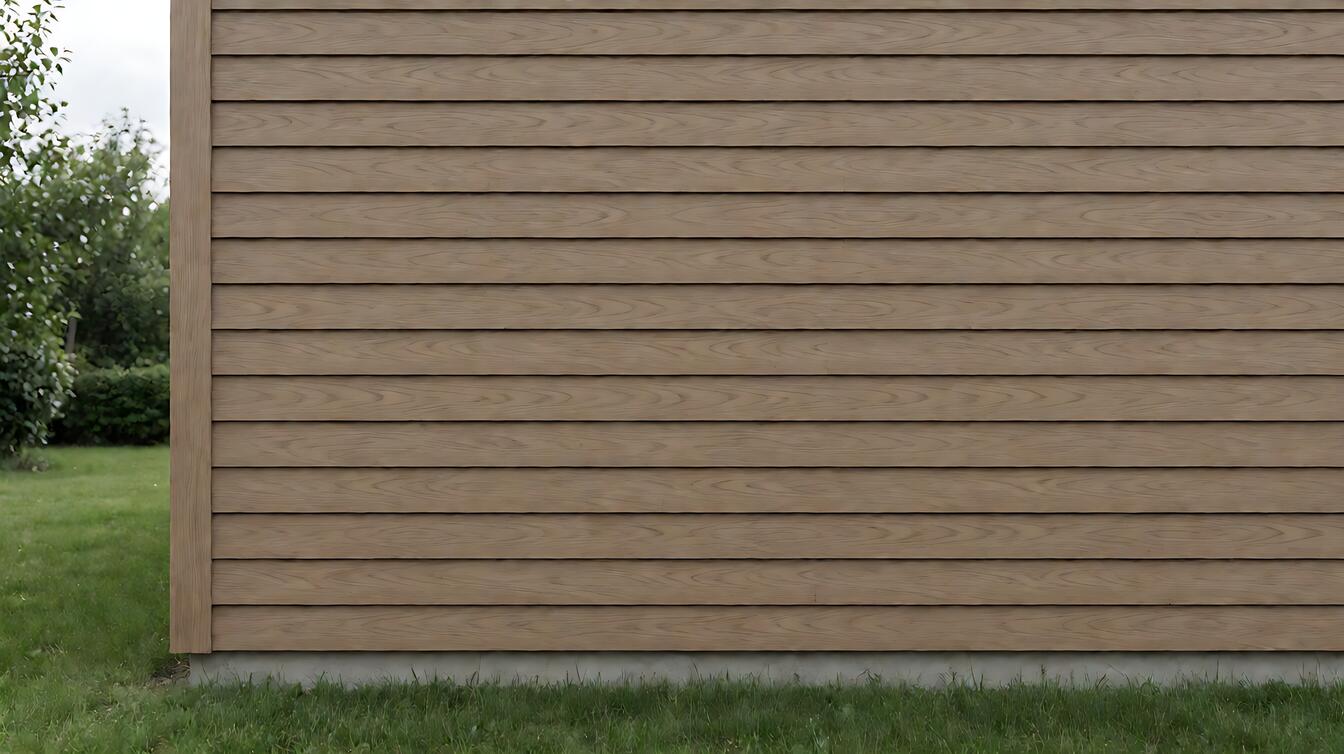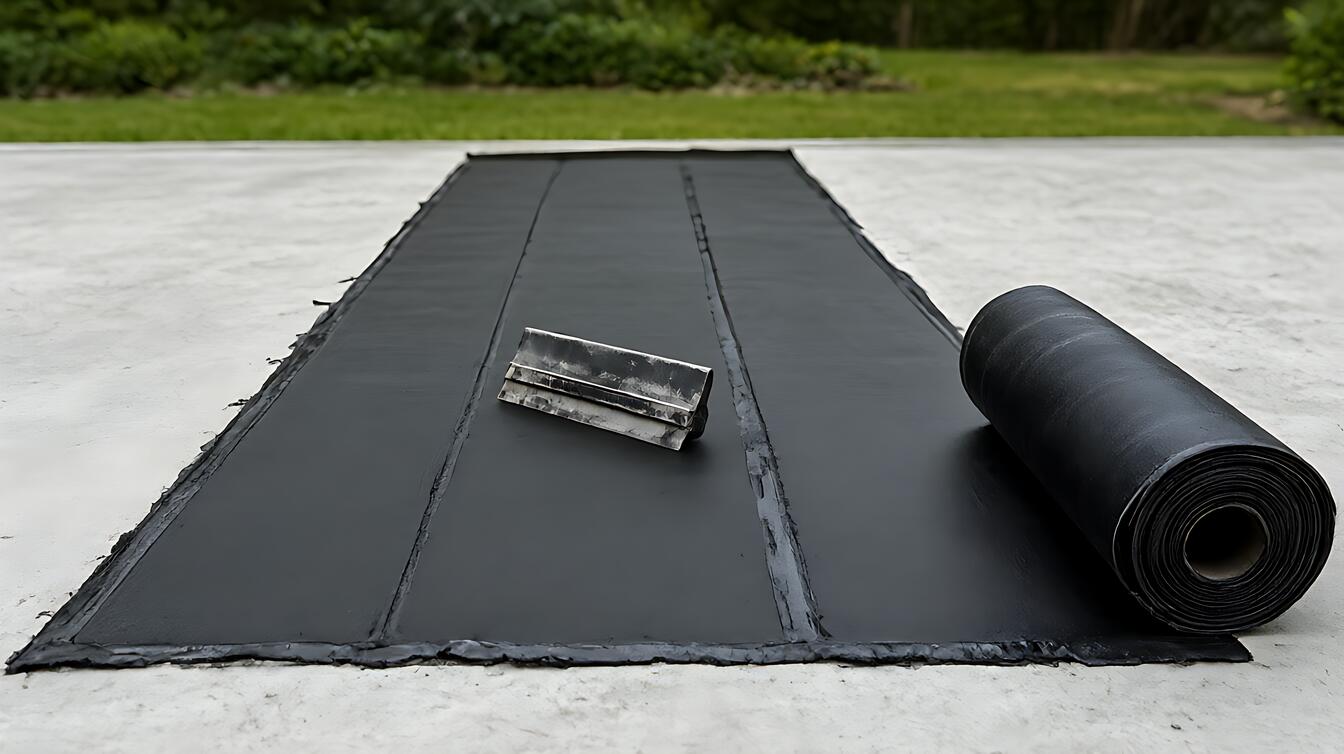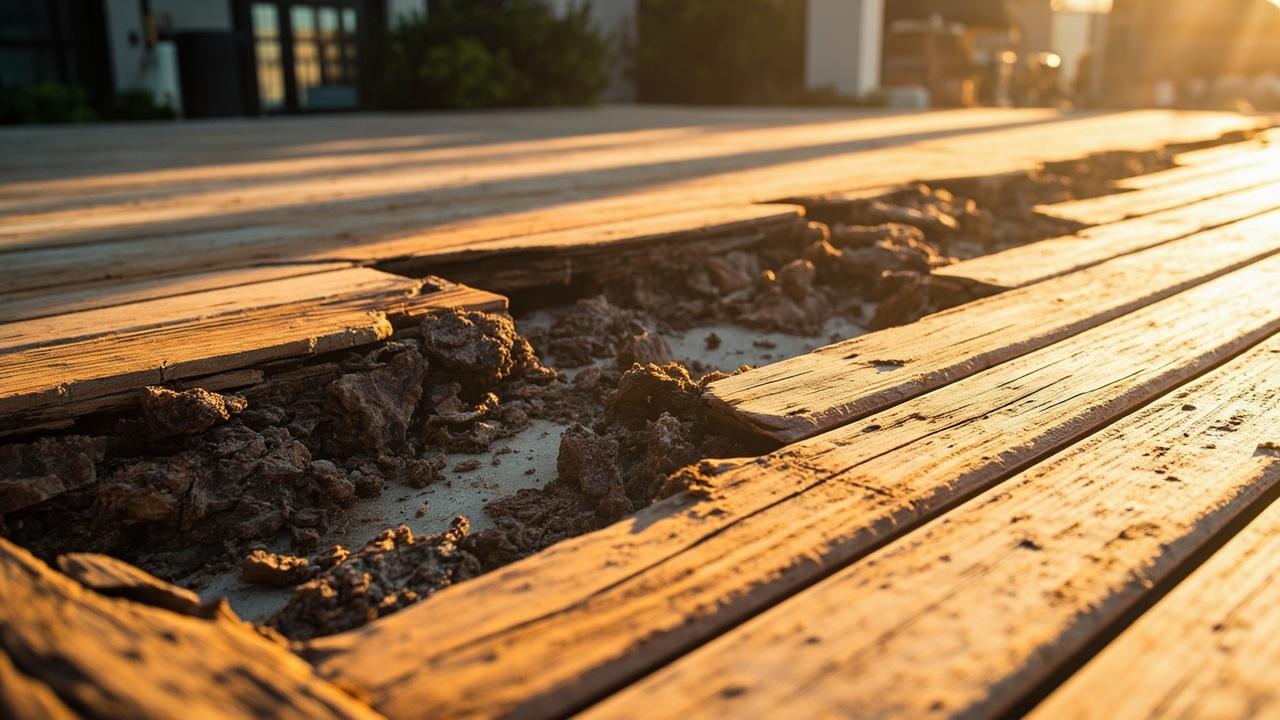

You have found a line in the concrete, and now the hard part is deciding what the line needs: a surface seal, a flexible membrane, or a repair that addresses movement and water entry together. The right answer depends on the crack, the surface, and where water comes from. Waterproofing for foundation cracks is the system of sealing or covering a crack so water cannot pass through it while the foundation remains exposed and inspectable.
That definition sounds simple, but product names blur it quickly. A coating can close a hairline crack, while a membrane can bridge a wider joint and tolerate more movement. The decisive attribute is fit: how the system behaves at the crack and under the site conditions that will keep acting on it.
What Waterproofing for Foundation Cracks Actually Means
Waterproofing for foundation cracks uses a seal, coating, or membrane to block water passage through a foundation joint. For a stable, dry hairline crack, a compatible acrylic coating may be enough; for a wider or moving crack, a flexible membrane can bridge the gap.
The system must match the failure mechanism. Water entering through a porous wall or leaking from an active joint needs a different response from dampness caused by condensation. A surface treatment cannot correct drainage directed toward the foundation.
Start by identifying where the water appears and whether the crack changes. If you are comparing the main families, the waterproofing types compared guide explains how sheets, liquid membranes, and cementitious products fit different jobs.
How Foundation Crack Waterproofing Works
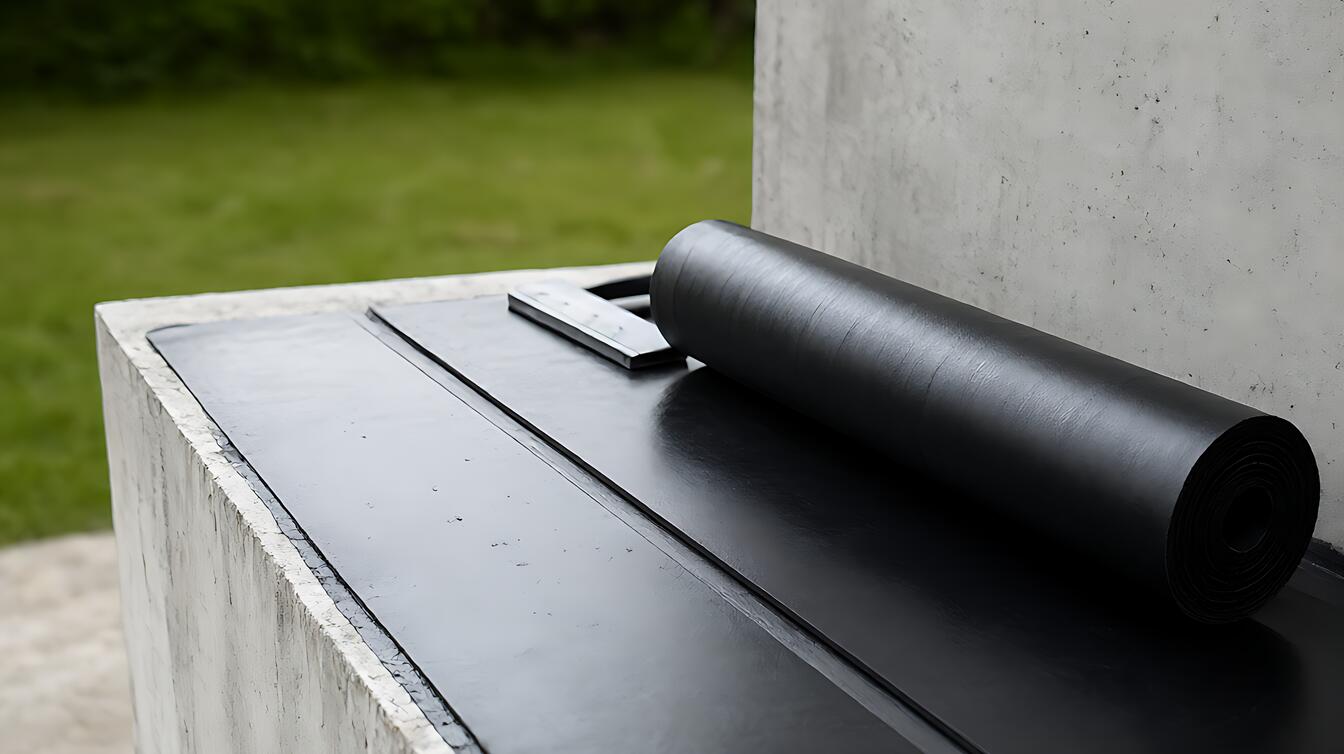
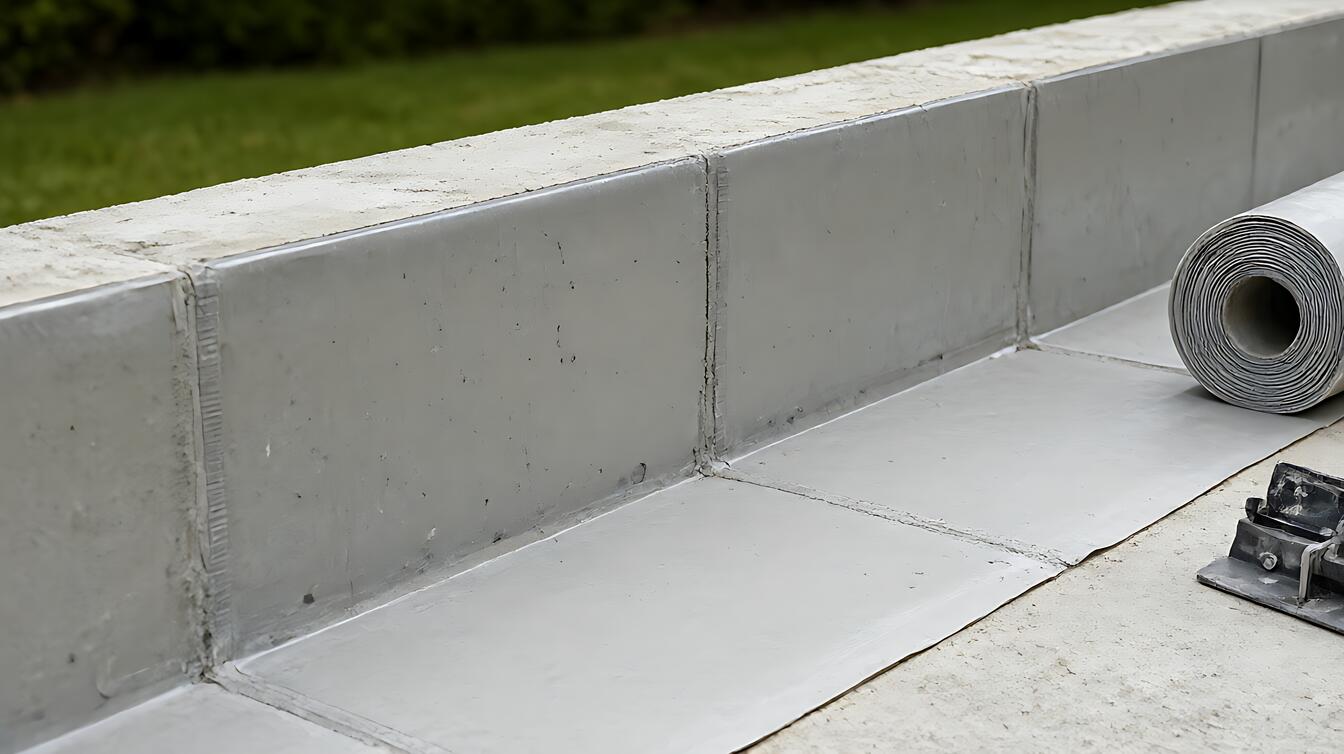
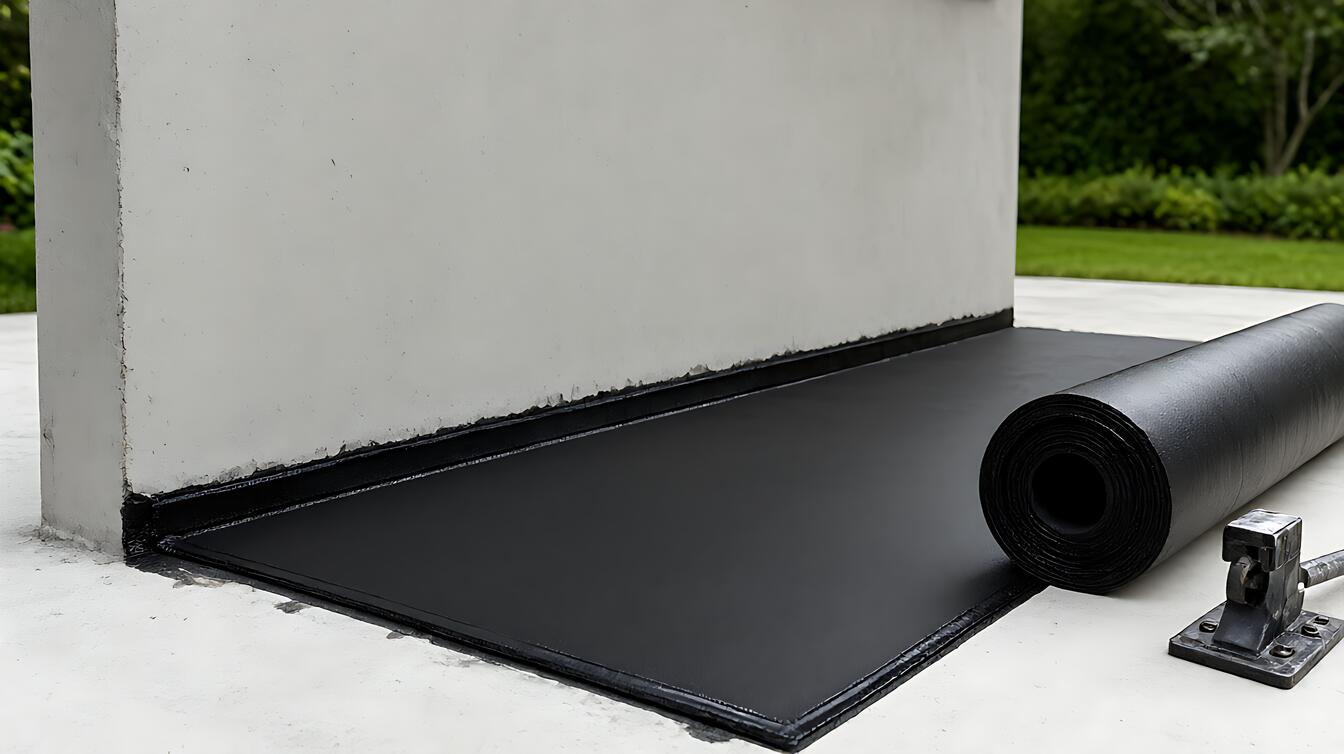
Sheet membrane blocks water by forming a continuous barrier across the crack. A membrane thickness of 3 – 4mm supplies the physical layer, while an overlap of 100mm helps adjoining sheets shed water instead of leaving an open seam.
The membrane must bridge the defect and bond or adhere to sound concrete. Preparation controls the result: dirt, loose concrete, and active leakage can prevent a continuous seal. Corners, penetrations, and transitions need extra detail because they interrupt the sheet.
Flexibility matters when the crack may move. Rigid filler can handle a stable void, but it may fracture when the foundation flexes. An acrylic coating is easier to apply over prepared concrete, although its suitability depends on the product and the condition of the joint.
For more detail on dimensions, review waterproofing membrane thickness and overlap. This avoids choosing a membrane by name alone and focuses on the layer geometry that changes its performance.
When to Choose Which Crack Waterproofing Option
Cementitious repair suits stable cracks where filling the path is enough. Choose sheet membrane when the crack needs a continuous barrier, especially around wet areas where water pressure or recurring moisture makes surface filling less dependable.
| Condition | Preferred approach | Main limitation |
|---|---|---|
| Stable, hairline crack in sound concrete | Compatible acrylic coating or crack sealant | It cannot bridge a joint that keeps moving |
| Crack requires a continuous barrier | Membrane system with a 3 – 4mm layer | Surface preparation and detailing determine success |
| Wet area around a wall or floor joint | Waterproofing system with reinforced wet – area detailing | Terminations and penetrations can remain weak points |
| Crack is active or structural | Professional assessment before sealing | Waterproofing does not repair movement or structural damage |
Choose a liquid membrane when complex shapes or many details make sheet placement difficult. Its benefit is continuity around corners and penetrations; the trade – off is that application quality, curing, and compatible surface preparation become more important.
If you need a broader view of these systems, the sheet, liquid, and cementitious waterproofing types comparison explains where each approach belongs.
Real Job – Site Conditions That Change the Answer
Damp ceiling over a bathroom points toward water traveling from the wet area rather than leaking straight through the crack below. The practical test is to dry the area, watch when moisture returns, and compare that timing with rain, shower use, and household activity.
For a basement, relative humidity below 50% can help distinguish condensation from an active leak when controlled with a dehumidifier. That clue changes the proposed repair. A crack sealant may address the visible line, but it will not stop a shower, plumbing joint, or foundation drainage problem.
Here is the sequence that keeps the diagnosis honest:
- Dry the affected area and record where water first appears.
- Check whether the crack changes with rain, temperature, or building movement.
- Inspect grading, drainage paths, wet – area plumbing, and nearby wall transitions.
- Match the repair to the crack condition, then detail every termination and penetration.
- Verify the completed system according to the product instructions and the scope of the repair.
That sequence prevents the most expensive mistake: covering evidence before understanding where the water came from. For more diagnostic methods, use waterproofing failure and leak diagnosis to separate surface symptoms from their causes.
Limits, Edge Cases, and the Next Decision
Waterproofing systems can block a controlled water path, but they do not stop foundation movement, repair failed drainage, or guarantee that every crack will remain dry. Active cracks, widening joints, recurring structural displacement, or water entering under pressure need a professional inspection before another layer is added.
Consult a qualified waterproofing or foundation professional when the crack is widening, the wall is bowing, water arrives under pressure, or repeated repairs have failed. The professional can distinguish a local sealing problem from a structural or water – management issue, which is the crucial boundary for this decision.
Use the main waterproofing systems overview when choosing a broader method, then consult a professional before work that affects the foundation structure.
Decision guidance
- Choose an acrylic coating if the crack is stable, hairline, and the surface can be prepared properly.
- Choose a 3 – 4mm membrane if the crack needs a continuous barrier or sits within a demanding wet – area detail.
- Choose cementitious repair if the void is stable and filling it addresses the actual water path.
- Choose professional assessment if the crack moves, widens, leaks under pressure, or keeps returning after repair.