
Water seeps through hairline grout joints in a bathroom shower and travels behind the tile. The tiles themselves rarely fail; the failure lives in the membrane beneath them. Understanding how bathroom tiling works changes how you budget.
This article examines the tiling system as a layered assembly: substrate, membrane, mortar, tile, grout, and sealant. It covers cost ranges in 2026, which tile types suit which conditions, and misconceptions that drive costly mistakes.
Tiling as a Waterproofing Assembly
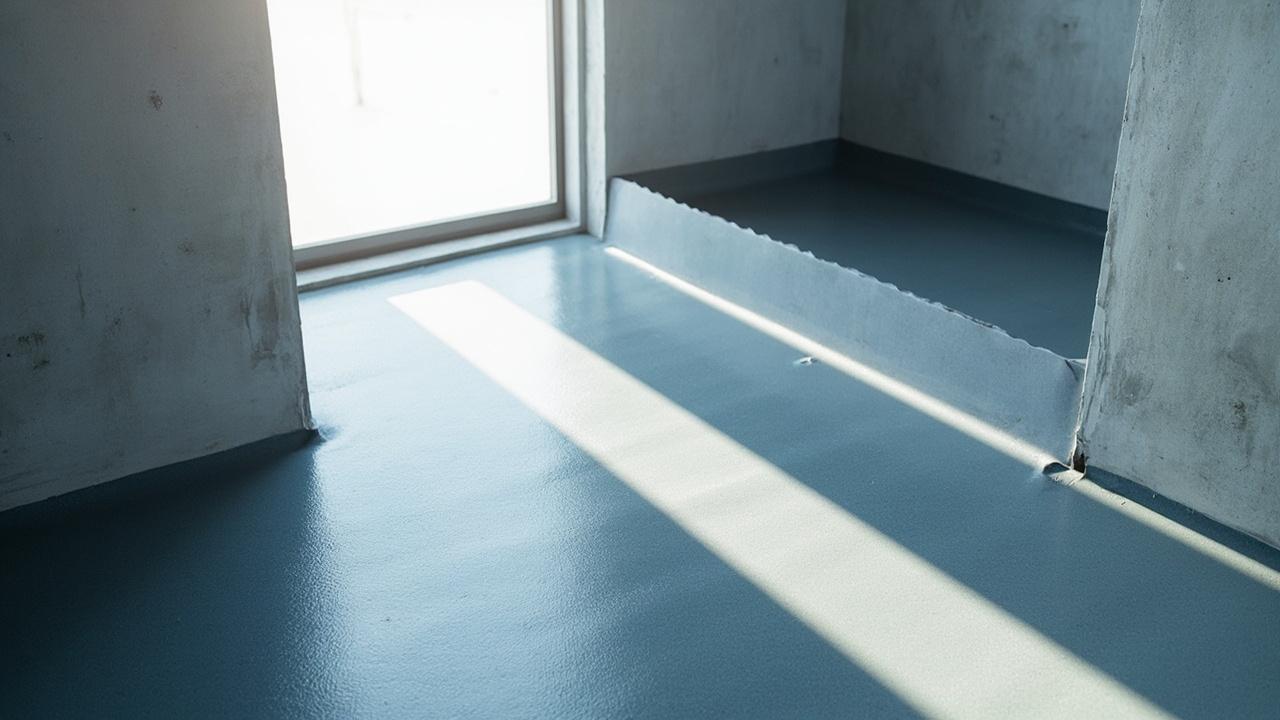
Bathroom tiling is a waterproofing assembly, not a decorative finish. The visible tile is the outermost layer of a stack including the substrate, a waterproof membrane, thin-set mortar, the tile, grout, and perimeter sealant. Water penetrating grout — all grout is porous, even sealed — must hit an uninterrupted membrane before reaching the substrate.
An experienced installer checks membrane continuity before laying tile. The cheapest mistake in a bathroom re-tile is skipping the flood test. Fill the shower pan with water for 24 hours. A membrane passing this test typically lasts 15 to 20 years. One failing it leaks within the first season, regardless of tile quality.
The tile material matters, but its role differs from most buying guides. Porcelain at less than 0.5 percent water absorption per ANSI A137.1 is nearly impervious. Ceramic at 0.5 to 3 percent absorption suits walls and low-traffic floors but not shower floors. Natural stone varies: marble absorbs around 0.5 percent when honed; travertine is porous and always requires sealing. The tile surface resists water. The membrane behind it stops water. Confusing the two drives common budgeting errors.
Installation Cost Ranges by Material
Bathroom tile installation costs vary tenfold between budget ceramic and natural stone. Labor runs $4 to $15 per square foot depending on tile type. Material runs $1 to $100 per square foot. The all-in range for a standard bathroom floor and partial walls is $5 to $25 per square foot installed in North America and $50 to $150 per square meter in Australia.
Ceramic tile sits at the low end. Material costs $1 to $15 per square foot. Installed, it runs $3 to $30. Porcelain occupies the middle. Material costs $3 to $25 per square foot. Installed, $6 to $40. Natural stone — marble, travertine, slate — spans $5 to $65 per square foot material and $11 to $80 installed. Glass tile runs $7 to $35 material and $14 to $47 installed. Mosaic carries high labor because of grout density: $6 to $30 material and $14 to $48 installed.
Pattern complexity adds a labor multiplier. Straight-lay ceramic or porcelain costs $4 to $8 per square foot in labor. Diagonal layout adds 25 to 50 percent. Herringbone and chevron run $14 to $16.50 per square foot. Large-format tile — 24 by 24 inches and larger — requires a substrate flat within 3 millimeters over 3 meters. Labor typically lands at $7 to $14 per square foot. Subfloor leveling adds $2 to $6 per square foot.
Waterproofing membrane is the line item most homeowners overlook. Sheet membranes run $2 to $4 per square foot material plus installation. Liquid-applied membranes run $1 to $3 per square foot. Both require manufacturer-specified wet film thickness and a 24-hour flood test before tile is set. Skipping either step voids most warranties.
Matching Tile to Bathroom Conditions
The right tile depends on moisture exposure, foot traffic, and substrate condition. Matching tile to these variables prevents premature failure and avoids installing a wall tile on a shower floor.
For shower floors, use porcelain or mosaic tile with a coefficient of friction of 0.42 or higher per ANSI A326.3. Polished marble and glossy ceramic fail this test and become hazardous when wet. For shower walls, porcelain or ceramic with any finish is acceptable. For bathroom floors outside the shower, medium-format porcelain at 12 by 24 inches with a matte or honed finish balances slip resistance and visual scale.
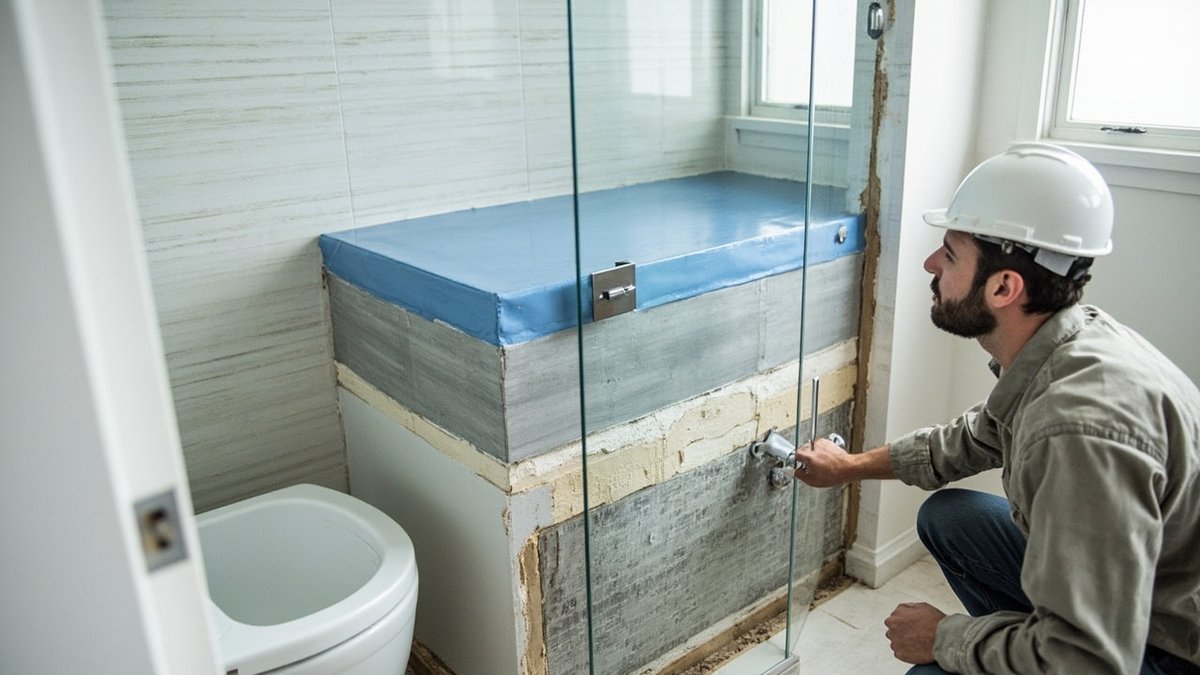
Substrate condition determines whether you can tile over existing tile. Glossy glazed tile provides no mechanical key for membrane adhesion. If existing tile is sound, diamond-grind the glaze and apply an ANSI A118.10-compatible liquid membrane rated for tile-over-tile. If existing tile is cracked or on a flexing substrate, removal is safer. Tiling over a failed substrate delays the next failure by 12 to 18 months in humid climates.
In tropical and subtropical climates, humidity accelerates organic growth behind tile if moisture reaches wood or gypsum. Cement backer board is water-resistant but not waterproof. Mold can grow on dust trapped between the board and membrane. Always install a continuous membrane over backer board in wet areas, not just at seams.
Misconceptions Driving Costly Mistakes
Several persistent myths cause homeowners to underspend on critical layers and overspend on visible ones. The most expensive mistakes are rarely about tile choice.
Grout sealer does not make an installation waterproof. Sealer repels liquid water and stains for 6 to 18 months. It does not stop vapor transmission. Only a membrane beneath the tile stops liquid water migration. Epoxy grout is denser than cement grout but is not a waterproofing layer. If a contractor claims grout sealer eliminates the need for a membrane, seek a second opinion.
Porcelain tile is impervious to water absorption, but grout joints are not. Water enters through grout and reaches the substrate. A membrane is required regardless of tile material. Building codes in Australia, the United States, and the United Kingdom all mandate waterproofing in shower areas. Inspecters flag missing membranes during final walkthrough.
Large-format tile reduces grout lines and creates a cleaner aesthetic. But large tiles amplify every substrate imperfection. A 2-millimeter dip invisible under small tile becomes visible lippage under 24 by 48 tile. Large-format installation requires self-leveling underlayment, adding $3 to $8 per square foot. The grout-line savings are real but modest compared to prep cost.
Natural stone is beautiful and durable when maintained, but it is softer than porcelain and vulnerable to etching from acidic cleaners. Marble etches from lemon juice and vinegar, leaving dull spots that require repolishing. Porcelain with a stone-look print achieves the aesthetic without the maintenance, and color running through the full thickness hides chips and edge wear.
Verification Checklist Before Committing
Before signing a contract or purchasing materials, verify each layer in the tiling assembly. Each skipped item carries measurable risk.
- Membrane continuity: Ask to see the membrane plan — product, coverage area, corner and penetration detailing. The membrane must extend from the shower floor up walls at least 3 inches beyond the shower valve and to full height for floor-to-ceiling tile. Verify a 24-hour flood test before tile is set.
- Substrate flatness: For tile larger than 15 by 15 inches, measure with a 3-meter straightedge. Acceptable variation is no more than 3 millimeters under the straightedge and 1.5 millimeters between adjacent edges. If the subfloor fails, budget for leveling compound or a decoupling membrane.
- Thin-set compatibility: Confirm the mortar matches both substrate and tile. Porcelain requires polymer-modified thin-set per ANSI A118.4 or A118.15. Natural stone requires white or non-staining thin-set to prevent efflorescence.
- Grout type: For shower floors and high-moisture areas, specify epoxy grout or premium latex-added cement grout with penetrating sealer. Epoxy costs $1 to $3 per square foot versus $0.30 to $0.80 for standard grout but does not crack, stain, or harbor mold.
- Transition sealant: Every change of plane — floor to wall, tile to tub, tile to vanity — must be sealed with 100 percent silicone or polyurethane sealant rated for bathroom use. This is the most common leak origin in newly tiled showers.
- Warranty documentation: Request written confirmation that the installed system matches the membrane manufacturer specification, including primer application, coat thickness, cure time, and flood test protocol.
When Tiling Reaches Its Limits
Bathroom tiling is long-lived when built correctly. A properly membrane-protected porcelain tile floor in a residential bathroom typically lasts 20 to 50 years before replacement, with grout refresh every 10 to 15 years. The tile itself rarely fails. Failure modes are substrate movement, membrane degradation, and sealant breakdown at transitions.
Soft spots under existing tile, persistent musty odor behind a bathroom wall, or staining on the ceiling below a shower indicate likely membrane failure. Surface repairs provide temporary relief. The reliable correction is removing tile, inspecting the substrate, replacing compromised material, reinstalling the membrane, and flood-testing before retiling. Localized repairs for a failed sealant joint cost $200 to $800. Complete membrane replacement in a standard shower runs $2,000 to $6,000. Early detection through the verification checklist is the most effective cost-control measure in any bathroom tiling project.