
What should you waterproof on a deck or patio? Start with the surface that must stay dry, then match the system to its exposure, detail work, and traffic. Waterproofing for decks and patios is a continuous protective layer that sheds water while keeping moisture from reaching the structure below.
The tricky part is that a product name does not tell you whether it suits the job. Surface preparation, drainage, joints, and curing time decide the outcome as much as the material does, so the useful question is which system fits the conditions you actually have.
Waterproofing for Decks and Patios: The Direct Answer
Waterproofing for decks and patios protects an exposed horizontal surface by forming a continuous barrier against water. On a suitable substrate with correct drainage and detailing, that barrier limits moisture intrusion and helps preserve the structure beneath.
There are three broad routes: sheet membranes, liquid – applied coatings, and cementitious systems. Their practical difference is how they handle complexity. Sheet material creates a factory – made layer, liquid systems conform around details, and cementitious systems bond to suitable masonry substrates.
For the wider decision, start with the waterproofing systems overview. It places these options in context before you match one to the deck or patio in front of you.
How Waterproofing Systems Work, With Real Numbers
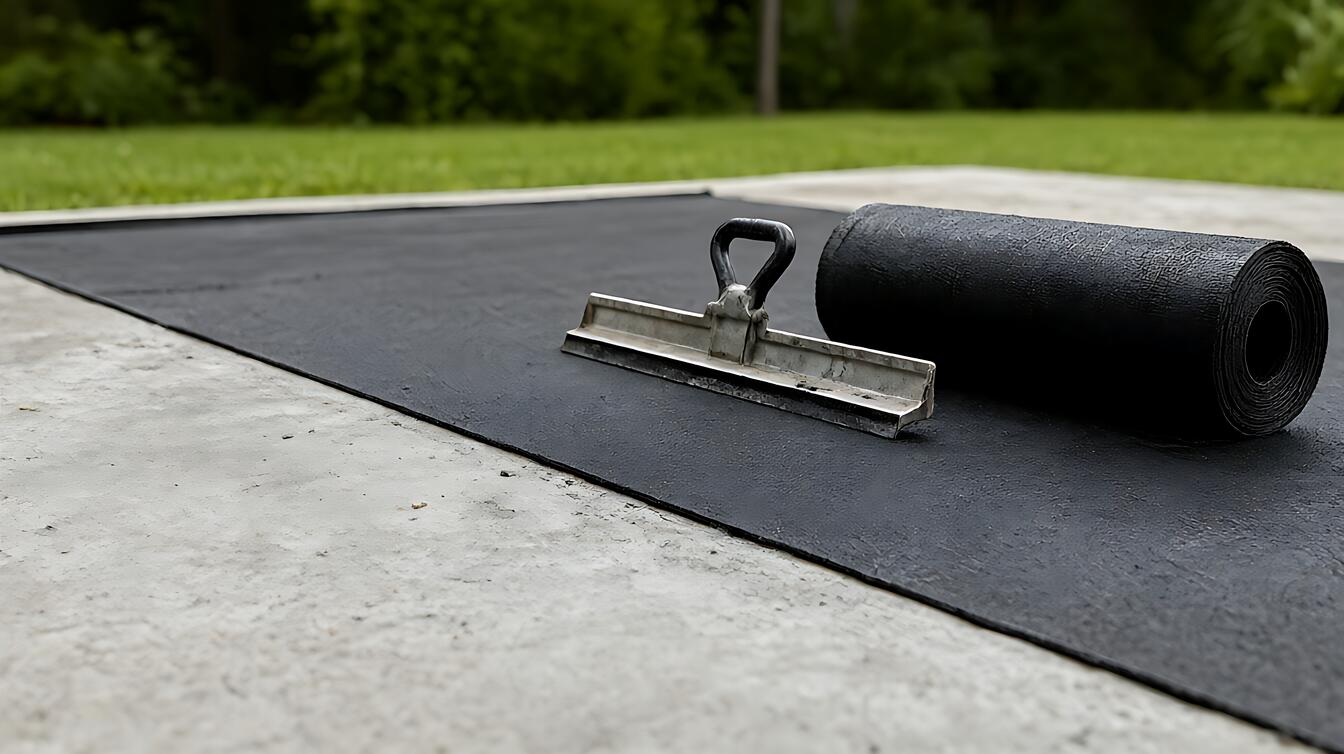
Sheet membrane forms a controlled waterproofing layer when it is bonded or heat – welded to a prepared substrate. A torch – applied membrane often uses a membrane torch 3 – 4mm specification to establish membrane thickness and support heat – fused seams.
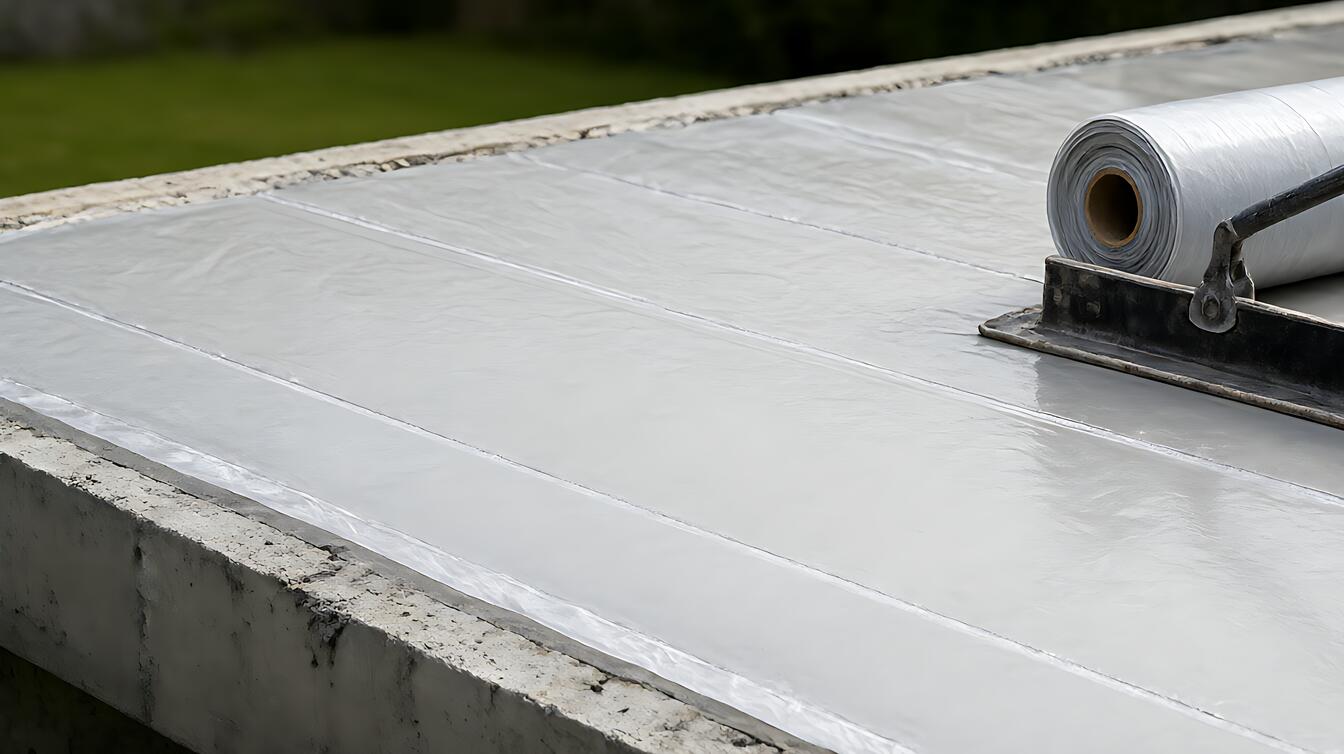
That thickness matters because the membrane must form a continuous layer without weak pinholes or poorly sealed joints. The overlap 100mm requirement at seams provides an additional bonded or welded area beyond the edge of the adjoining sheet.
Preparation is not a ceremonial step. One cited deck – coating source assigns 80% preparation to a successful waterproofing job, which reinforces the practical point that cleaning, drying, repairing, and sealing determine whether the finish adheres.
Curing also deserves its own line on the schedule. Many deck coatings require 24 – 48 hours curing before children or pets use the treated surface. Read the product instructions because surface temperature, moisture, and subsequent layers can extend that restriction.
When to Choose Sheet, Coating, or Cementitious Systems
Cementitious systems suit compatible masonry substrates when the priority is a rigid, bonded protection layer. They are less forgiving when a detail cannot be treated as a continuous masonry surface, so substrate compatibility must be checked before purchase.
Sheet membranes are useful where defined sheets and heat – welded seams create a predictable layer across a relatively regular surface. Their limitation appears at complex details, where cuts, corners, penetrations, and terminations demand careful detailing.
Acrylic coating is a liquid – applied option that can cover shaped surfaces and details without forming a sheet seam. Its limitation is that the whole system depends on preparation, coverage, curing, and compatibility with the substrate beneath it.
Choose sheet membrane when consistent material thickness and fused seams matter. Choose liquid coating when details dominate the installation. Choose cementitious waterproofing when the base is compatible masonry. See the sheet, liquid, and cementitious system comparison for a closer technical look.
| System | Best fit | Key limitation |
|---|---|---|
| Sheet membrane | Regular surfaces where fused seams are practical | Complex details require careful termination and sealing |
| Liquid coating | Irregular surfaces and wet – area detailing | Coverage, adhesion, and curing depend heavily on preparation |
| Cementitious system | Compatible masonry substrates | Rigid material is unsuitable for movement or incompatible bases |
Real Job – Site Conditions That Change the Answer
Wet area detailing changes the system because water concentrates around drains, penetrations, changes of plane, and edges. These are the places where a continuous surface is most likely to be interrupted, so they deserve more attention than the broad field area.
Imagine a covered patio where rainwater collects near a door threshold. A membrane that works across the open slab may still fail if the threshold detail lacks a continuous tie – in. The field layer cannot make up for a weak connection at the edge.
Drainage 1 – 2% gives water a direction to travel instead of lingering on the surface. Use that fall as part of the design check, because a waterproof layer is not a substitute for a surface that drains properly. Confirm the required slope against the applicable product and building requirements.
Traffic changes the maintenance schedule as well. One cited system recommends inspection and maintenance every 3 – 5 years based on traffic, which illustrates why an occupied deck needs attention sooner than a lightly used patio. For help identifying the cause of an existing leak, use the waterproofing failure and leak diagnosis guide.
Limits, Failure Traps, and the Next Decision
Waterproofing coating has a service life that depends on the product, application quality, and environment. One source places quality deck coatings at 2 – 10 years, so a warranty or product label should not be mistaken for a promise of permanent protection.
The common failure pattern is mundane: skipped preparation, contaminated surfaces, incompatible materials, incomplete coverage, or water entering at a detail. The cited guidance warns that skipping preparation can lead to peeling within 24 months, while full – sun epoxy may chalk within 18 – 24 months.
Sun exposure also changes expectations. A deck coating that blocks 95% UV may help reduce heat in the afternoon, but that performance claim belongs to the cited product. Verify equivalent properties for your chosen system rather than transferring the number to another product.
Most projects take 3 – 5 days, while larger or complex work can stretch to a week or more. Before installation, confirm the substrate, drainage, compatible system, seam or coverage requirements, and cure time. For structural decks or wet areas with complicated penetrations, consult a waterproofing professional rather than treating generic instructions as a substitute for site – specific detailing.
Decision Guidance
- Choose sheet membrane when the surface is regular and dependable seam fusion matters most.
- Choose acrylic coating when irregular details make a reliable liquid application more practical.
- Choose cementitious waterproofing when the substrate is compatible masonry and rigid protection fits the design.
Next, review the complete waterproofing systems guide or membrane thickness and overlap guidance before fixing the product details to the drawings.