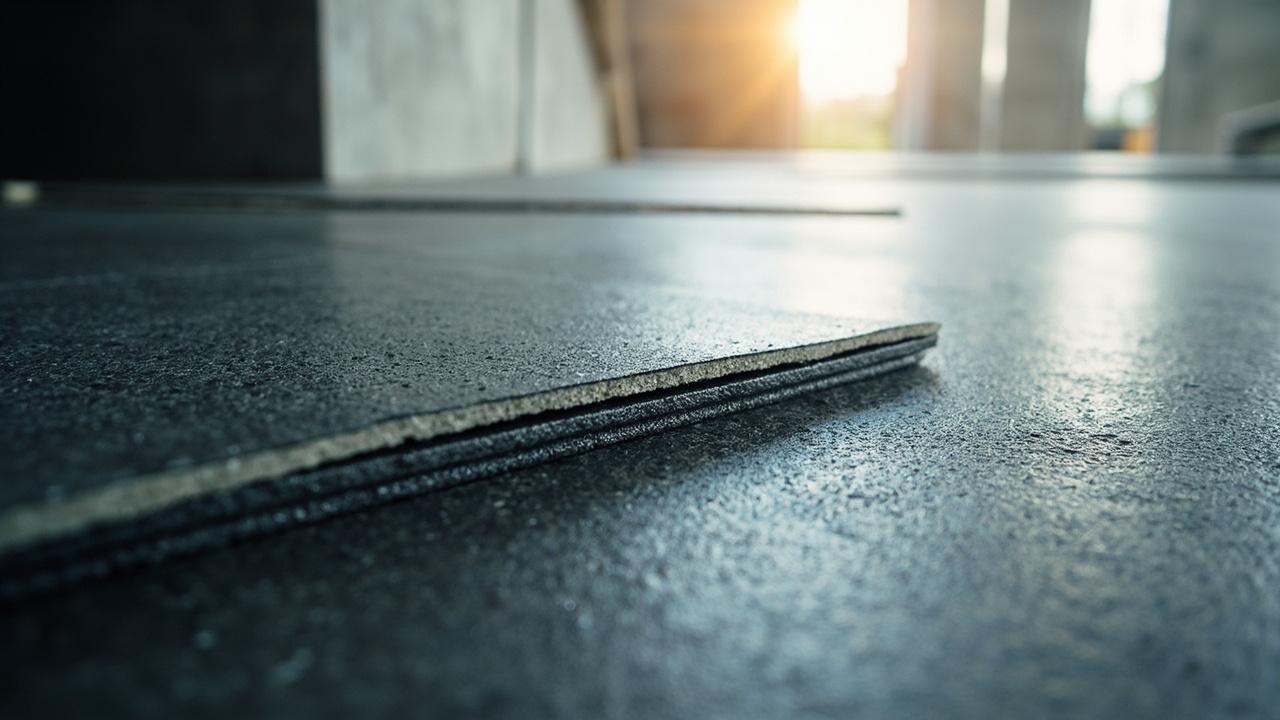

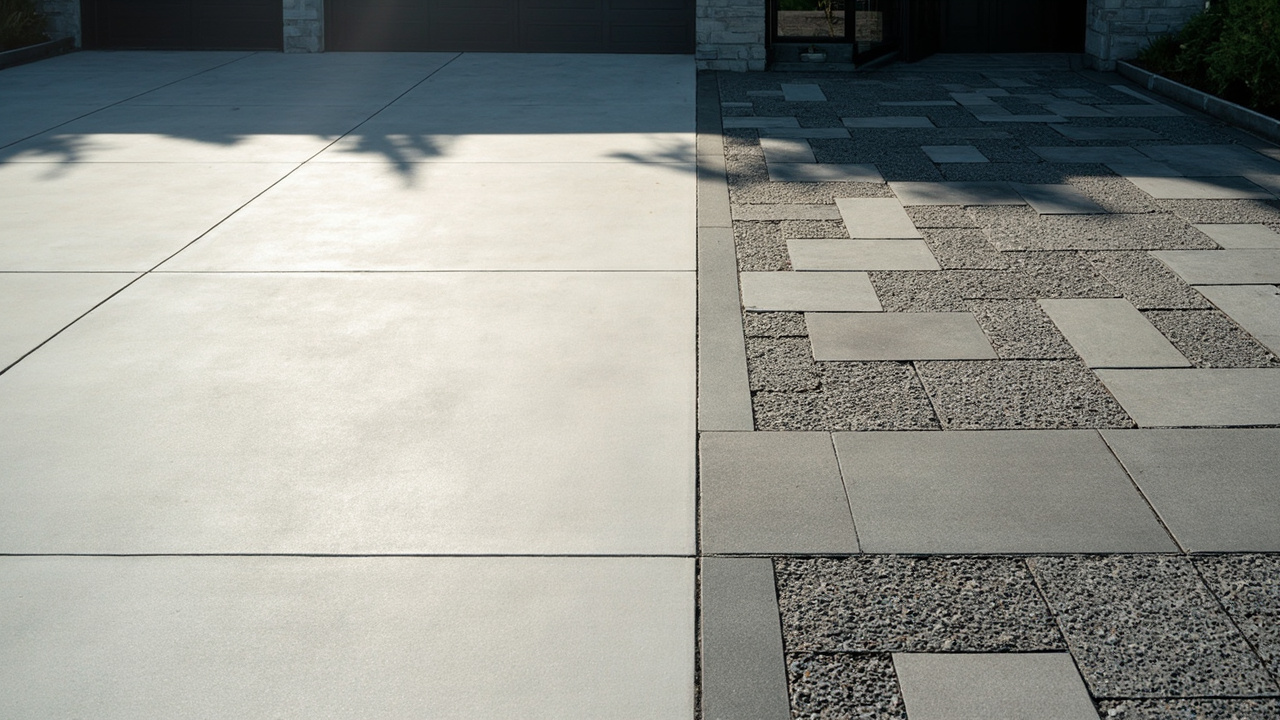
You are staring at two quotes for the same driveway: one for solid concrete, another for interlocking paver stones. The price difference confuses you because neither contractor explained why one costs more in labor but less in future repairs. The answer depends on your specific site conditions, such as soil stability and vehicle load. A concrete driveway is a poured, monolithic slab that requires precise formwork, whereas a paver driveway is a modular system of individual units laid on a graded stone base that allows for simple local repairs.
Core Material Differences: Poured Slab vs. Modular Stones
Poured concrete creates a continuous surface using cement, aggregate, and water that hardens into a single rigid unit. This structural integrity makes the slab stiff, but it cannot move much without cracking. Interlocking pavers are individual units, usually made from concrete masonry or natural stone, that sit on a flexible sand and gravel foundation. Because each paver moves slightly, the whole system tolerates soil shifts better than a rigid slab.
The distinction matters because failure modes are opposite. If the ground under a concrete slab sinks, the slab develops long, visible cracks that collect water and expand. With pavers, the same ground movement causes the units to shift or settle, but the surface remains walkable and the area can be dug up and re-leveled in a few hours. This flexibility is the primary mechanical advantage of modular systems over monolithic pours in unstable ground conditions.
Cost Comparison: Installation Labor vs. Long-Term Maintenance
Concrete installation typically ranges from $6 to $15 per square foot, including material and labor. The high upfront cost comes from skilled labor, formwork, and the need for curing time before use. Paver installation usually costs $8 to $20 per square foot, driven by the massive volume of aggregate required for the base and edge restraints. While pavers start higher, the cost curve flattens over time because repairs are localized rather than requiring full-slab patching.
Maintenance costs reveal the real trade-off. Concrete requires periodic sealing every three to five years to prevent staining and water penetration. Pavers need annual sweeping and occasional polymeric sand application to lock joints. A cracked concrete section often requires cutting, chipping, and repainting, which is expensive and visually distinct from the surrounding surface. A damaged paver section involves removing five to ten stones, replacing the base, and laying new units, a job a homeowner can often handle with basic tools.
Durability and Structural Performance Under Load
Concrete slabs handle heavy, static loads exceptionally well, typically supporting 4,000 to 5,000 pounds per square inch when properly reinforced with steel mesh. This makes them ideal for heavy trucks or commercial use. Paver systems rely on the stone base layer, which must be at least 6 inches of compacted crushed stone to distribute dynamic loads. If the base is thin or poorly compacted, pavers will separate under heavy vehicle weight, creating a bumpy surface that accelerates wear.
Weather resistance varies by material type. Standard concrete is porous and absorbs water, leading to spalling in freezing climates. Pavers, especially high-quality porcelain or brick varieties, have lower absorption rates and often exceed the durability of standard concrete in freeze-thaw cycles. However, the joints between pavers can shift if the edge restraint fails, so the system’s durability depends on the integrity of its perimeter confinement as much as the stones themselves.
Site Conditions That Change the Best Choice
Slope and drainage determine which material fails first. Pavers handle slopes up to 10% easily because the modular units follow the grade without stress. Concrete on slopes over 5% is difficult to pour and often requires additional formwork or texture treatment to ensure vehicle traction. In high-humidity areas with poor drainage, pavers allow water to drain through joints if designed with open permeability, while concrete channels water to low points, potentially causing erosion or pool formation.
Soil type dictates maintenance frequency. In expansive clay soils, the ground moves with seasonal moisture changes. Pavers tolerate this movement better because the system is flexible, whereas concrete slabs will crack along random lines. If your site has a stable, granular soil, concrete is a solid, low-maintenance option. If your soil is reactive or unknown, the modular nature of pavers provides a safety margin against structural failure caused by subsidence or heave.
Conditional Decision Guidance and Next Steps
Choose concrete if you prioritize a reliable, high-gloss finish and have a stable, well-drained site with moderate load requirements. Choose this option when budget is tight for long-term upkeep and you do not mind the visual impact of inevitable crack sealing. Choose pavers if you face soil instability, steep grades, or want the ability to repair specific sections without disturbing the entire surface. This option is superior for aesthetics and flexibility but demands a robust initial base installation to prevent shifting.
Before committing, verify the permit requirements for your local municipality, as some areas mandate specific permeability standards for both materials. For a deeper look at material properties, explore our concrete mix design strength and curing guide.