
If a contractor points to a pipe leaving your foundation and calls it the drain outlet, you need to know where that water goes and why the route matters. The answer is simpler than it sounds: the outlet carries collected groundwater beyond the foundation, while discharge determines where it can safely leave the property. Foundation drain outlet and discharge are the connected parts of a foundation system that move water away from a structure.
Foundation drain outlet and discharge: what each part does
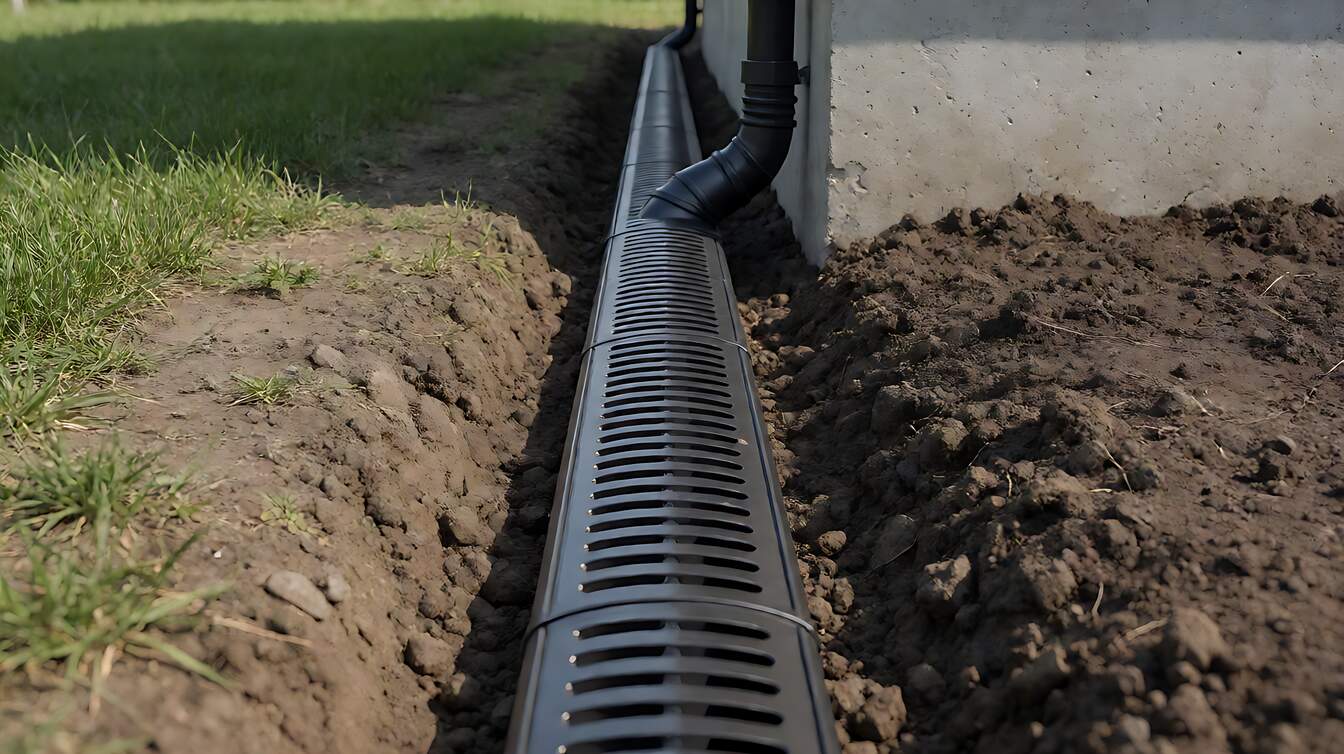
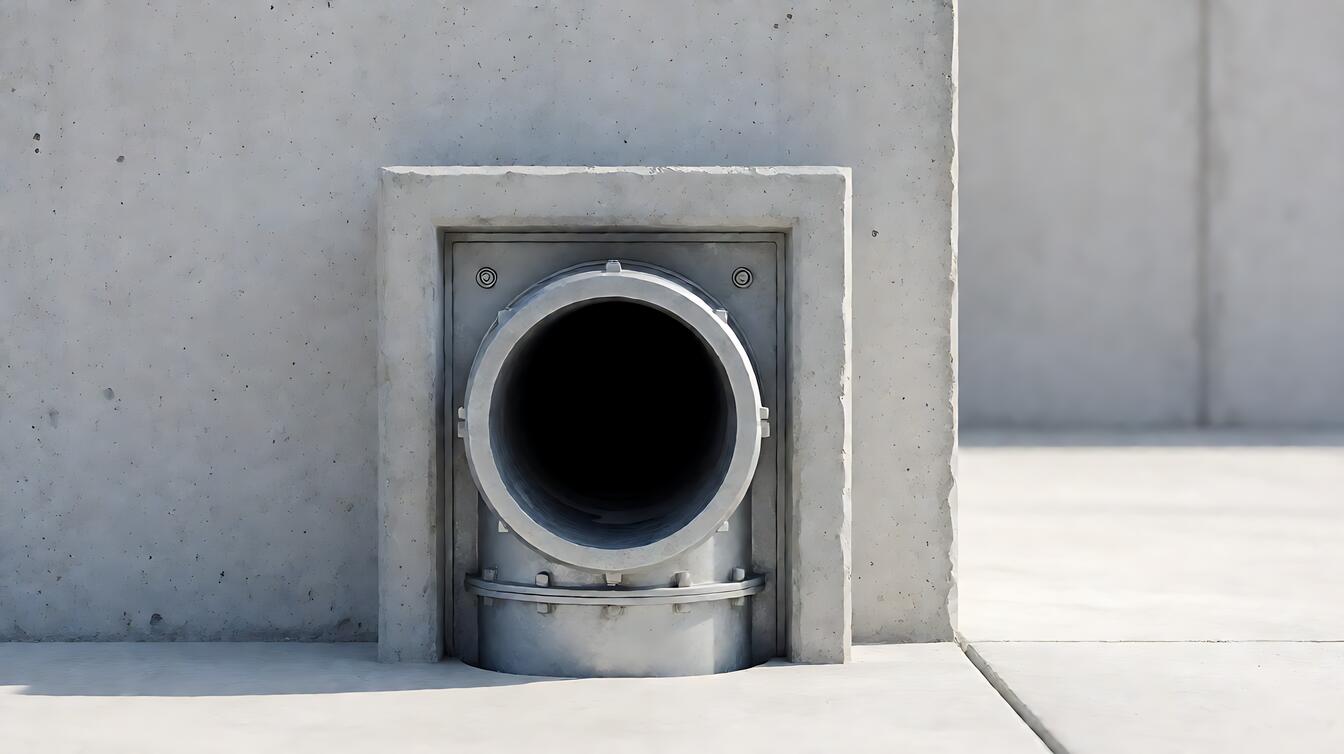
A foundation drain outlet is the pipe connection where the foundation drainage system releases collected water, while discharge is the route or destination for that water. In a wet area, this connection keeps groundwater moving away from the foundation rather than allowing it to accumulate beside the footing.
Those two jobs work together. The drain gathers water at the footing, the outlet carries it forward, and the discharge point gives it somewhere to go. If any link fails, the practical consequence is water backing up near the foundation systems that were supposed to stay dry.
For example, a yard drain connected to a 4-inch PVC pipe may discharge downhill into a garden area. That is a specific route, not proof that the route meets local requirements or that the receiving area can absorb the flow.
Understanding the full drainage arrangement also helps when comparing foundation types and their drainage needs. The foundation determines where water collects, but the outlet determines where it travels next.
How foundation drainage moves water away from the footing
Foundation drains work by collecting water that reaches the footing and directing it through a continuous outlet path. With proper installation and maintenance, foundation drains can last over 30 years, so the decisive detail is not merely having a pipe. It is keeping that pipe clear and confirming where it discharges.
The failure mechanism is direct. A clogged drain can redirect roof runoff toward a trapped pool around the building, which may flood the basement. In that situation, adding surface grading alone does not repair an obstructed outlet.
Material choice affects material durability only insofar as it helps the drain resist burial, soil pressure, and moisture without failing early. The grounding research does not establish a universal service life for every material variant, so pipe diameter, joint design, and installation quality cannot be reduced to a one-size-fits-all recommendation.
One field example shows why the destination matters. Downspouts were routed through 4-inch PVC piping extending 100 feet into a downhill backyard. The slope and outlet location appeared favorable, but the system still depended on clear flow, stable grading, and a discharge area that did not erode or send water back toward the house.
Choosing an outlet route when site conditions differ
A foundation drain outlet works best when the discharge path slopes continuously away from the foundation and ends in a location that can receive water without eroding soil or redirecting runoff toward the building. Choose a discharge route only after checking the path, the receiving area, and any code requirements that apply to the property.
Different conditions call for different decisions. In a wet area, dependable gravity drainage usually deserves priority over a cheaper route that holds water near the foundation. Where a tight budget rules out substantial excavation, the available route may still need an inspection rather than an improvised connection.
For sun-exposed pipe runs, UV exposure and heat can affect exposed components, but the grounding evidence does not support a general thickness or temperature limit. Use the pipe maker’s exposure guidance and obtain local drainage advice rather than guessing at a service allowance.
Here is the practical comparison:
| Site condition | Decision to make | Practical consequence |
|---|---|---|
| Wet area or recurring groundwater | Confirm a continuous, clear gravity route before choosing a less direct alternative. | Water that cannot leave may collect beside the foundation. |
| Sloping yard with an open discharge point | Check erosion and the distance from the building at the outlet. | Fast flow can still create erosion or a new drainage problem. |
| Sun-exposed pipe section | Use components approved for the exposure and install them as specified. | Protection needs come from compatible materials, not a guessed thickness. |
For the surrounding water-management strategy, see foundation drainage grading and French drain guidance. Grading and pipe discharge work together, but they are not interchangeable jobs.
What happens on a real foundation drainage job
A recognizable site symptom is water pooling around the foundation after rain while the discharge pipe appears connected. Before blaming the outlet, trace the full route and look for a blocked low point, crushed pipe, or discharge point sitting where water can return toward the building.
The outlet route is the first part of the diagnosis because a visible pipe may end at a buried obstruction. A worker can expose the pipe, verify its fall toward the discharge point, and check whether the receiving area remains stable after concentrated flow arrives.
Then inspect the inlet and collection system. If the foundation drain is clogged, the outlet cannot perform its job because water never reaches it. This distinction matters when comparing foundation crack repair and drainage causes, since a repair choice cannot replace a failed drainage route.
Do not connect a new discharge to a neighbor’s drain, public drain, or soakaway without checking ownership and local rules. The discharge destination can affect neighboring property, public infrastructure, and the site’s ability to handle the flow.
Limits, trade-offs, and the next action to take
A foundation drain outlet offers a simple gravity path, but simplicity depends on elevation, pipe condition, and receiving space. If the available route has poor fall, erosion risk, uncertain ownership, or no verified discharge location, a contractor should design an alternative rather than forcing the connection.
The honest trade-off is cost versus dependable performance. A short or inexpensive route may be attractive on a tight budget, yet it can fail if it holds water, erodes soil, or directs runoff back toward the foundation. Choose the route that protects the structure and receiving area, not simply the one with the shortest pipe run.
Drainage design can involve foundation waterproofing, soil grading, plumbing connections, and local code. Because a mistake can move water into a neighboring structure or undermine the site, consult a qualified drainage professional when the outlet route is uncertain or the work affects structural, electrical, or plumbing systems.
Use the foundation waterproofing system guide to see how drainage fits with the broader moisture-control plan. The next useful step is not buying a pipe. It is confirming the elevation, route, destination, and ownership of the discharge point.
Decision guidance for a foundation drain discharge
Choose a gravity discharge route when the pipe has a verified fall, the destination can receive the flow safely, and local rules permit the connection. This is the best starting point for a wet area where preventing accumulation around the foundation is the priority.
Ask for professional drainage design when the grade is uncertain, the outlet would sit below the required fall, erosion is likely, or the discharge would enter shared infrastructure. The evidence does not support treating an improvised connection as equivalent to a properly designed system.
- Choose the direct route when it slopes continuously away from the foundation and discharges in a stable, permitted location.
- Choose a designed alternative when excavation is limited, soil conditions are uncertain, or runoff could affect nearby property.
- Choose maintenance over replacement when inspection finds accessible blockage rather than failed pipe or an unusable discharge point.