
You hear “french drain” and imagine a simple gravel trench, but the real question is whether it will move water away from your foundation before the soil around it gets saturated. A french drain for foundation is a sloped trench containing a perforated pipe and surrounding drainage aggregate that intercepts groundwater and carries it to a safe discharge point. Here is how it works, where it fails, and how to choose.
French Drain for Foundation: What It Is and the Direct Answer
A french drain for foundation is a sloped trench built with a perforated pipe, drainage aggregate, and a controlled outlet. Unlike a surface channel that carries runoff across the yard, it intercepts water moving through soil around the foundation.
The decisive attribute is not the gravel. It is the continuous outlet. A trench that collects water but ends in a low spot becomes a long reservoir beside the building, which can leave foundation soils wetter than before.
Choose a french drain when water needs to reach a known discharge point. If the outlet is uncertain, consult a drainage professional before digging. Foundation work crosses into structural and drainage decisions that deserve a site-specific look.
For the wider picture, start with foundation drainage and grading options, then use this page to understand the drain itself.
How a French Drain Works, With the Numbers That Matter
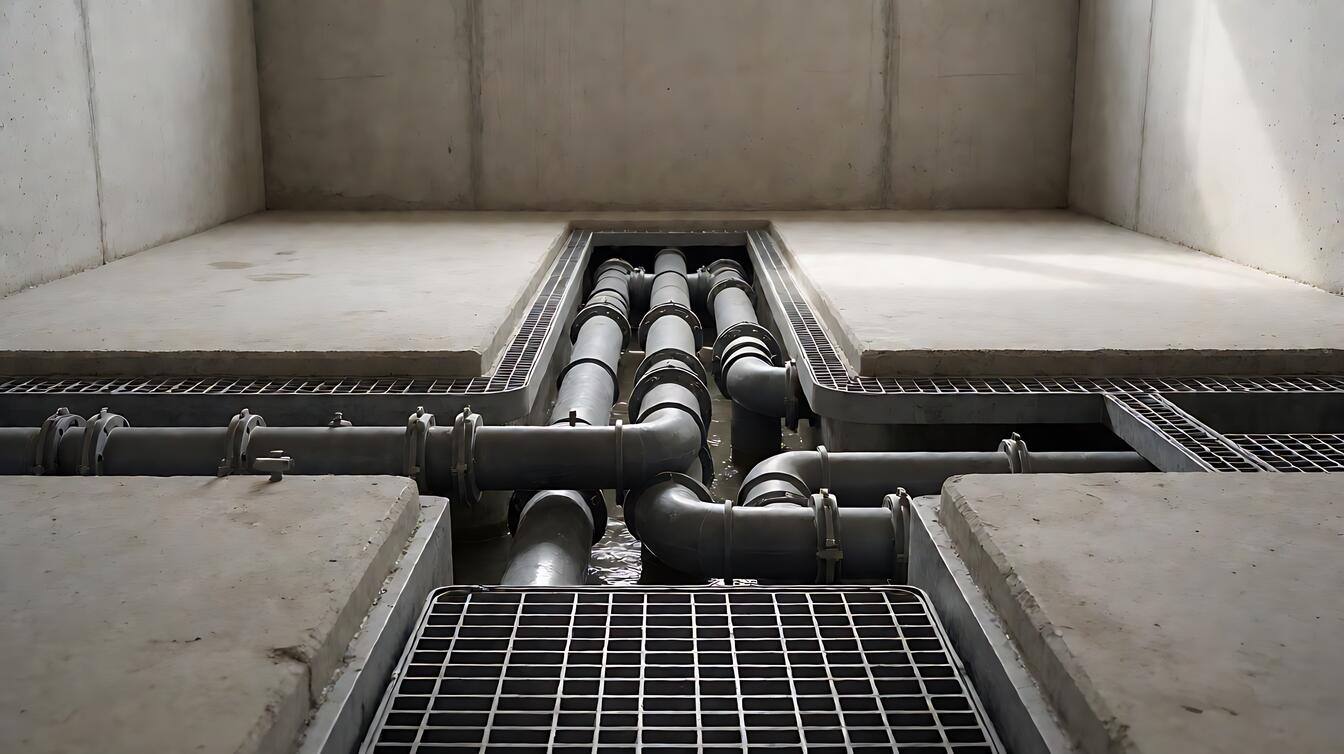
Water enters a french drain through permeable drainage aggregate, reaches perforated pipe, and travels downhill through the pipe. Gravity does the work continuously, without a pump, provided the trench has a reliable fall and an outlet that does not pond.
The trench width should be 5 to 6 inches, and it does not need to be wider than 6 inches. That constraint matters because a wider excavation removes more soil from the root zone and creates more area that can settle later.
For the pipe, 4-inch or 6-inch perforated pipe is the usual starting point. Pipe diameter should follow the expected water volume, trench length, and available outlet capacity, not just the length of the foundation wall.
| Component | Practical measurement | Decision it changes |
|---|---|---|
| Trench width | 5 to 6 inches | How much soil is disturbed |
| Pipe diameter | 4 or 6 inches | How much water the drain can carry |
| Outlet | Must sit below the trench | Whether water can leave the site |
When to Choose Each French Drain Option
A gravity french drain is the practical default when a downhill outlet is available. Choose it for a wet area where saturated soil repeatedly reaches the foundation and a safe discharge point sits below the pipe.
A perforated pipe drain with an approved outlet is appropriate when you need a defined collection line. Use 4-inch pipe for shorter runs and 6-inch pipe when the run, collected volume, or outlet capacity calls for more capacity.
Choose a dry well only when the surrounding soil can accept the water over time. In high humidity or a saturated clay area, infiltration tends to fail, so diverting the flow to a dependable outlet matters more than dispersing it nearby.
Keep a french drain away from large trees and structures whose roots or foundations could be affected. Tight budgets also deserve honesty: a shorter drain that solves the actual wet zone often beats a full-perimeter installation that has not been assessed.
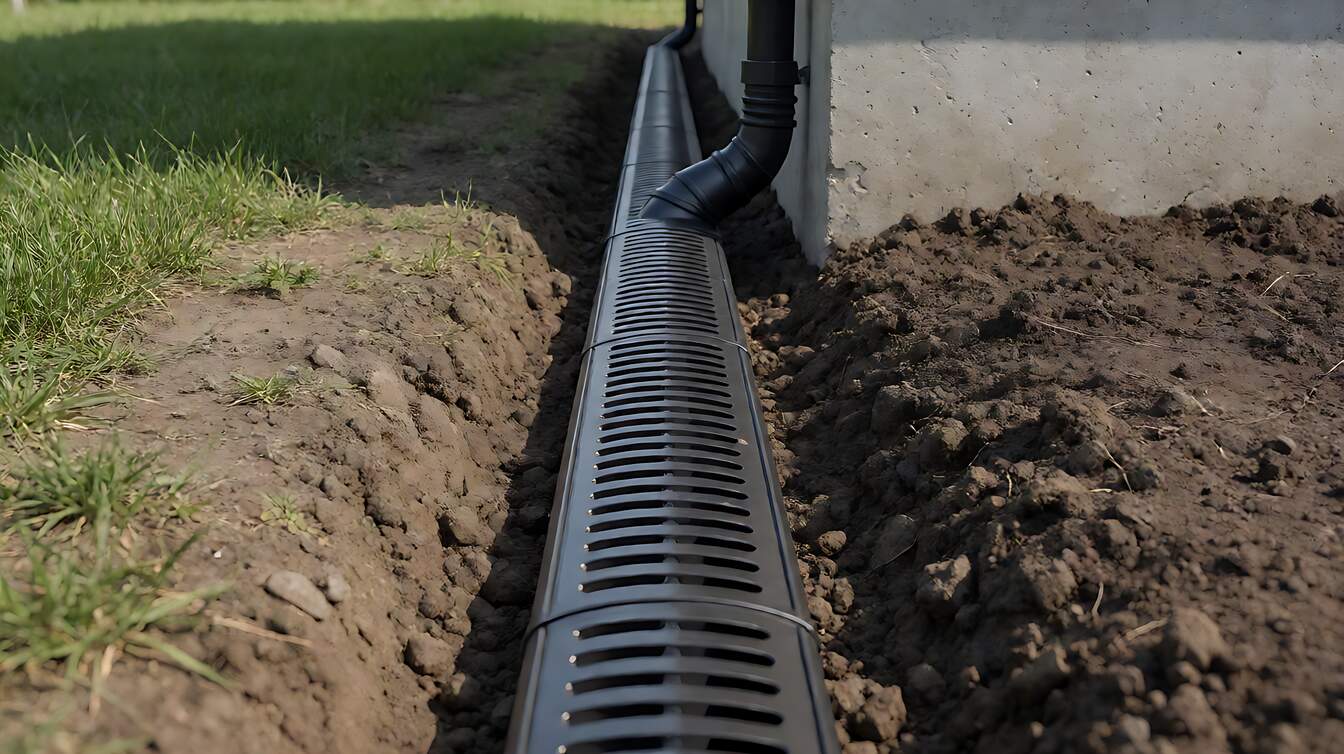
Real Job-Site Reality: Where French Drains Fail
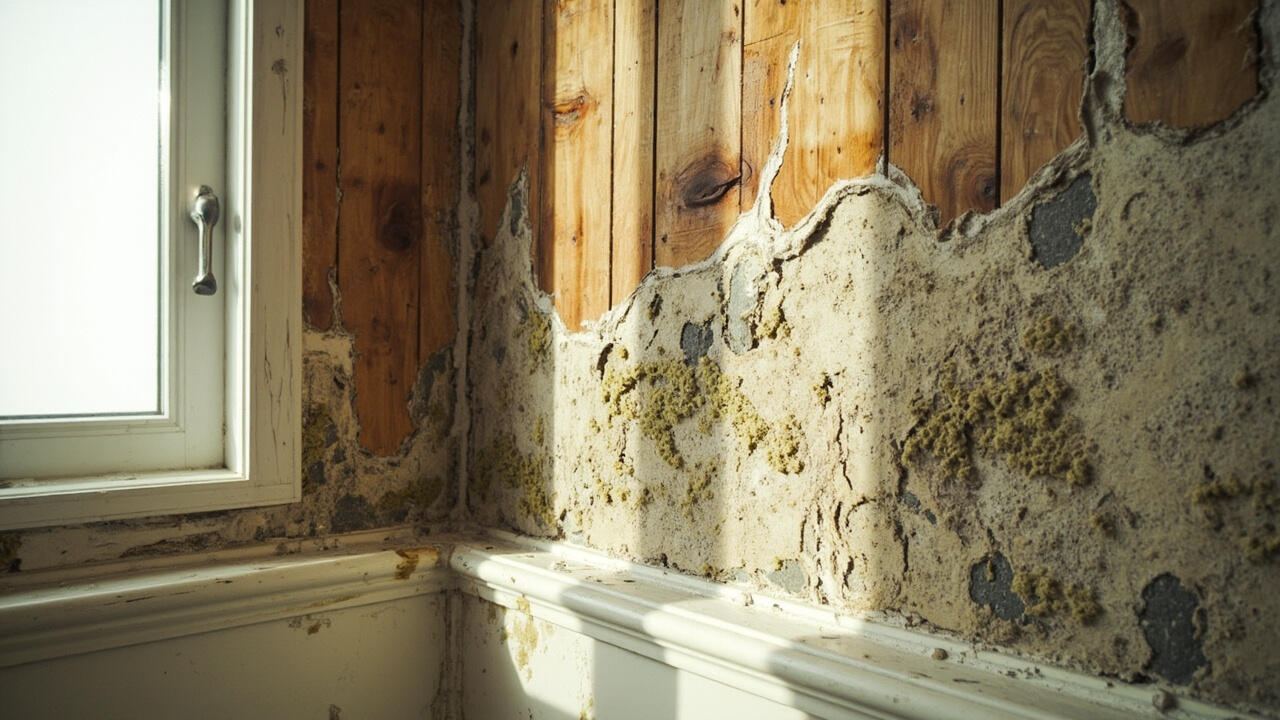
Picture a basement wall that stays damp after a heavy rain, while the yard on that side sits slightly lower than the house. That symptom often points to water arriving from uphill and lingering in compacted soil beside the foundation.
The instinct is to widen the trench. Resist it. A trench wider than 6 inches disrupts more soil and more roots, yet it still will not fix a poor drainage outlet. The grading, pipe fall, and discharge point decide whether water keeps moving or simply collects nearby.
On site, the sequence matters. First, confirm where the water comes from. Then, locate a legal and physically lower discharge point. Only after those two answers are clear does excavation add value.
Here is the practical order of work:
- Trace the wet zone during and after rain, noting where water enters and where it collects.
- Confirm a discharge point that sits below the pipe and will not send water toward neighboring properties.
- Excavate a trench 5 to 6 inches wide, keeping the excavation as narrow as practical.
- Set 4-inch or 6-inch perforated pipe with a continuous fall toward the outlet.
- Backfill around the pipe with drainage aggregate and protect the pipe from damage during backfill.
- Restore the surface carefully so it sheds water away from the foundation.
Finish by watching the area during rain. A drain that performs correctly should show less standing water and fewer damp patches, not merely a tidier trench.
Limits, Trade-Offs, and What to Do Next
The main durability trade-off is between a simple gravel trench and a fully engineered system. Aggregate and pipe can manage soil water, but neither fixes settlement, roof runoff, or a neighboring slope directing water toward the house.
Material choices also carry consequences. A rigid pipe supports alignment and resists soil movement better in some conditions. Flexible pipe tolerates shifting ground, although the tradeoff is fewer precise control points across a long run.
Choose corrugated flexible pipe when the run crosses uneven ground and dependable slope matters more than tight joint control. Choose a rigid pipe system when the trench is straight, bedding is stable, and the installer can maintain consistent fall.
Know the failure limits. A french drain will not stop a rising water table, reverse groundwater flow, or repair a structural foundation problem on its own. For foundation cracks that continue moving or leak repeatedly, shift from drainage to a repair assessment such as foundation crack evaluation and repair.
Your foundation type also changes what you are solving. Compare foundation types from slab to crawl space to basement before assuming the same perimeter detail fits every home.
Decision guidance:
- Choose a gravity french drain when you have a reliable lower outlet and recurring soil-water intrusion.
- Choose a narrower trench and 4-inch pipe when the problem area is short and the available flow volume is modest.
- Choose 6-inch pipe when the run is long or the collected volume exceeds what a smaller line can carry.
- Call a drainage professional when the outlet, soil conditions, or foundation movement are unclear.
For a broader look at keeping water outside the structure, compare foundation waterproofing systems. Drainage and waterproofing solve different problems, and the foundation usually needs whichever one matches the actual water source.