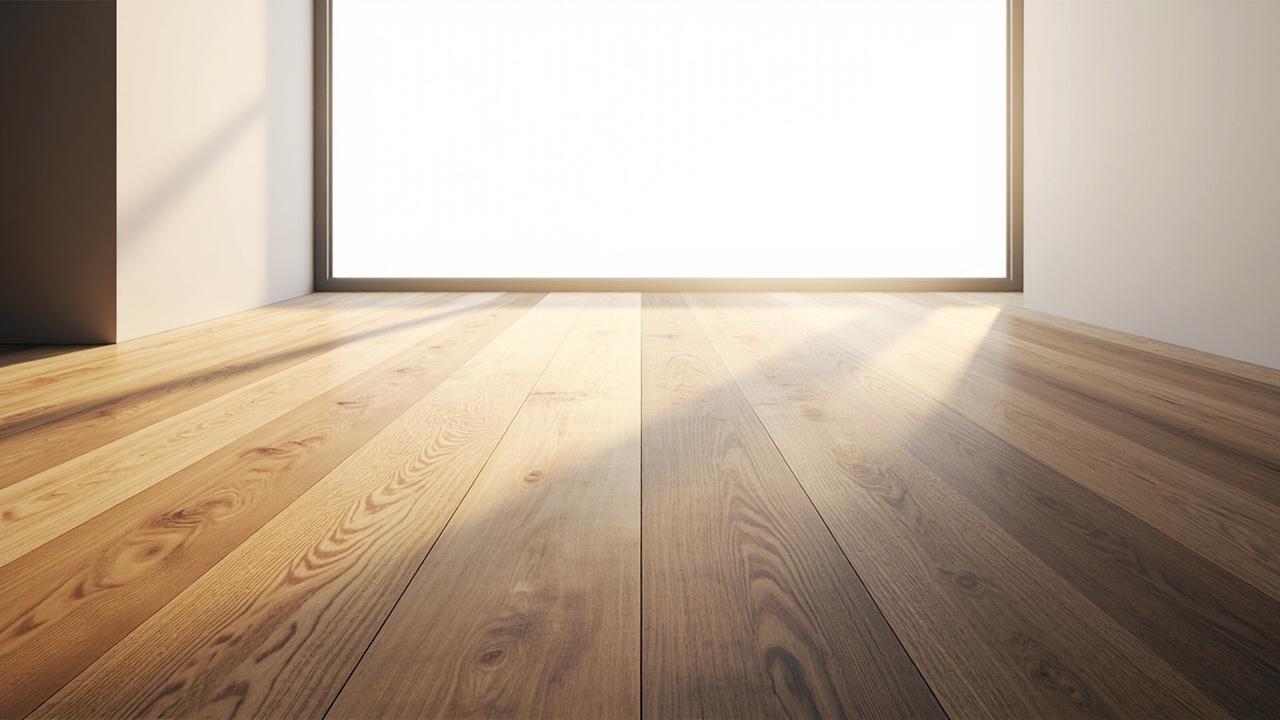

Laminate flooring looks like timber, feels solid underfoot, and costs a fraction of hardwood — but the material is nothing like solid wood. Every plank is an engineered stack of four distinct layers, and the quality of that stack determines whether the floor survives five years or twenty-five in a humid, high-traffic home.
This article breaks down what laminate flooring is actually made of, which specifications matter in tropical and subtropical conditions, and the material myths that lead to expensive replacements.
What the four layers do
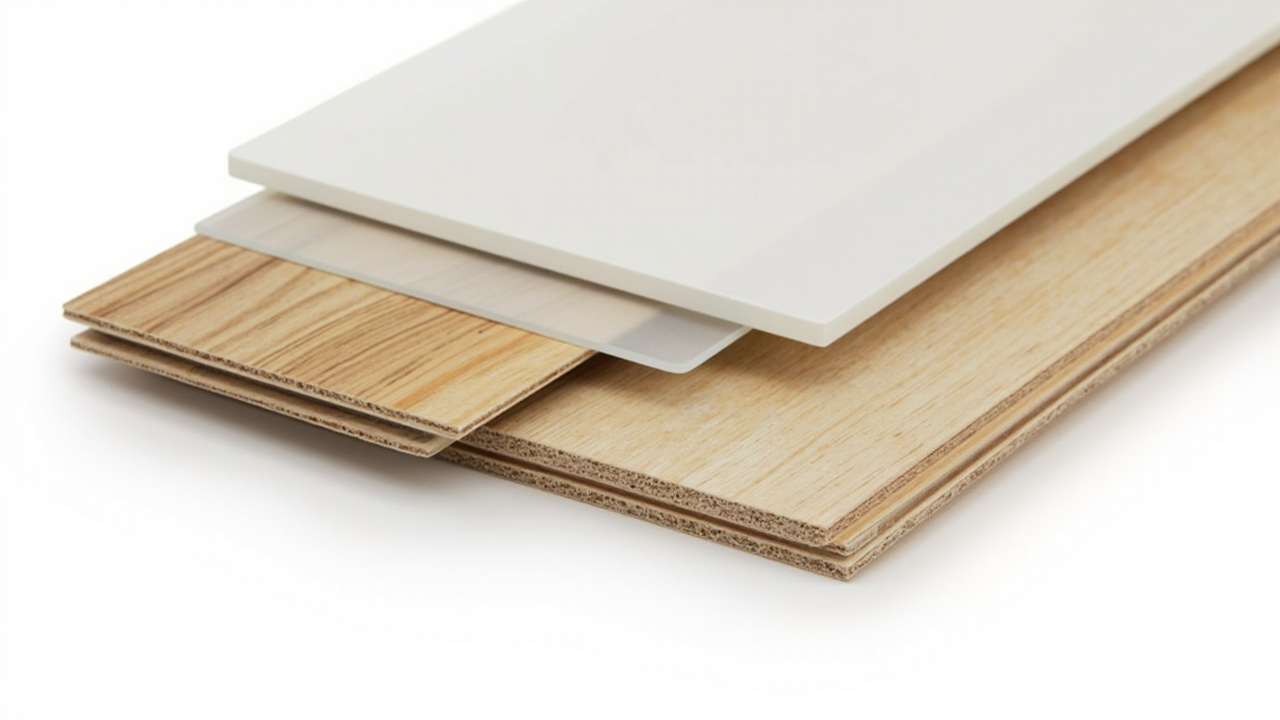
Every laminate plank is a fusion of four functional layers, each solving a different problem. Understanding them makes spec sheets less confusing and buying decisions clearer.
Wear layer — the invisible shield
The topmost layer is a clear coating of melamine resin infused with aluminium oxide particles. This is what resists scratches from pet claws, grit, and furniture movement. Wear-layer thickness ranges from about 0.1 mm on budget boards to 0.6 mm or more on commercial-grade products. Below about 0.3 mm, the surface tends to show wear within a few years in hallways and kitchens.
Decorative layer — the photograph
Directly beneath the wear layer sits a high-resolution printed film, typically 300-600 dpi, that replicates wood grain, stone, or tile. The realism of this layer is what separates a convincing floor from an obviously synthetic one. Higher-end products use embossed-in-register (EIR) texture, where the physical grain aligns with the printed pattern — the surface feels as realistic as it looks.
Core layer — the structural backbone
The thickest layer is the core, and it does most of the engineering work. Nearly all residential laminate uses high-density fibreboard (HDF): compressed wood fibres bonded with resin under intense heat and pressure. HDF density typically exceeds 850 kg/m³, and it accounts for roughly 60–70% of the plank’s total weight. This core provides impact resistance, dimensional stability, and the rigidity that holds click-lock joints together over time.
Backing layer — the moisture barrier
The bottom layer is a melamine-infused stabilising sheet that resists moisture rising from the subfloor and prevents the plank from warping. In humid climates, this backing is the first line of defence against the swelling that ruins laminate floors.
How specs translate to real performance
Specification numbers only matter when they connect to actual living conditions. Here is what the common ratings mean in practice.
AC rating — scratch and traffic durability
The Abrasion Class (AC) rating runs from AC1 (light residential) to AC5 (heavy commercial). For most homes, AC3 handles general living areas; AC4 is the safer choice for kitchens, hallways, and homes with pets or young children. AC5 is commercial-grade — useful in retail or office spaces but over-specified for a bedroom.
Thickness — feel, sound, and stability
Plank thickness ranges from 6 mm to 12 mm. Six-millimetre boards feel thin underfoot and tend to sound hollow without quality underlayment. Eight millimetres is the practical baseline for residential use. Ten to twelve millimetres feels more solid, bridges minor subfloor imperfections better, and dampens footfall noise — useful in upstairs rooms and open-plan layouts.
Core density — the hidden variable
Not all HDF cores are equal. Budget laminate sometimes uses medium-density fibreboard (MDF), which ranges from 600-800 kg/m³. MDF is softer, swells more readily with moisture, and holds click-lock joints less securely. In tropical humidity, the difference shows up within the first wet season: MDF-core planks tend to swell at the seams, creating visible ridges. HDF-core planks resist that movement measurably better.
In practice, experienced installers check core density before committing to a large install — a denser core costs more upfront but avoids the callbacks that come from swollen joints eighteen months later.
What works in tropical and subtropical climates
High humidity, heavy rainfall, and consistent warmth accelerate every failure mode laminate is prone to. Material selection shifts accordingly.
Moisture resistance is non-negotiable
Standard HDF absorbs moisture through any exposed edge or seam. In tropical conditions — where indoor humidity regularly sits above 70% — that absorption leads to swelling, peaking at the joints, and eventually delamination of the wear layer. Waterproof or water-resistant laminate, with sealed edges and a treated core, is a practical minimum for ground-floor rooms, kitchens, and entryways.
Thermal expansion needs room to move
Laminate expands and contracts with temperature and humidity changes. Installers leave a 10-12 mm expansion gap around the perimeter — without it, the floor buckles and peaks in the centre of the room. This is not optional; it is structural.
Underlayment does more than soften the step
A quality underlayment — foam, cork, or rubber composite — provides moisture barrier, sound dampening, and minor subfloor levelling. In humid climates, the moisture barrier function is as important as the comfort. Skimping on underlayment to save a few dollars per square metre is a common mistake that shows up as hollow sound and moisture damage within two years.
Common material myths
Several persistent misconceptions lead homeowners to overpay for the wrong spec or underperform on the right one.
Myth: laminate is just plastic
The wear layer is synthetic melamine, but the core is real wood fibre — HDF is a wood-composite product, not plastic. This is a meaningful distinction from luxury vinyl plank (LVT), which is entirely synthetic. Laminate feels more solid underfoot because the HDF core is denser and more rigid than plastic alternatives.
Myth: thicker always means better
Thickness improves feel and sound, but core density matters more for durability. A 10 mm plank with a low-density MDF core will swell and fail faster than an 8 mm plank with a high-density HDF core in the same humid room. Check both numbers, not just thickness.
Myth: waterproof laminate is a marketing gimmick
Waterproof laminate has improved substantially. Products with sealed click-lock joints, wax-treated edges, and water-resistant cores now carry warranties ranging from 24-hour spill protection to lifetime waterproof guarantees. The limitation is that “waterproof” typically refers to surface spills and occasional moisture — not prolonged standing water or below-grade installation. Read the warranty language carefully.
Verification checklist before buying
Use this short list when comparing laminate flooring products in-store or online.
- AC rating: AC3 minimum for bedrooms, AC4 for kitchens, hallways, and active households
- Core type: HDF, not MDF — check the density rating if listed (aim for 850 kg/m³ or higher)
- Thickness: 8 mm minimum for residential, 10-12 mm for upstairs or open-plan areas
- Wear layer: 0.3 mm or thicker for any room with regular foot traffic
- Water resistance: Waterproof or water-resistant for ground floor, kitchen, bathroom-adjacent areas
- Warranty: Check what the waterproof warranty actually covers — spills, standing water, or humidity
- Underlayment: Budget for quality underlayment with integrated moisture barrier in humid climates
The material decision comes down to matching the spec to the room’s actual conditions — traffic level, moisture exposure, and subfloor quality. A floor that performs well in a dry bedroom may fail within a year in a humid kitchen. Choose the spec for the harder job, and the easier rooms take care of themselves.