
Walk into any flooring showroom in 2026 and you’ll see a row of planks that look like oak, walnut, or pine — but they’re stamped with the word laminate and priced at a fraction of solid wood. Two of those planks will look almost identical in the hand. They won’t behave the same way once they’re on your floor for five years.
The honest answer to “what is laminate flooring?” isn’t just “a cheaper wood-look floor.” It’s a layered plank built around a high-density fibreboard core, a printed photograph, and a clear wear layer — and that construction is exactly what makes it strong, affordable, moisture-sensitive, and impossible to refinish. Understanding that mix is what separates a 15-year floor from one that buckles in the second summer.
What Laminate Flooring Actually Is (And What It Isn’t)
Laminate flooring is a composite product that replicates wood, stone, or tile without using those materials as the structural component. At its core is a high-density fiberboard (HDF core) that gives the plank rigidity and dimensional stability. Above that sits a photographic design layer — a high-resolution printed image. On top is a transparent melamine wear layer that resists abrasion, stains, and fading. Below the HDF core, a backing layer (also melamine-impregnated) protects against moisture wicking up from the subfloor.
What laminate flooring is not is wood, plastic, or tile. It cannot be sanded or refinished like hardwood. It does not flex like luxury vinyl plank (LVP) or stone-plastic composite (SPC). Its click-lock floating floor installation expands and contracts as a single sheet — both a strength and a vulnerability. The entire system depends on correct AC rating (Abrasion Class) selection: an AC3 plank in a heavy commercial corridor shows wear in three years; an AC5 in a bedroom is overkill.
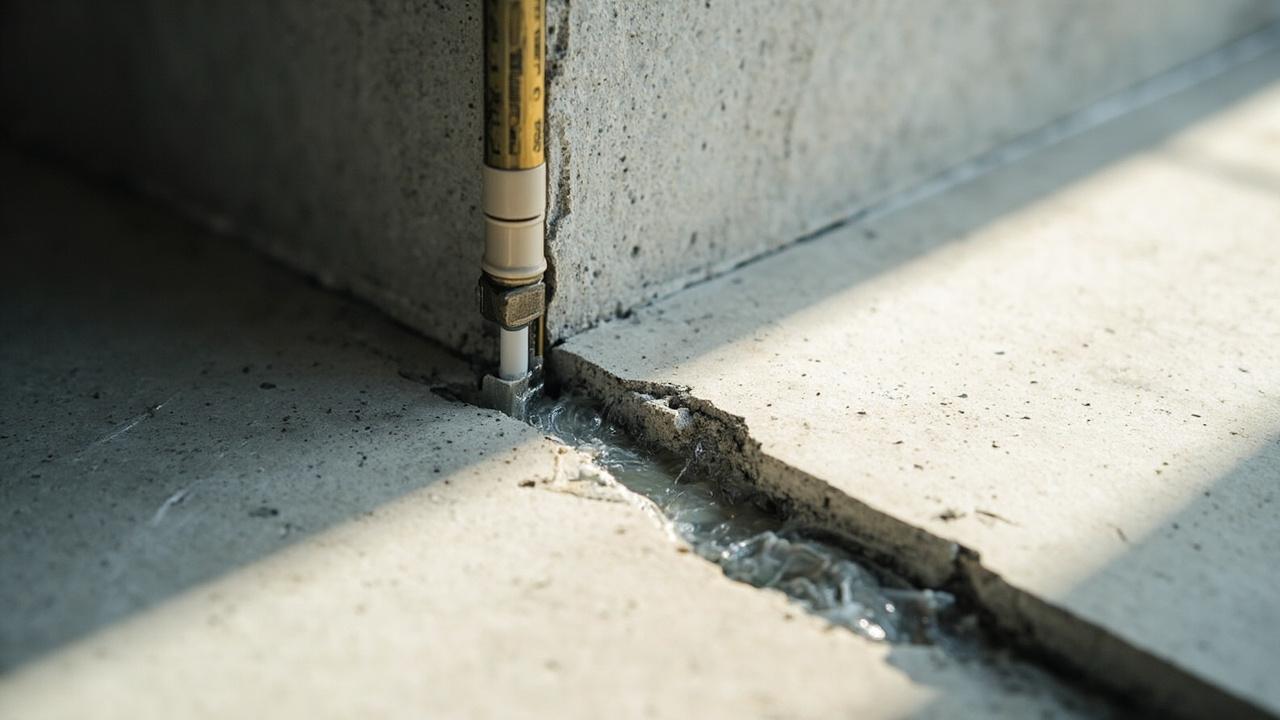
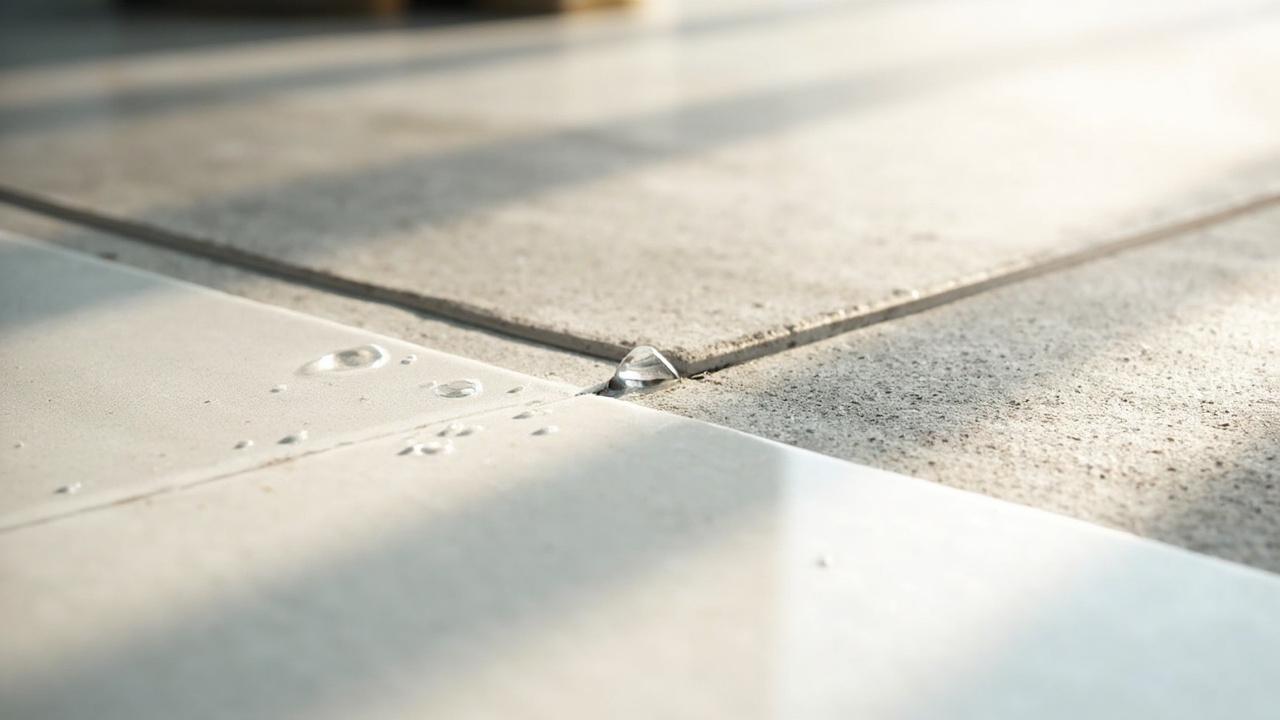
In the field, an experienced installer usually traces a failed laminate floor to one of two root causes: moisture penetration through the seams or an out-of-flat subfloor. Neither has anything to do with the colour or the brand. Install it on concrete without a vapour barrier and you can predict the pre-order for a replacement floor within the same decade.
How a Laminate Plank Is Built (The Four Layers)
Every laminate plank sold under a reliable AC rating shares the same four-layer architecture. The order matters:
- Wear layer (melamine) — Transparent overlay of melamine with aluminum oxide. The Taber abrasion test measures rotations until the design layer appears; AC4 (≥4000 cycles) is the residential standard.
- Design layer (printed photo) — A high-resolution digital image of wood grain, stone, or pattern. Premium planks randomise the repeat so the same board rarely appears twice in a room.
- HDF core (6–14 mm) — Compressed wood fibres with a resin binder. Thicker cores (10–12 mm) feel more solid underfoot and telegraph subfloor imperfections less.
- Melamine backing layer (balancing layer) — A moisture barrier on the underside that resists the humidity differential between the floor and the subfloor. Without it, the plank would cup when the subfloor is damp.
Snap a premium 12-mm plank in half: the white HDF core, printed picture, and clear melamine top are all visible — paper-thin on entry planks, thicker on midrange and above. The AC rating AC1–AC6 corresponds directly to the wear layer thickness. That rating is the single most important number on the box because it tells you how much traffic the surface can take before the print begins to show. Read more on AC rating AC1–AC6 for the exact room-by-room recommendation.
Laminate Flooring vs LVP vs SPC vs Engineered Hardwood
In 2026 the floor-aisle conversation usually starts with “I want waterproof, but I don’t want plastic.” That’s where this comparison earns its keep — sealed HDF and SPC (stone-plastic composite) behave nothing alike under standing water.
Luxury vinyl plank (LVP) uses a PVC core that is inherently waterproof. It is softer underfoot, warms up faster, and can be installed in full bathrooms and basements. But it lacks the rigid, solid feel of a laminate plank. LVP is 100% waterproof; laminate is water-resistant at best.
Stone-plastic composite (SPC) is a rigid-core vinyl with a limestone-based centre. It is completely waterproof, dimensionally stable to within 1 mm over 5 m, and can often be installed over minor subfloor irregularities. Its downside: it feels harder and colder underfoot, and its surface is more prone to denting under heavy furniture than a laminate’s HDF core.
Engineered hardwood has a real wood veneer (2–6 mm) glued over plywood or HDF. Refinishable once or twice, lifespan 25–50 years, costs 2× to 4× more than laminate, requires climate control. Solid hardwood is the high-end benchmark — sandable 3–4 times, 50+ year life — but expands aggressively with humidity and needs professional installation.
Where does laminate win? For a renovation under $4.00 per sq ft installed in a medium-traffic living room or hallway, laminate’s Taber abrasion rating outperforms vinyl at the same price. Where it loses: anywhere water sits regularly, or where the homeowner expects to refinish in two decades. See top laminate brands 2026 and the waterproof laminate guide to refine your choice.
Where Laminate Flooring Works (And Where It Doesn’t)
Most laminate failures trace back to two conditions: surface water sitting longer than an hour, or a slab not level within 3 mm over 2 m. Both are preventable at install time.
High-traffic hallways are a natural fit for laminate at AC4 or higher; the hard surface withstands foot traffic and the floating system accommodates subfloor movement. Basements (below-grade) are a risk: concrete wicks moisture year-round and the HDF core can swell over time even with a 6-mil vapour barrier. If the basement stays under 60% RH and drains work, laminate can work. With a history of damp spots, choose LVP or tile.
Full baths only demand a 100% waterproof floor. Laminate — even the best “waterproof” lines — is water-resistant, not waterproof. A guest half-bath with wiped spills may be acceptable; a full bath with daily showers and burst risk needs vinyl, tile, or a waterproof membrane. Kitchens sit in the middle: surface spills wipe in seconds, but a dishwasher leak or 20 minutes of standing water can swell HDF edge seams. Laminate in a kitchen works if you are vigilant and choose a product with a Hydroseal edge coating.
Rental properties suit laminate: affordable, durable at AC4, quick to install. Landlords typically budget $2.50–$4.00 per sq ft and expect 8–12 years of life. Direct sunlight fading is real — UV lightens the design layer; window film or rugs help. Acclimation 48–72 hours in the room before install prevents post-install contraction. Subfloor flatness tolerance is 3 mm over 2 m; humps must be ground or self-levelled first.
In practice, the failure mode that shows up most often is a floor that was installed on a damp slab or over an existing vinyl that was already trapping moisture. The surface looks fine for 18 months and then the seams start to go. That’s why the room-by-room evaluation matters more than the brand on the box. See laminate problems for a deeper dive on swelling, buckling, and gapping.
Is “Waterproof Laminate Flooring” Real in 2026?
Walk into a big-box store and you will see “100% waterproof” printed on laminate boxes from Pergo, Mohawk, Quick-Step, and Shaw. It is marketing — and not entirely false, but incomplete. A waterproof vs water-resistant distinction matters more than any single brand label.
Two mechanisms deliver water resistance: a sealed HDF core that resists absorption, and Hydroseal edge coating that blocks the tongue-and-groove joint. Pergo WetProtect uses a wax-based edge seal plus a built-in underlayment dam. Mohawk RevWood Plus uses an acrylic-infused HDF core that swells under 10% after 24 hours of standing water. Quick-Step Impressive Ultra has a pressure-sealed drop-lock. Shaw Repel uses a fluorochemical treatment on core fibres.
The honest read: a “waterproof” laminate plank survives a 24-hour standing water test in a lab. The seams stay intact and the HDF core does not dissolve like MDF. But the core still absorbs humidity over weeks if the subfloor is perpetually damp. It cannot handle the moisture of a full bathroom or a basement that floods annually. An SPC vinyl core is genuinely 100% waterproof because limestone-plastic composite has zero wood fibre.
For practical purposes: laminate labelled “waterproof” in 2026 is water-resistant enough for a kitchen with a vigilant homeowner, but not for a bathroom. If you need a floor that can survive a toilet overflow, choose SPC or tile. If you want the field test on a 24-hour pool of water, the brand-by-brand breakdown is in the waterproof laminate guide.
What a Laminate Flooring Project Actually Costs in 2026
The single number most homeowners get wrong is the labour line. A $2.99/sq ft installed quote becomes $4.99 once underlayment, transition strips, and removal are added. The honest budget adds every line.
Materials per sq ft — Entry-level AC3 planks run $0.60–$1.50. Midrange AC4 with sealed edges runs $1.50–$3.00. Premium AC5 runs $3.00–$4.00. Underlayment per sq ft — Foam underlayment ships with many planks; a 6-mil vapour barrier adds $0.15–$0.30; acoustic underlayment adds $0.40–$0.60. Labor per sq ft — Pro install for a 500 sq ft room runs $1.50–$3.00 depending on region and complexity. Old flooring removal ($0.50–$2.00/sq ft) — Carpet is cheap to remove ($0.50); tile removal hits $1.50–$2.00 due to breakage.
So a 500 sq ft project total ($2,500–$7,500) breaks down as: $2,500 for entry-level (materials $1.00 × 500 + underlayment $0.20 + labour $2.00 + removal $1.00 = $2,100, plus transition strips and thresholds at $15–$30 each). Premium hits $7,500 with AC5 at $3.50, acoustic underlayment at $0.60, labour at $3.00, and a full moisture barrier (6-mil) at $0.30.
The hidden variable is the subfloor. If concrete needs levelling (self-levelling compound at $0.50–$1.00/sq ft), add another $250–$500. DIY removal saves $250–$1,000. The most common mistake is assuming a $3.00/sq ft quote covers everything — it almost never includes transition strips, removal, or subfloor prep. Full cost breakdown 2026 provides a downloadable quote-comparison checklist.
Is Laminate Flooring Right for Your Project?
This decision comes down to three variables: room moisture level, traffic intensity, and budget. Use this first-time homeowner checklist:
- Which room? Living room, hallway, bedroom, or den — laminate works. Full bath or below-grade basement — choose SPC, LVP, or tile.
- How many people and pets? For heavy daily traffic (family of four with dogs), choose AC4 or AC5. For a rarely used guest room, AC2 or AC3 is fine.
- AC rating by room: Bedrooms = AC3; Living rooms = AC4; Hallways = AC4–AC5; Rentals = AC4.
- Subfloor condition: Concrete must be dry and flat within 3 mm over 2 m. Plywood can have 5 mm over 2 m. Existing vinyl is risky if cushioned — moisture trapped under cushioned vinyl swells HDF.
- Budget per room: Budget under $3/sq ft installed → AC3 mid-range, expect 7–10 years. Over $5/sq ft installed → AC4 sealed edge, realistic 15–20 years. Anything below $2/sq ft installed in a full bath is a 5-year floor.
- Expected lifespan (10–20 year) depends on AC rating, installation quality, and moisture management. A low-traffic bedroom with AC3 can last 20 years as a secondary floor. A kitchen with AC4 and spills may need replacement at 10 years.
- Call a pro when: Subfloor slope exceeds 3 mm over 2 m, the room has 6+ doorways or an irregular shape, or you can’t operate a jigsaw for door jambs. Acclimation 48–72 hours in the room is mandatory.
If your priority is a floor that looks like wood, costs less than $5/sq ft installed, and lasts 10–15 years in a dry room, laminate is a strong choice. If you need standing-water handling or refinishing later, consider engineered hardwood or SPC vinyl. The guides above will help you choose the right next step.