
The two most popular wood-look floors in 2026 are also the two most often confused: laminate and LVP (luxury vinyl plank, including the rigid SPC version). At a glance, both click-lock, both show convincing oak grain, both come with attached underlayment. The price tags overlap.
So which one belongs in your room? The honest answer depends on one variable above all others: how much water will this floor actually see. This comparison maps the four trade-offs — water, scratch, comfort, price — and gives a decision rule that holds across bedrooms, kitchens, basements, and mixed-floor layouts.
What They Actually Are (Core and Construction)
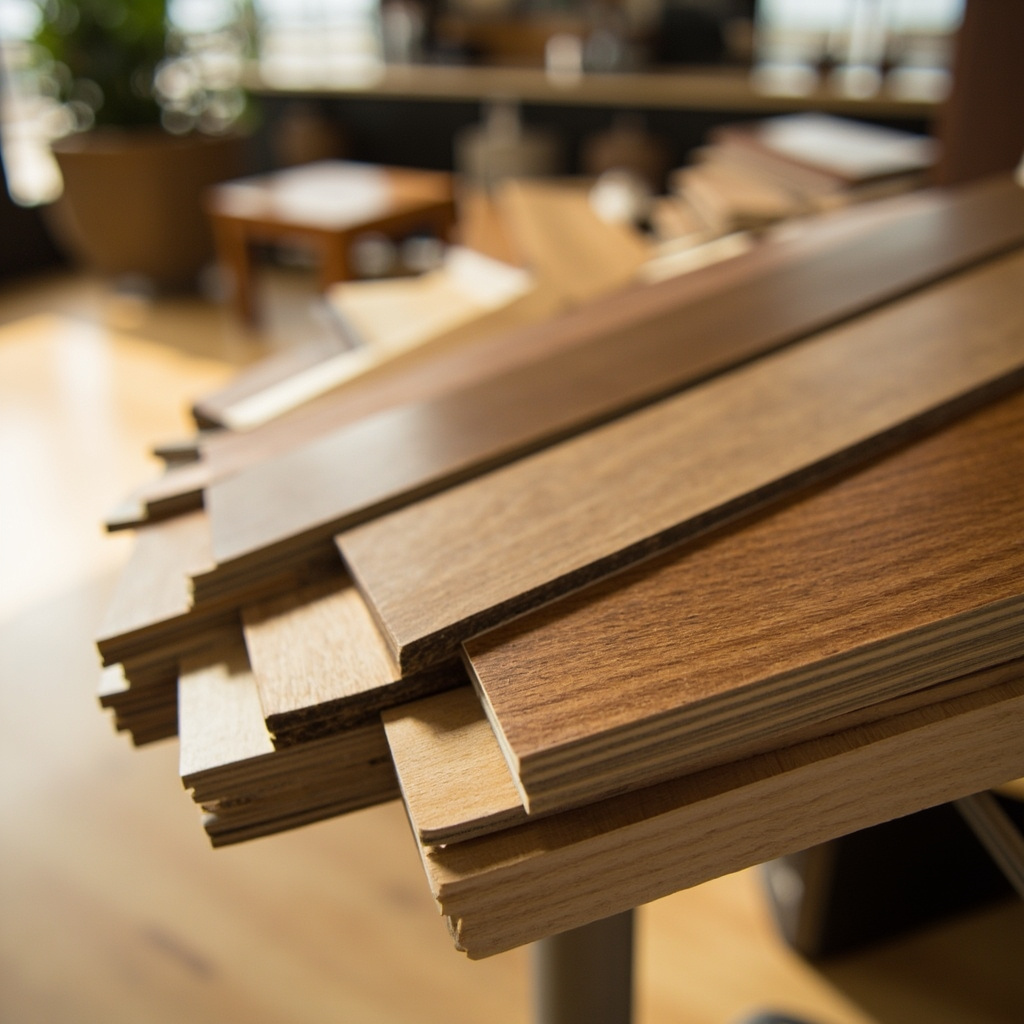
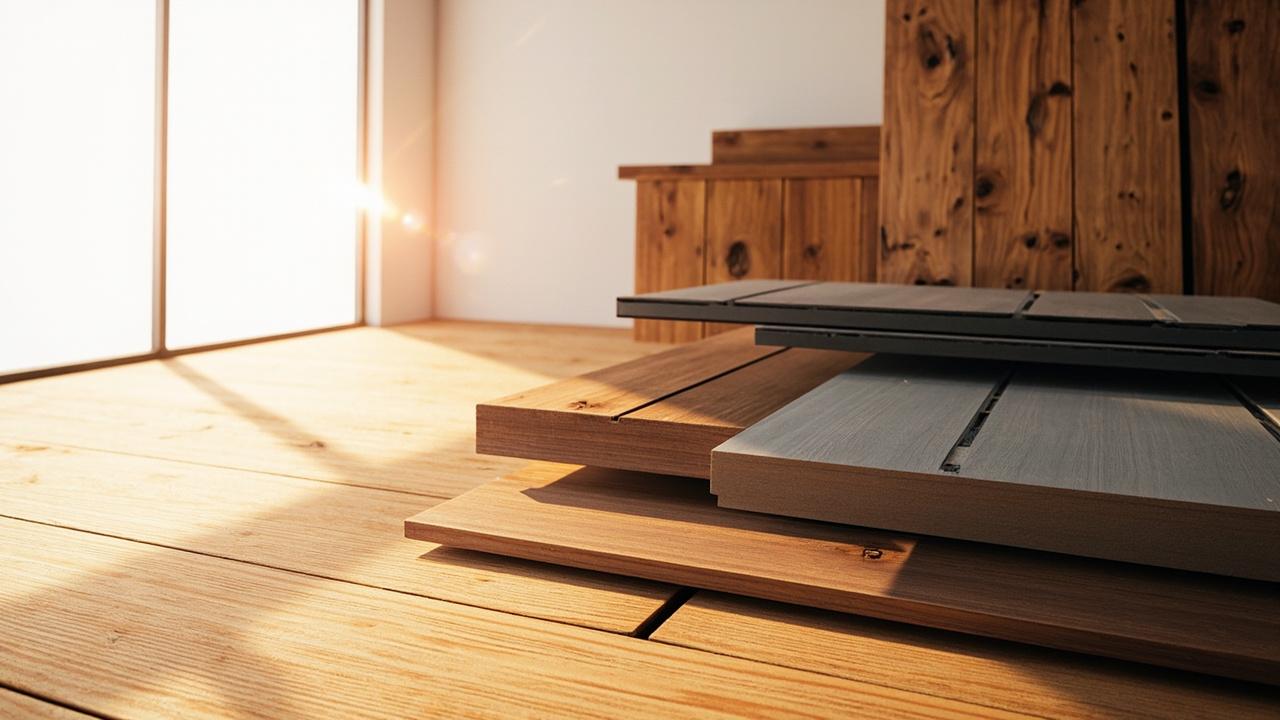
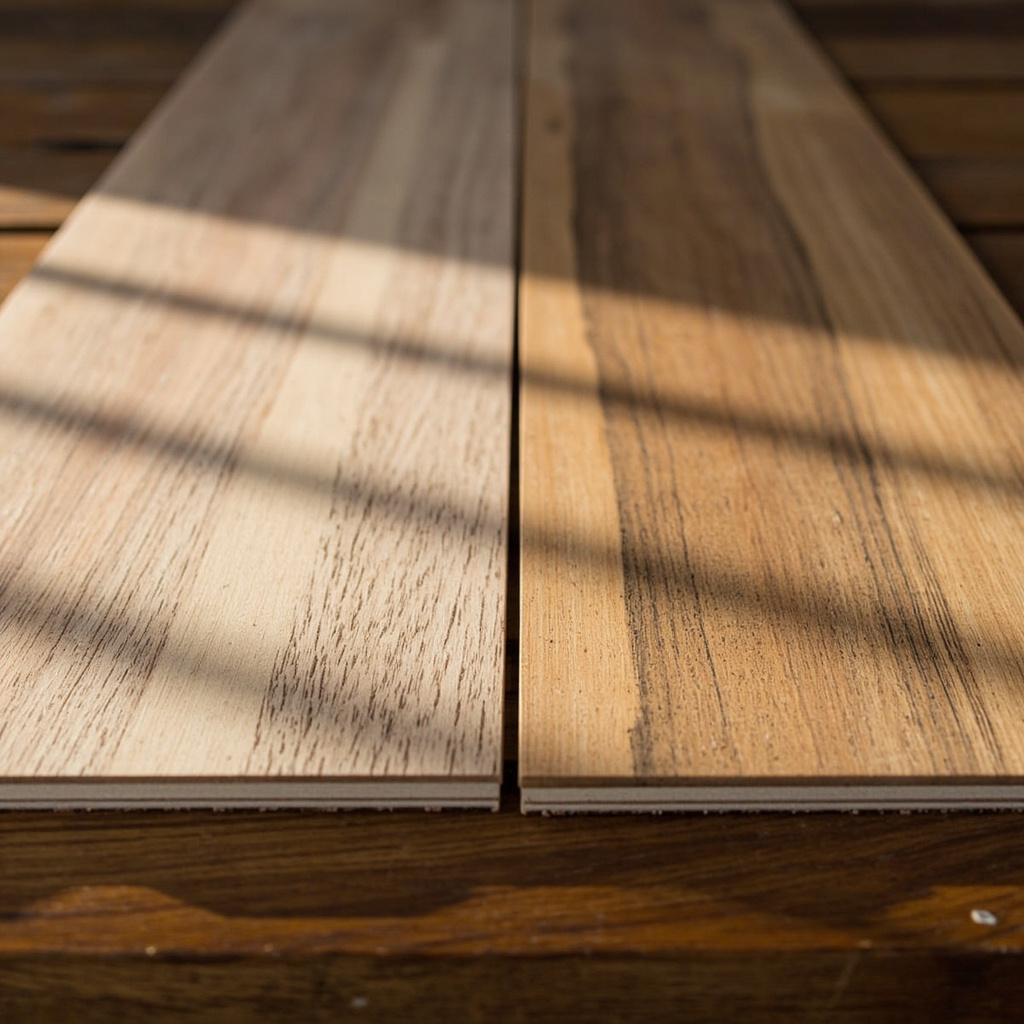
On a showroom display, the two floors look interchangeable — both show oak grain with EIR texture, both click-lock, both come with attached underlayment. The difference is invisible until you look at a cross-section: the laminate plank is wood-fiber HDF core (high-density fiberboard, compressed wood fibers plus resin), while the LVP plank is limestone powder and PVC. That core decision drives every downstream trade-off.
Laminate’s build goes: melamine overlay, then a photographic print layer, then the HDF core, then a balancing layer. LVP/SPC follows a different recipe: clear wear layer (vinyl), photographic print layer, then SPC core (Stone Plastic Composite, roughly 70% limestone by weight) or WPC (wood plastic composite with foaming agent), then attached underlayment.
The clear wear layer differs too: on laminate it is aluminium oxide; on LVP it is vinyl. Each layer exists to solve a specific use problem, which is why a room-by-room decision beats a blanket recommendation.
There is a third category worth knowing: WPC (wood plastic composite) uses a foaming agent in the PVC core, producing a softer, warmer plank that some buyers prefer for bedrooms. WPC costs more than SPC but is quieter underfoot. It is still 100% waterproof like SPC.
For a deeper look at the material itself, see our article on what HPL actually is — it covers a related but distinct material used in countertops and furniture, not flooring.
The typical 4–6 mm SPC plank is thinner than the 8–12 mm laminate, which matters in renovation projects where floor height affects transitions to adjacent rooms and appliances. A thin SPC minimizes the need for transition strips at doorways or for trimming the bottom of doors.
Water Resistance: The Single Biggest Difference
The failure pattern is predictable: a dishwasher leak in a kitchen with laminate turns a 6-hour repair window into a full-floor replacement. The HDF core swelling is irreversible — once the compressed wood fibers absorb moisture, the plank expands, buckles, and delaminates. The same leak on SPC (100% waterproof) can be mopped up with no plank damage because the limestone-polymer core won’t absorb water.
That mechanical difference — absorbent core versus synthetic core — is the single most important variable in your decision.
Modern water-resistant laminate exists: treated products with wax-sealed edges buy a 24–72 hour spill window before damage begins. The clock starts the moment water reaches the joint, not the moment it spills. That window works for quick wipe-ups in a living room but not for standing water in a bathroom or kitchen.
The 24-hour figure is best-case. Real-world tests show that water left overnight can begin wicking into the HDF core through micro-gaps at the click-lock joints, especially on cheaper products without sealed edges. Bottom line: water-resistant laminate is a margin of safety for accidents, not a license to install in a bathroom.
The floor’s moisture exposure determines which product fits: if the room sees water weekly, choose LVP/SPC; if only dry spills and a dust mop, a treated laminate can work. See the typical failure mode in our article on laminate wet room failure modes.
Scratch, Dent, and Fade: Where Laminate Wins
Here the advantage flips. Laminate’s aluminium oxide coating is harder than the vinyl mil wear layer on LVP/SPC — measured on the AC rating (abrasion class AC1–AC6), a standard laminate with AC3 or AC4 resists pet claw scratches far better than a 12–20 mil vinyl wear layer. Dog owners who choose laminate rarely regret it for the first two years: the aluminium oxide surface holds up against claws and furniture drag.
Vinyl’s weak point is UV fade: direct sunlight through big south-facing windows can bleach colour out of LVP/SPC in 1–2 years. Laminate’s melamine overlay resists fading longer because the print layer sits underneath the aluminium oxide rather than under a UV-sensitive plastic.
For impact dent, SPC’s rigid core performs better than laminate — dropped pots or heavy furniture legs leave a mark on HDF but less on stone-composite. That reverse trade-off (scratch vs. dent) is why a kitchen benefits from SPC’s dent resistance while a pet-heavy living room leans laminate.
LVP’s scratch vulnerability is amplified by darker colours. Dark walnut and ebony LVP shows every scratch and dust particle. Light oak and natural pine LVP hides wear marks better. If you’re choosing vinyl and care about scratch appearance, lighter tones will forgive daily wear.
For more on the wear scale, see AC rating and scratch performance.
Comfort, Sound, and Feel Underfoot
Anyone who stands barefoot on both products notices it within minutes — laminate’s HDF core has a hard, dense surface that transmits walking noise to the floor below, while an LVP plank with IXPE foam underlayment absorbs the step and quiets the room. The firmer feel of laminate can cause foot fatigue over a long day in the kitchen, whereas the softer step of vinyl flexes slightly underfoot.
For upstairs bedrooms or open-plan living areas where sound travel matters, the difference is measurable. Underlayment is a moderating factor: premium SPC and LVP often come with pre-attached IXPE pad that reduces hollow sound and improves comfort. Laminate usually ships with a thin foam pad; a thicker separate underlayment can narrow the gap, but the core density still makes laminate noisier.
Cooler underfoot is another point: vinyl feels colder than laminate in winter, which matters in unheated areas. For unheated basements or seasonal homes, laminate feels warmer under sock feet.
Temperature stability underfloor heating is another differentiator. Both LVP/SPC and laminate can be installed over radiant heating systems, but the maximum recommended surface temperature differs. LVP allows slightly higher surface heat before dimensional issues arise. Laminate’s HDF core can dry out with sustained high heat, causing gaps between planks. If your project includes underfloor heating, check both products’ maximum surface temperature ratings before buying.
For a detailed breakdown of how underlayment changes the feel, read underlayment that changes the feel.
Where Each Floor Makes Sense (Decision Rule)
A whole-home install doesn’t need one product. Installers who have done hundreds of mixed-strategy layouts will tell you the mistake isn’t picking laminate over vinyl — it’s trying to make one floor work in both a bathroom and a bedroom.
The common-sense pattern is dry room with budget priority (bedrooms, home office, low-traffic den) → laminate on price; wet room with moisture exposure (kitchen, bathroom, basement, entryway) → LVP/SPC.
Pet households with both scratch concerns and occasional water incidents (water bowls, accidents) need to weigh whether the scratch advantage of laminate is worth the risk of a single water event. A common hybrid pattern: LVP in pet-heavy wet rooms, laminate in dry pet rooms where claws matter more than spills.
High-traffic common areas like living rooms and hallways: both work, but choose based on scratch vs. dent priority and pet/claw exposure. For below-grade installation (basement), LVP/SPC is recommended over laminate because of potential moisture wicking through concrete.
Mixed-strategy installation — laminate in dry zones, LVP in wet zones — is the default for multi-room projects. Both use the same click-lock system, so transition strips are minimal (usually T-moldings at doorways). The budget works out because the cost per square metre for mid-range laminate and LVP overlaps heavily.
For specifications within the laminate category, see our right spec for dry rooms guide.
Next Step After Choosing Per Room
Once you’ve decided per room — laminate for the dry zones, LVP/SPC for the wet zones — your next move is to purchase both batches separately (they’ll likely come from different suppliers or product lines), plan the transition strip locations, and book the installation or prepare for DIY.
Subfloor conditioning matters for both products: each needs a clean, level, dry base. Concrete subfloors need a moisture barrier for either product, though the consequences of skipping it differ — a wet concrete slab under laminate causes HDF core swelling within months; under LVP/SPC, the planks themselves survive but the moisture can promote mould growth in the underlayment.
Acclimation periods also differ. Laminate typically needs 48 hours in the room before installation to let the HDF core adjust to indoor humidity; LVP/SPC needs less acclimation time (24 hours is usually enough) because the synthetic core is dimensionally stable.
For installation steps on a concrete subfloor, follow our laminate on concrete tutorial. The buying guide linked above gives the specs for choosing a laminate board within your budget; the same spec rules (AC rating, thickness, core density) apply on the LVP side mapped to wear layer in mils and core composition.
Budget tip: if your project spans more than 50 square metres and you’re splitting between two products, buy both at the same time from the same retailer to consolidate delivery and negotiate volume pricing. With a room-by-room plan in hand, the trade-offs become clear, and the floors you pick will each last its full lifespan in the right room.