
Which engineered beam do you actually need: LVL, glulam, or a solid sawn beam? For most residential spans under 20 ft with normal loads, LVL is the default; glulam wins where appearance, fire performance, or long spans matter; solid sawn only where cost and availability dominate. Pick by span, load, exposure, and fire rating. Engineered lumber is a structural member built by bonding wood veneers, laminations, or strands under heat and pressure so the grain runs in a controlled direction, giving predictable strength and stiffness that solid sawn timber cannot match.
The decision is rarely about strength alone. LVL carries high stiffness with E approximately 1.8 – 2.1 million psi and MOR of 4,500 – 6,000 psi; glulam places stronger laminations on its tension and compression faces for MOR up to 4,000 – 5,500 psi; solid sawn depends on grade and growth. This guide walks the attribute that actually decides the job: grain orientation and how it sets strength, stiffness, fire behavior, and cost.
What Engineered Lumber Actually Means: The Direct Answer
Engineered lumber is a structural member built by bonding wood veneers, laminations, or strands under heat and pressure so grain runs in a controlled direction, giving predictable strength and stiffness solid sawn timber cannot match; the decisive attribute is grain orientation, not density. LVL stiffness E approximately 1.8 – 2.1 million psi with MOR 4,500 – 6,000 psi comes from that controlled parallel grain.
LVL bonds thin veneers with all grain running parallel, so stiffness stays high and consistent in one direction. Glulam stacks dimensional laminations and grades them, placing higher – strength laminations on the tension and compression faces. Glulam bending strength MOR up to 4,000 – 5,500 psi comes from that selective placement. PSL compresses strands into a dense billet. PSL MOR up to 6,500 psi with E 2.0 – 2.4 million psi is the highest of the three.
That grain orientation is why strength is directional. LVL is strongest parallel to the face grain and significantly weaker perpendicular to it. Glulam gains dimensional stability from balanced laminations. Solid sawn depends on growth rings and grade, so its strength varies board to board. Published span tables from APA, LP, Weyerhaeuser, or APA – EWS assume adequate lateral bracing, proper end connections, and moisture content at or below 16 percent.
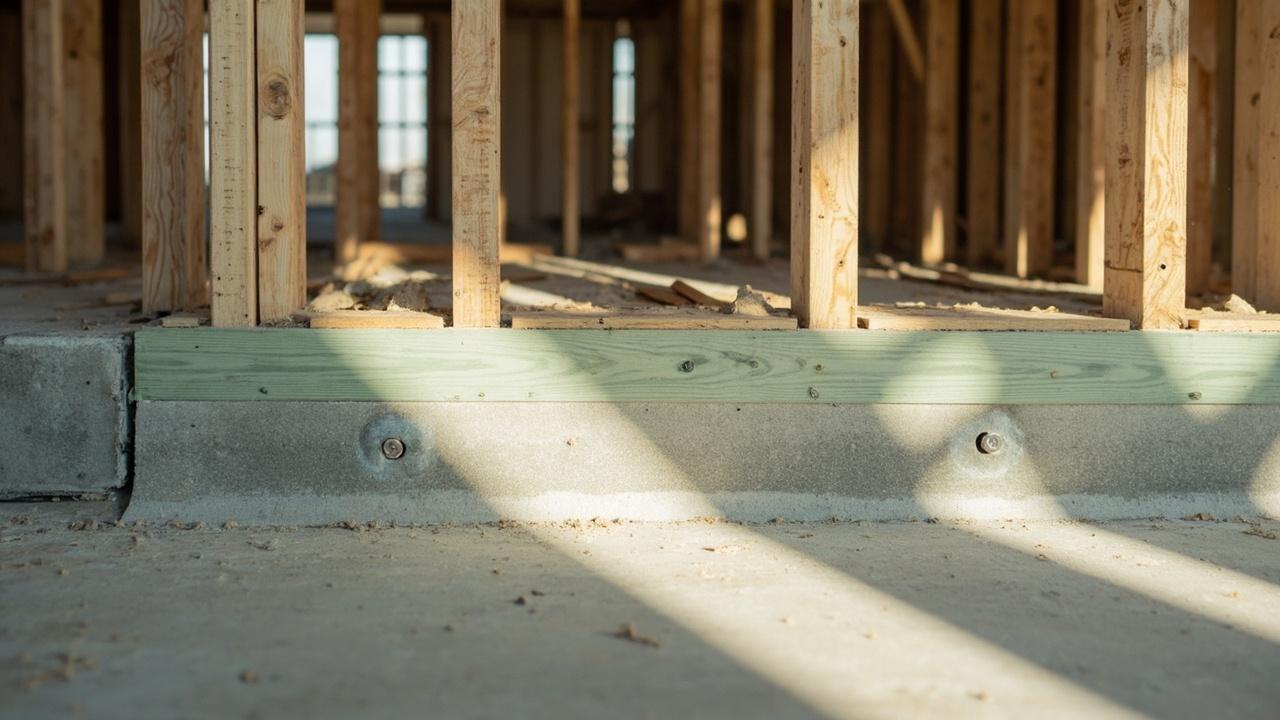
Where it gets used: headers, beams, rim boards, columns, and garage door headers. The wrong pick usually shows up as sag, not failure. If the member ties into a foundation wall, see the foundation repair cost guide for scope and cost context.
What to Gather First: Tools and Materials
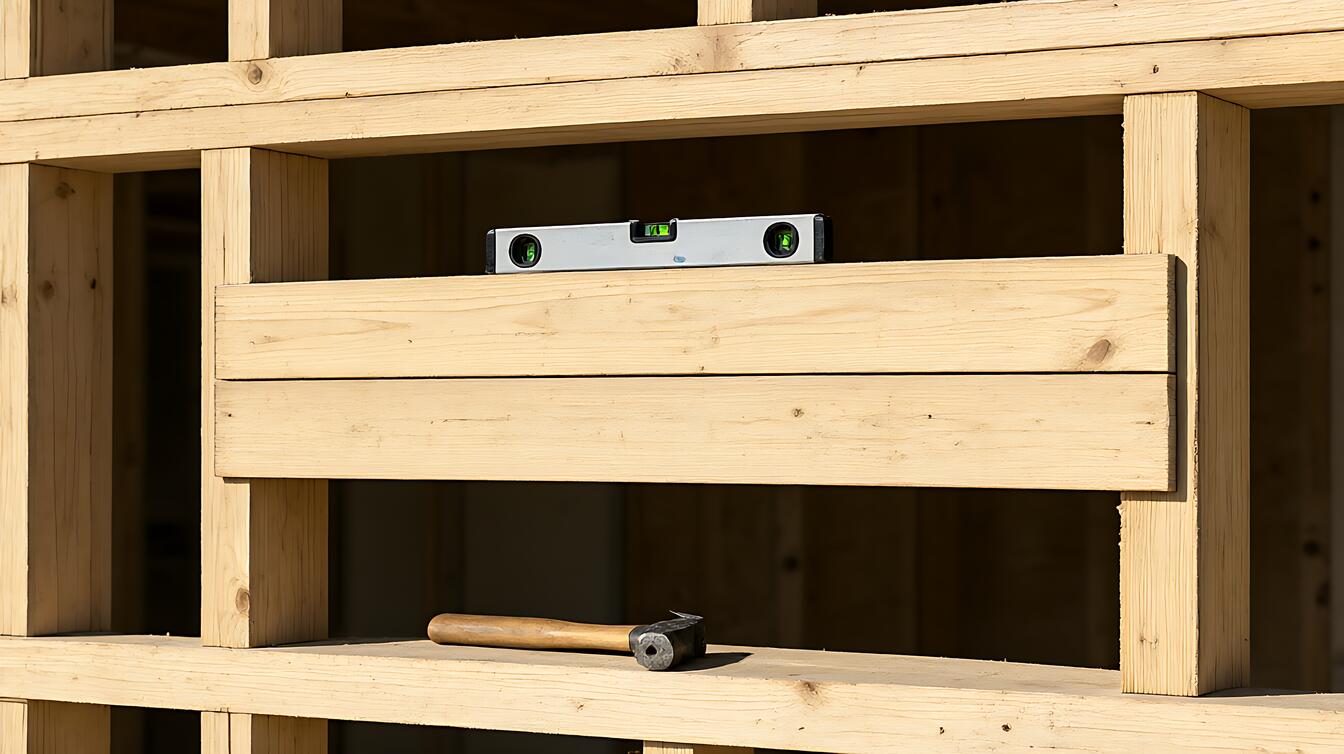
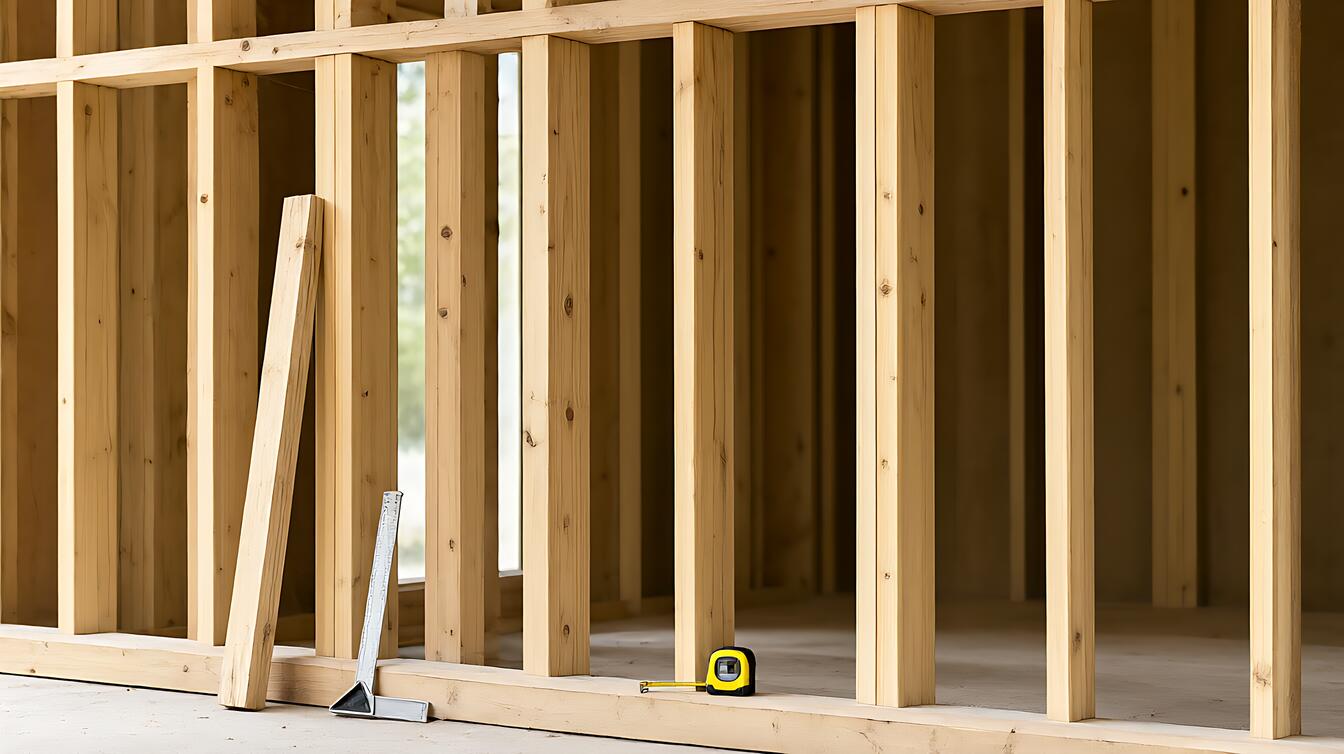
Before you cut or spec an engineered beam, gather a tape, level, moisture meter, drill, product – rated fasteners, and the manufacturer span table; the moisture reading must be at or below 16 percent for published spans to hold, and wet material must be dried within 24 to 48 hours. Moisture content at or below 16 percent for published spans is the gate that decides whether the table applies.
- Tape measure, 4 ft level, and moisture meter for condition checks.
- Drill or impact driver with product – rated fasteners, not generic screws.
- Manufacturer span table matching your exact product and load.
- Lateral bracing material and end – bearing hardware per the product guide.
- Half – inch Type X gypsum if a one – hour fire rating is required.
Stock the beam, bracing, hardware, and gypsum. Check moisture before cutting: proceed only at or below 16 percent. If material is wet, fix the water source and dry within 24 to 48 hours to prevent mold, per EPA guidance. Drying wet materials within 24 to 48 hours is the mold – prevention window.
Confirm the span table matches your load, spacing, and bracing. Tables from APA, LP, Weyerhaeuser, or APA – EWS assume specific loading and installation practices; if your job differs, the table does not apply. Half – inch Type X gypsum for a one – hour fire rating is the protection that earns the rating.
Step by Step With Tolerances
Set an engineered beam in this order: verify moisture at or below 16 percent, set with full end bearing, install lateral bracing before loading, add half – inch Type X gypsum where a one – hour fire rating is needed, then re – check level after first load; each step protects the span assumption. Moisture at or below 16 percent before setting is the first gate.
The process splits into three parts: verify conditions, set and brace, then protect. Each decides whether the published span holds.
- Test moisture; proceed only at or below 16 percent. If wet, dry within 24 to 48 hours and fix the source.
- Set the beam with full end bearing per the manufacturer spec; do not trim to fit without checking.
- Install lateral bracing at the spacing in the product guide before any load.
- Add half – inch Type X gypsum underside for a one – hour fire rating, or accept 30 minutes fully exposed.
- Re – check plumb and level after the first load; re – brace if anything moved.
Re – check after seasonal humidity changes. Engineered members move less than solid sawn, but connections and bracing do not. Lateral bracing before loading and half – inch Type X gypsum or 30 minutes exposed are the two checks most often skipped.
Common Mistakes and How to Avoid Them
The traps that actually happen on site: loading before bracing, ignoring moisture, and assuming any engineered beam swaps for solid sawn; each breaks the span assumption and can turn a header into a sagging liability. LVL weak perpendicular to face grain is the directional trap most crews miss.
- Loading before bracing: the beam carries load without lateral support.
- Ignoring moisture: installing above 16 percent or skipping the 24 to 48 hour dry window.
- Assuming interchangeability: LVL and glulam have different E and MOR; a swap needs a new span check.
- Forgetting directional weakness: LVL is significantly weaker perpendicular to the face grain.
- Claiming a fire rating without gypsum protection.
Glulam has its own trap: its adhesive, typically resorcinol or melamine, stays stable up to 300 degrees F, and thicker laminations char slowly, so it outperforms LVL in fire. But that advantage only holds with the right lamination grade and exposure detail. Glulam adhesive stable to 300 degrees F is the fire – performance edge.
If you are framing a renovation, the beam choice interacts with duct runs, headroom, and finishes. The kitchen renovation guide covers how structural changes ripple through layout and services. Span tables assume at or below 16 percent moisture is the assumption to re – verify on every job.
Limits, Edge Cases, and What to Do Next
Engineered beams are not universal: glulam chars slower with adhesive stable to 300 degrees F, LVL needs half – inch Type X gypsum for a one – hour rating, and spans collapse if moisture exceeds 16 percent or bracing is missing. Glulam chars slower, adhesive stable to 300 degrees F is the fire and durability edge.
LVL is stiff and cost – efficient, but weak perpendicular to the grain and needs gypsum for a one – hour fire rating; choose it for straight, dry, interior spans. Glulam offers appearance, fire performance, and long spans, at higher cost and weight; choose it when the beam is exposed or the span is long. Solid sawn is cheapest and most available, but strength varies by grade; choose it for short, light, budget – driven spans. PSL for heavy point loads is the step up when MOR up to 6,500 psi is needed.
Wet areas, heavy loads, tight budgets, and sun – exposed members change the answer. In wet zones, dry within 24 to 48 hours and keep moisture at or below 16 percent. In sun, protect glulam from UV and moisture cycling. For heavy loads, step up to PSL or add a flitch plate with an engineer. For exterior material selection, the chain link fence gauge guide shows how gauge and span interact in another structural system.
Call a professional for load – bearing members, foundation – adjacent work, moisture – damaged beams, or any span beyond the manufacturer table. Decision guidance: choose LVL if the span is straight, dry, and interior; choose glulam if the beam is exposed or the span is long; choose solid sawn only for short, light, budget – driven spans; choose PSL for heavy point loads; call a pro for load – bearing, foundation – adjacent, or moisture – damaged members.