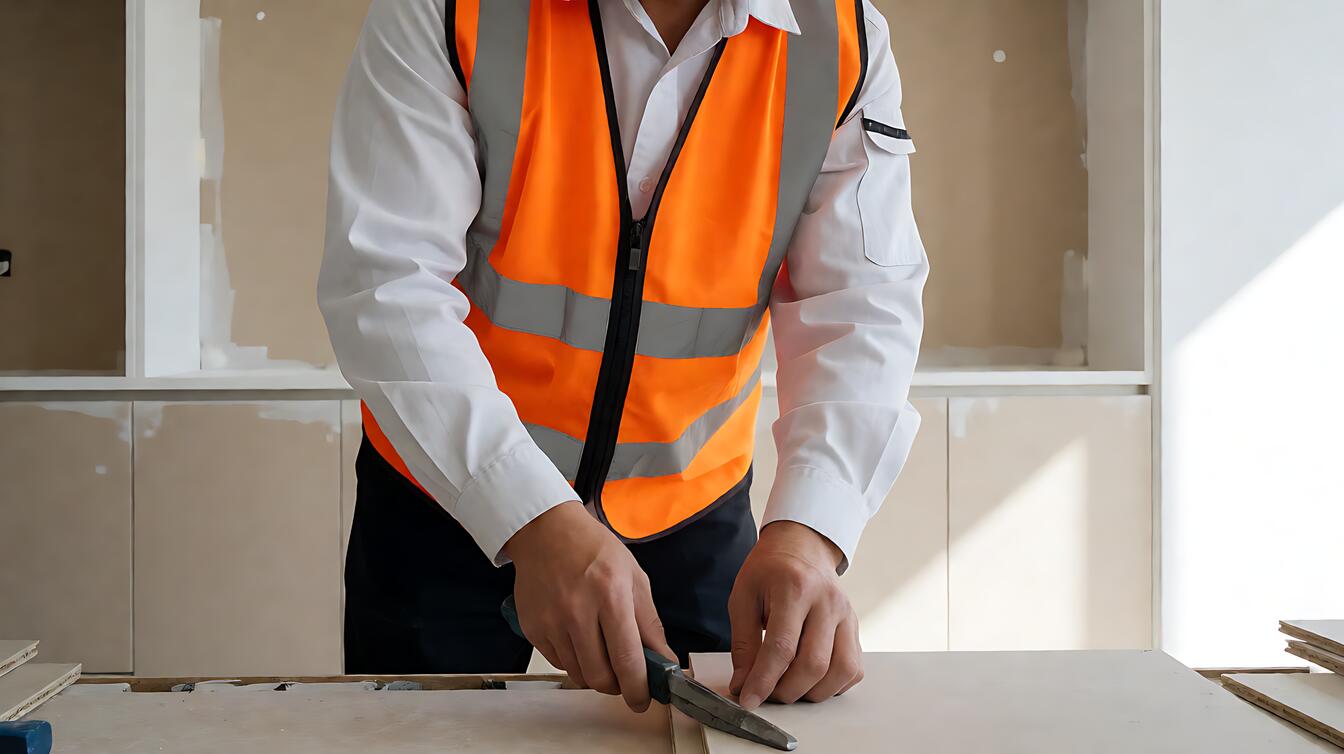

The confusing part of foundation repair cost is rarely the total alone. A $3,000 quote may cover three piers, one wall, or an entire stabilization project, so compare the quantity and scope before comparing dollars. Foundation repair cost is the total for diagnosing, stabilizing, and, when required, restoring a foundation, with the price shaped by the defect, method, site, and warranty.
Start with the quantity your quote uses. Pier count, wall length, anchor count, and project scope determine what the headline number means, while permits, engineering, dewatering, excavation, and basement restoration can change the final budget.
What Foundation Repair Costs Cover and Where the Budget Starts
Foundation repair cost has a median project price of $5,500, with a typical range of $2,200 to $12,000 covering roughly 80% of residential projects. Minor crack repairs fall around $250 to $800, while major piering, full wall replacement, or combined structural work can reach $15,000 to $25,000 or more.
That broad median is a starting point, not a quote. A minor repair seals a crack without structural movement; a major repair transfers or rebuilds support, restores a wall, or replaces part of the foundation. Comparing those scopes as if they were equivalent creates a misleading budget.
For orientation, one national pricing summary places a small piering section of three to four piers at $3,000 to $12,000. Full-perimeter work involving ten to twelve piers costs $10,000 to $36,000, so the same unit price can produce a very different project total.
Confirm whether the estimate includes labor, materials, permits, and engineering where applicable. Then separate the repair itself from restoration work, because a finished basement may need demolition and rebuilding after the structural fix.
Cost by Repair Method: The Unit Is Part of the Price
Repair method determines the price unit: crack work may be quoted per crack, piers per pier, anchors or wall reinforcement per wall, and replacement per project. Two quotes with similar dollar amounts are comparable only when they cover the same quantity, method, and site work.
The table below uses the pricing bands in the research. Some sources price wall anchors individually and others price wall systems as a whole, so ask every contractor to state the quantity and exclusions in writing.
| Method | Typical use | Price and unit |
|---|---|---|
| Crack injection | Hairline or minor cracks without structural movement | $250 to $800 per project |
| Crack stitching or carbon fiber staples | Crack reinforcement | $500 to $2,500 per project |
| Carbon fiber strip reinforcement | Wall reinforcement | $5,000 to $10,000 per wall |
| Wall anchors | Bowing or leaning wall stabilization | $3,000 to $7,000 per wall |
| Push piers | Settlement reaching bedrock | $1,000 to $3,000 per pier |
| Helical piers | Lighter structures and expansive soils | $1,000 to $3,000 per pier |
| Slab jacking or mudjacking | Sunken slabs and minor settling | $500 to $1,500 per project |
| Polyurethane foam lifting | Slab lifting and void filling | $1,000 to $3,000 per project |
| Full foundation replacement | Catastrophic failure or severe structural damage | $20,000 to $100,000+ per project |
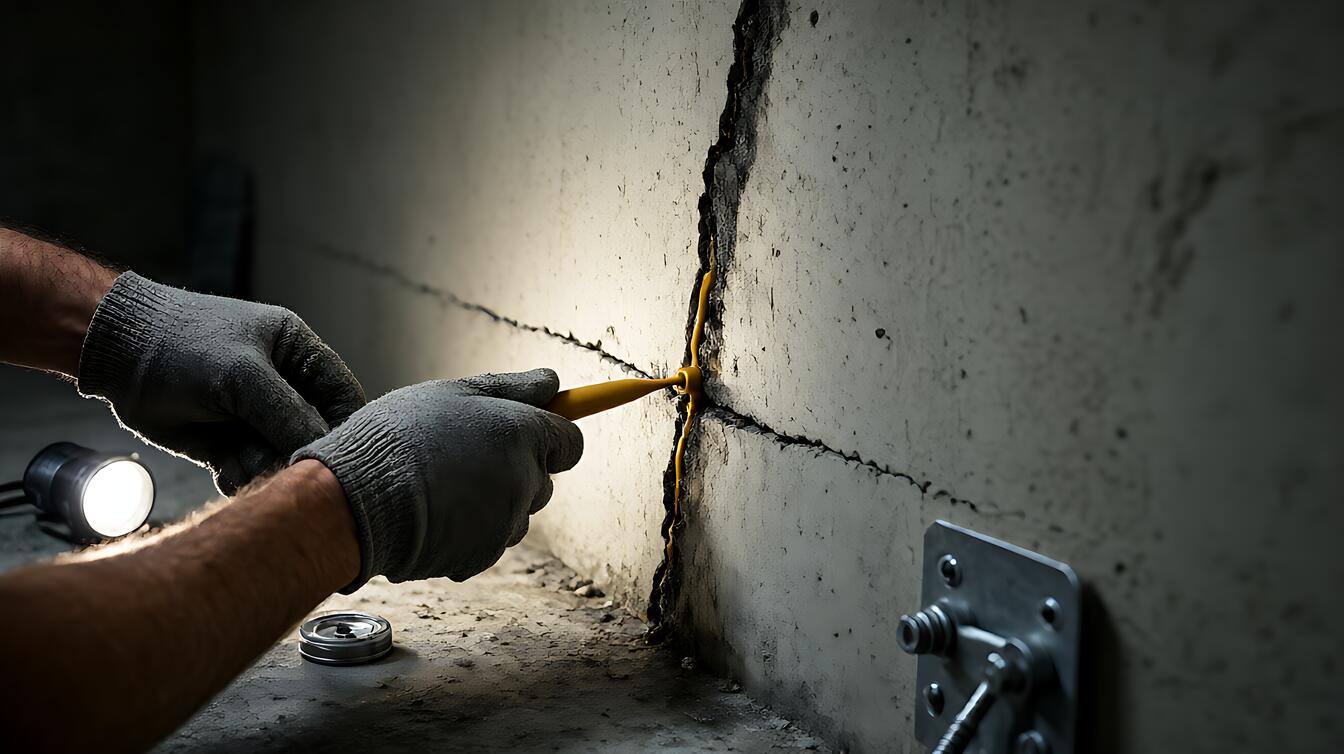
Choose crack injection if the crack is under one-quarter inch and shows no structural movement. Choose piers when support and load transfer are the central problem, and request the foundation settlement repair pier options for a closer scope comparison.
Choose wall anchors when a basement wall is bowing, but do not confuse their force mechanism with crack sealing. For reinforcement details, see foundation crack injection and repair methods before assuming the visible crack defines the entire problem.
What Changes the Price: Foundation Type and Site Conditions
Foundation type changes both repair feasibility and price. Poured concrete generally costs the least to repair, CMU block foundations typically cost 10% to 20% more, and stone or rubble foundations cost 50% to 100% more because the work is more complex and specialists are limited.
Wide ranges reflect that diversity. Poured concrete repairs run $250 to $15,000, CMU block repairs $500 to $20,000, slab-on-grade repairs $500 to $25,000, pier-and-beam work $1,500 to $15,000, and stone or rubble work $5,000 to $50,000 or more.
Site conditions can add costs even when the repair unit stays the same. Finished basement demolition and restoration adds $1,000 to $5,000, while a high water table can add $500 to $2,000 for dewatering. Limited equipment access and deep excavation also increase labor requirements.
Permitting, nonstandard layouts, and other project complexity can add 15% to 30% to the total. Ask whether that estimate covers permit burden, excavation, disposal, waterproofing, landscaping, and interior restoration rather than treating them as optional details.
Warranty, Lifespan and the Cost of Repairing Late
Transferable warranty coverage commonly runs 10 to 25 years and can follow the home to its next owner. The useful comparison is not simply the longest term, because you also need to know which defects are covered and whether transferred coverage retains the original terms.
Get the written warranty before comparing two quotes. One contractor may offer a longer term but exclude specific movement or water problems, while another may offer shorter coverage with clearer terms. The warranty also establishes who must respond if the installed repair fails.
Delay can change the repair scope and cost. A $300 crack seal may prevent a $10,000 pier job five years later, while a $5,000 piering job now may prevent a $50,000 foundation replacement later. These are possible cost trajectories, not guarantees for every house.
Water and grading can drive recurring movement, so drainage deserves attention before structural work. If a foundation wall is damp after rain, inspect foundation drainage inspection requirements and consider whether foundation wall waterproofing belongs in the same project scope.
Limits, Edge Cases and What to Do Next
Professional foundation repair is the appropriate route for structural movement because diagnosis determines the method. Signs include diagonal cracks from door or window corners, sticking doors or windows, and gaps between walls and ceilings or floors. A horizontal crack paired with inward wall bowing warrants prompt professional assessment.
DIY crack injection kits cost $30 to $150 and may suit vertical or diagonal cracks under one-quarter inch without structural movement. They carry no warranty and cannot correct settling, bowing, or whole-house movement. A structural engineer should assess those conditions before a contractor selects a repair method.
Compare at least three quotes on the same written scope. Ask for pier count, wall length, method, foundation type, permits, engineering, site access, restoration, exclusions, payment schedule, and warranty term. Foundation prices can vary 30% to 50% between contractors for the same work.
Do not let an unusually low headline number win automatically. Verify the quantity and exclusions, then add probable site costs. If one quote includes restoration, engineering, and warranty while another excludes them, the second quote may be cheaper only on paper.
Decision Guidance for Your Foundation Repair Budget
Choose crack injection if the crack is minor and structural movement has been ruled out. Choose slab lifting for a sunken slab, piers for settlement, and wall anchors or reinforcement for wall movement. Use full replacement only when the damage warrants rebuilding rather than stabilization.
Budget from the method and quantity, then add site-specific work. For a pier project, multiply the per-pier price by the proposed pier count. For wall work, multiply by wall length or the number of wall sections.
Choose a contractor when the quote identifies the method, quantity, inclusions, exclusions, licensed and insured status, and transferable warranty. Stop comparing prices and consult a licensed structural engineer when symptoms conflict, the foundation type is unusual, or the scope involves deep excavation, high groundwater, or major wall movement.