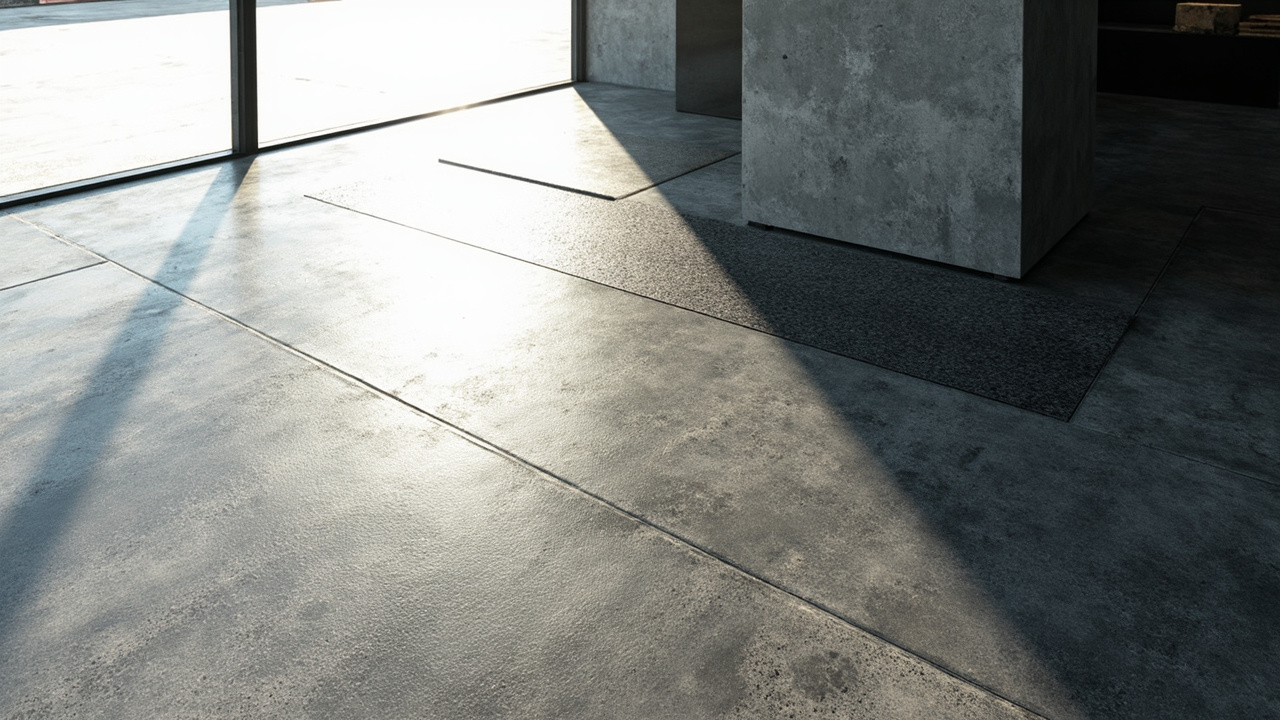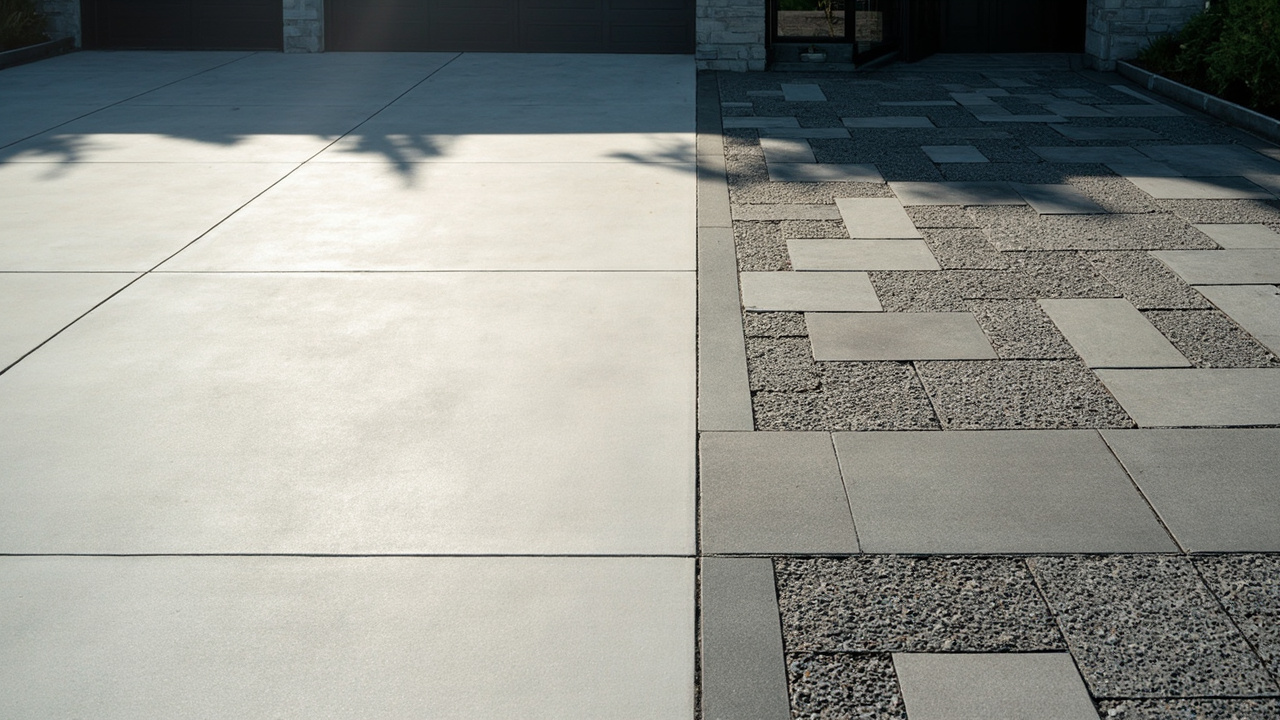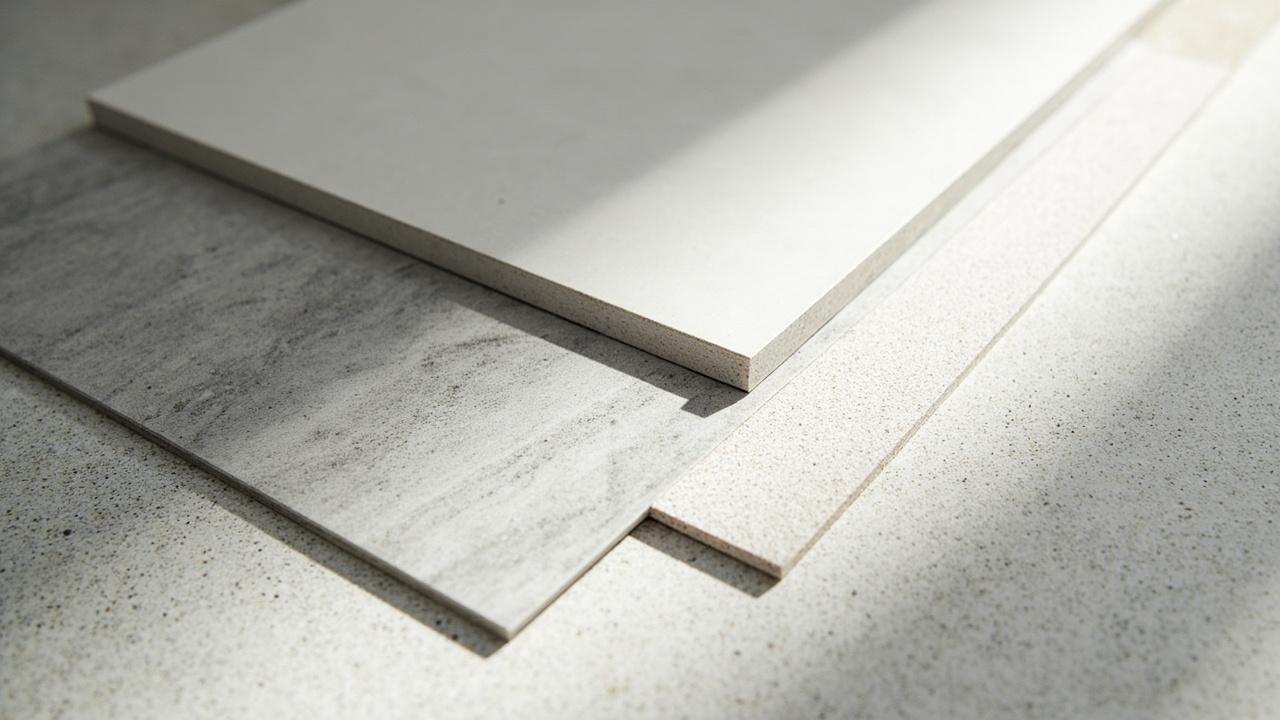

You’re staring at a kitchen remodel quote with concrete countertops at $85 per square foot, and your first thought is: can I actually pour this myself for a third of that? Maybe, but only if your kitchen is small, your timeline is flexible, and you’ve never cracked a sealer coat wrong. Here’s the honest answer: concrete countertop cost ranges from $15 to $100+ per square foot installed, with DIY typically landing at $15 – $40 and professional work at $65 – $100+, and the right pick depends on your skill, your tolerance for hairline cracks, and how long you plan to stay in the house.
What Concrete Countertop Cost Actually Includes (DIY vs Pro)
Most price quotes you see online are material-only, which is why DIY looks impossibly cheap. The real number bundles four things: concrete mix (typically $8 – $15 per square foot for standard 1.5″ – 2″ thickness), reinforcement and form materials, sealer and finishing supplies, and either your labor or a contractor’s markup.
DIY labor is free in theory, but your time isn’t. A first-timer pouring a 30-square-foot kitchen island can spend 40 – 60 hours across forming, pouring, curing, grinding, and sealing. Pro jobs compress that into 2 – 4 days of crew time, which is why installation alone runs $35 – $70 per square foot before materials.
The split matters because hidden costs hit DIY harder. Renting a concrete mixer runs $50 – $80 per day. Diamond polishing pads cost $120 – $200 for a one-time job. Food-safe sealer (mandatory for kitchen use) adds $3 – $6 per square foot and needs reapplication every 1 – 3 years. These line items add up to roughly $10 – $20 per square foot most beginners forget to budget.
Realistic Price Ranges by Scenario
Numbers without conditions are noise, so here’s what each path actually costs in three common kitchen situations.
In a small 25-square-foot guest bathroom vanity, DIY with a pre-mixed bag and basic sealer lands at $400 – $700 total. The same space professionally poured and polished runs $1,800 – $2,500. The DIY savings are real, and the crack risk is low because bathroom counters see light use and no direct heat.
For a standard 40-square-foot kitchen, DIY with custom forms, glass fiber reinforcement, and penetrating sealer runs $900 – $1,800. Professional installation with integral sink, custom color, and burnished finish lands at $3,200 – $5,200. The gap widens because kitchen work demands precise sink integration, heat-resistant sealing near cooktops, and often a thicker edge profile that doubles formwork time.
Large or complex kitchens (60+ square feet with waterfall edges, integrated drainboards, or unusual shapes) are where DIY math collapses. Form complexity multiplies labor, waste rates climb above 15%, and the equipment rental alone can hit $400. Pro quotes here often beat DIY total cost once you add the learning curve.
What Changes the Price (and When Each Option Fits)
Five conditions actually move the number, and ignoring them is how people blow their budget or get a countertop that fails in two years.
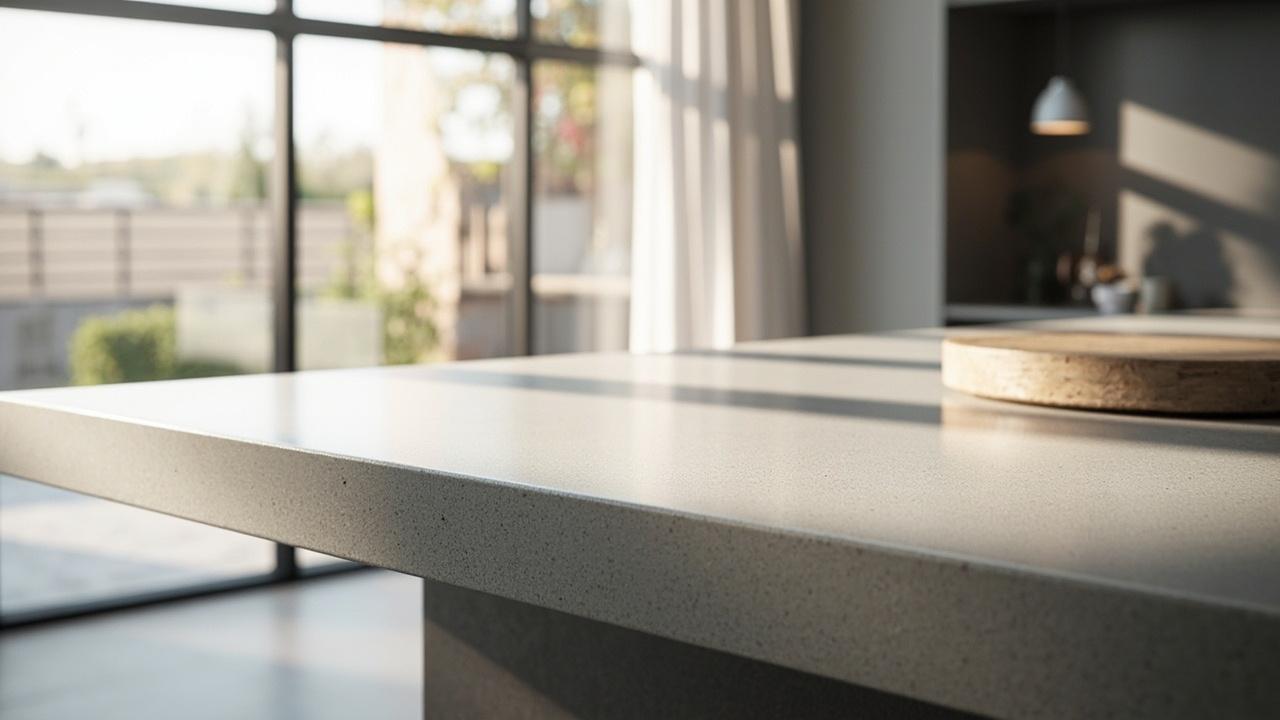
Slope and drainage matter near sinks. A perfectly level pour is harder than it sounds; if your substrate isn’t true, water pools and stains the sealer within months. DIY works only on flat, well-supported base cabinets. Pro crews shim and level as part of installation, which is part of why their price is higher.
Load and span change reinforcement needs. A countertop bridging a dishwasher gap or supporting a cast-iron sink needs rebar or fiber mesh at specific spacing. Skip this and you get cracking within the first seasonal shift. DIY with standard mesh handles short spans under 36 inches; spans beyond that need a structural detail most beginners miss.
Wet versus dry area is non-negotiable for sealer choice. Kitchen counters around a sink need penetrating sealer rated for food contact, plus a topical coat for stain resistance. Bathrooms with no cooktop heat can use lower-cost sealers. Outdoors or sun-exposed counters need UV-stable sealers that cost 2 – 3x more and reapply annually.
Your timeline controls whether DIY makes sense. Concrete cures for 7 days minimum before sealing, and full hardness takes 28 days. If your kitchen needs to be functional in two weeks, professional work is the only realistic path, since crews can use accelerators and pre-cast panels that install in a day.
Skill level determines crack risk more than any other factor. Hairline cracks are normal in concrete and even desirable in some designs, but structural cracks from poor mix ratios, inadequate curing, or vibration during set ruin the surface. If you’ve never worked with concrete before, your first kitchen counter is a $1,500 lesson either way.
When Cheap Becomes Expensive (5 – 10 Year Ownership Math)
Purchase price is roughly half the story. The other half is what happens when the sealer wears through, a hairline crack opens, or you want to sell the house.
DIY counters need resealing every 1 – 3 years at $50 – $150 in materials and 4 – 8 hours of your time. Pro-installed counters with premium sealers stretch that to 3 – 5 years. Over 10 years, DIY sealing costs roughly $500 – $1,500 in materials plus your labor; pro installations run $300 – $600 in service calls or materials if you reseal yourself.
Crack repair is where DIY savings evaporate fast. A structural crack that needs patching, re-coloring, and resealing runs $200 – $500 per repair, often more than the original DIY savings. Professional pours include crack-control joints and proper cure conditions that cut this risk significantly, but no concrete counter is crack-proof.
Resale value is the quiet factor most budgets miss. Buyers in mid-to-upper markets expect reliable surfaces like quartz or properly finished concrete. A visibly DIY concrete counter with patching, uneven color, or worn sealer can knock $2,000 – $4,000 off perceived kitchen value, which wipes out the DIY savings on a typical kitchen. A professionally poured counter with documented sealer schedule and warranty adds comparable or higher value.
Total 10-year cost for a 40-square-foot kitchen typically lands at $1,400 – $2,200 for DIY (including one major repair and full sealing schedule) and $3,500 – $5,800 for pro (including one reseal and no repairs under normal use). The gap narrows faster than most people expect, especially if you value your time at standard contractor rates.
Decision Guidance, Limits, and Next Steps
Choose DIY if your kitchen is under 30 square feet, you’re comfortable with 40+ hours of hands-on work, you accept hairline cracks as character, and you plan to stay in the house 5+ years to spread the sealing labor. Skip DIY if the kitchen is large, includes a waterfall edge or integral sink, sits near a heat source without proper clearance, or you need it functional within two weeks.
Choose a professional installer if the budget allows $65+ per square foot, you want documented crack control, the design includes custom color or aggregate exposure, or you’re working near structural elements that need engineering input. Get 2 – 3 quotes that itemize materials, labor, sealing, and warranty separately, because vague “all-in” numbers usually hide shortcuts on reinforcement or sealer quality.
One honest limit: concrete countertops are not maintenance-free at any price. Even professionally installed counters need resealing and accept that they’ll develop a patina over time. If you want a truly set-and-forget surface, quartz or solid surface composites handle differently and are worth comparing. For the full material trade-off breakdown across kitchen counters, the kitchen countertop materials guide walks through concrete, granite, quartz, marble, and solid surface side by side.
If you want the installation line-item costs for professional work broken out by slab, edge, cutout, and labor, our kitchen countertop installation cost guide covers that in detail. For broader kitchen remodel budgeting beyond the counters themselves, the kitchen renovation guide ties countertops into the larger layout, cabinets, labor, and timeline decisions.