
“`html
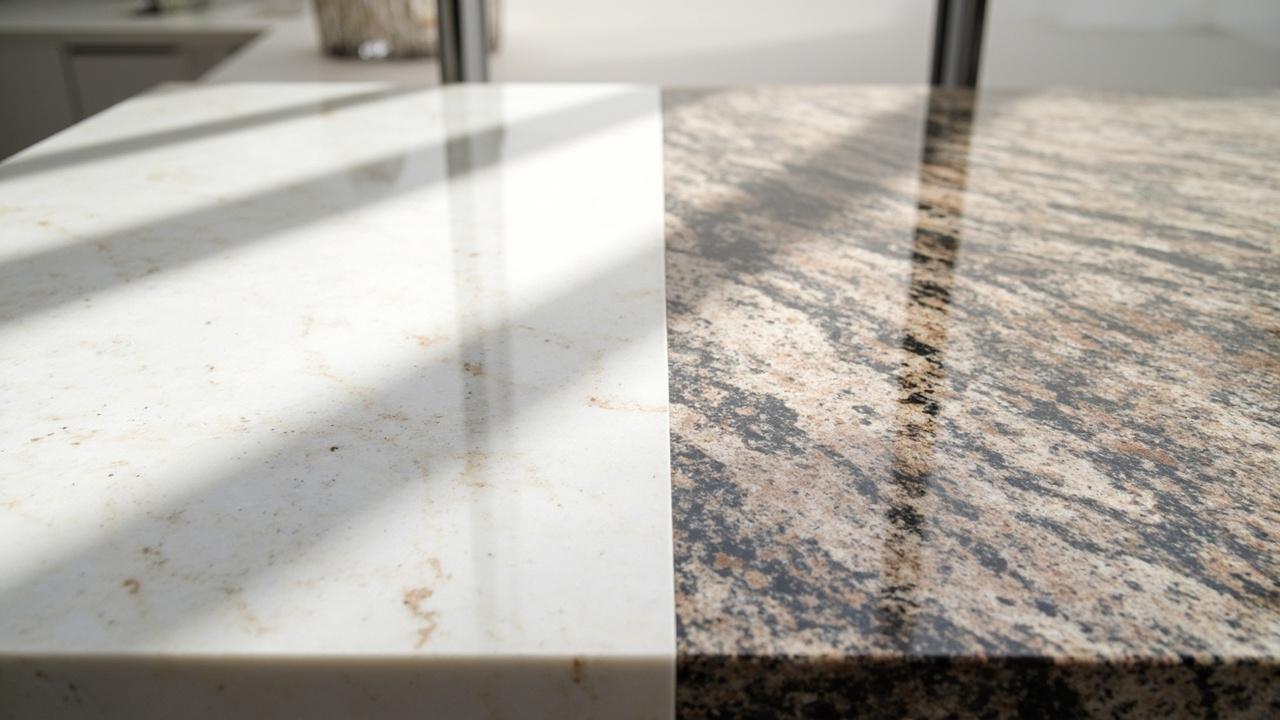
You are torn between quartz and granite for your kitchen countertop, and the sheer volume of conflicting advice is paralyzing. The answer depends on how you cook, your budget, and your tolerance for maintenance. Quartz is an engineered stone made of 90-95% ground natural quartz mixed with resin, offering non-porous durability. Granite is a 100% natural igneous rock, prized for its unique veining and extreme heat resistance. Choosing the right one means matching its specific properties to your daily life, not just picking the prettiest slab. A kitchen countertop is the primary work surface in your cooking space, where material properties like heat resistance, porosity, and maintenance directly impact daily usability and longevity.
What Is Quartz vs Granite Countertop + Dominant Answer
Quartz is an engineered stone with quartz porosity 0.5% that resists staining without sealing, while granite is natural stone with granite porosity 0.4-1.5% requiring annual sealant to prevent liquid absorption. This fundamental difference dictates your daily care routine.
The quartz resin binder creates a non-porous surface that bacteria and moisture cannot penetrate, making it inherently hygienic. Conversely, granite igneous rock forms under extreme pressure, giving it unparalleled hardness and natural variation.
There is no single dominant answer here. The right choice is entirely conditional on your kitchen’s specific demands. If you want a complete overview of materials, check out our kitchen countertop selection guide.
Key Differences (Symmetric Table)
Heat resistance 150°C vs 300°C defines the primary safety difference between these materials. Granite handles hot pans directly, while quartz resin degrades under high heat, making trivets essential for quartz owners.
Cost also varies significantly. The cost $60-100/sqft vs $40-80/sqft reflects quartz’s manufacturing process versus granite’s natural sourcing. However, granite demands maintenance sealant yearly vs none, adding long-term effort and expense.
Consider UV stability if your kitchen has intense sun exposure, as quartz can fade over time. Finally, weight 20-25 lbs/sqft means both require sturdy cabinetry, but your structural support must handle the load. Here is a side-by-side breakdown.
| Criterion | Quartz | Granite |
|---|---|---|
| Cost per sqft | $60 – $100 | $40 – $80 |
| Heat Resistance | Up to 150°C | Up to 300°C |
| Porosity | 0.5% (Non-porous) | 0.4% – 1.5% (Porous) |
| Maintenance | None | Annual sealant |
| UV Stability | Low (fades) | High |
| Weight | 20-25 lbs/sqft | 20-25 lbs/sqft |
Which One Fits Your Needs
Scratch resistance favors quartz due to its flexible resin matrix, while stain resistance requires annual sealant for granite but comes standard with quartz. Choose based on your specific kitchen habits.
If you frequently set down hot pots without thinking, heat exposure makes granite the safer bet. You will never damage it with a baking sheet fresh from the oven.
However, if you hate the idea of yearly upkeep, maintenance willingness points directly toward quartz. You simply wipe it clean without worrying about resealing.
For families with young kids who spill juice and milk constantly, quartz’s non-porous nature prevents permanent staining. Granite can handle acidic spills like lemon juice, but only if you wipe them quickly and maintain that sealant.

Real-World Context
Thickness 2-3 cm and edge profile options significantly alter both the visual weight and the final cost of your installation. Standard edges like eased or bullnose cost less than premium ogee or waterfall profiles.
Your cabinetry must support the weight load properly. A 3 cm slab adds substantial mass, so confirm your base cabinets can handle it before ordering. If you are unsure about your kitchen renovation structural requirements, consult a professional.
Fabricators often recommend plywood underlayment for extra support. The installation process for both materials requires precise templating and professional cutting. You cannot DIY this job.
The seams are visible on both materials, though skilled fabricators minimize them. Always visit the stone yard to select your specific slab, especially for granite, where natural veining varies wildly.
Limitations, Edge Cases + Next Steps
UV stability limits quartz to indoor applications, as direct sunlight causes yellowing and resin degradation, while granite maintains its color indefinitely, making it the only choice for an outdoor kitchen.
Both materials are durable, but severe impact can chip quartz, and granite can crack under extreme structural load.
If your project involves heavy stone sections over long spans, consult a professional fabricator to assess support needs.
Choose quartz if you prioritize low maintenance, consistent patterns, and stain resistance. Choose granite if you love natural variation, need extreme heat resistance, or plan an outdoor installation. For detailed pricing, review our quartz countertop cost breakdown. If you need ongoing care advice, read our granite countertop maintenance guide.
“`