
Standing in the aisle with three buckets that all claim waterproof, it is hard to know why one blisters and another holds ten years. The label hides the mechanism. Sheet vs liquid vs cementitious waterproofing is the choice between factory membrane torch 3 to 4mm, site formed acrylic 1.0mm dry film, and crystalline cementitious 1.2mm, and the right type is the one whose thickness, overlap, and movement tolerance match your wet area, not the one with the loudest claim.
Sheet Membranes Arrive at Thickness and Bridge Movement
Sheet membrane torch 3 to 4mm with polyester reinforcement 180gsm at overlap 100mm side lap and 150mm end lap delivers calibrated thickness over a concrete slab cured 14 to 28 days, where burner heat near 300C softens bitumen over primer 8 sqm per liter and seals to upstand 150mm. It bridges crack 2mm on a sun heated balcony to 40C.
Butyl and peel and stick sheets 1.0 to 1.5mm with self adhesive lap 50mm suit internal upstands and balustrade junctions where flame is unsafe in a timber framed ensuite, but they still demand roller pressure 20kg to bed the lap and seam tape 100mm at every internal corner or they tent over dust.
Sheets reward flat to gently sloped geometry. On a roof 20 sqm with fall 1 to 2 percent they lay fast and warranty cleanly, inside a shower with four pipe penetrations they fight you at every fold. That folding cost is why many internal jobs shift to liquid even when sheets feel tougher on paper.
Liquid Membranes Go Seamless Around Tight Geometry
Liquid acrylic membrane two coats at 0.6mm wet per coat shrinking to 1.0mm dry plus reinforcing band 100mm at every junction wraps penetrations 50 to 100mm diameter seamlessly in a bathroom 5 to 8 sqm membrane area, where recoat 3 to 6 hours at 25C and moisture below 15 percent let coats key without solvent trap. You gauge thickness, you do not assume it.
Polyurethane liquid 1.2mm dry with UV stable topcoat at 1.4kg per sqm total survives ponding over 48 hours and UV 1000 hours QUV on an exposed balcony slab 12 sqm, where drainage 1.5 percent fall and protection board 3mm keep the film from abrasion under tile bedding. Bare acrylic without topcoat chalks there within two summers.
The price gap hides skill. A 10 liter acrylic kit at 8 to 14 dollar per sqm materials looks cheap against sheet torch 18 to 28 dollar per sqm installed, yet without a wet film gauge 600 micron every sqm the kit is often rolled to 0.5mm and leaks at the waste a year later. Liquid is seamless but unforgiving of thin coats, so budget the gauge and the time.
Where ponding and movement are mild, liquid wins on detail. Where they dominate, sheets or polyurethane overtake. Internal wet areas belong to acrylic. Exposed movement belongs elsewhere.
Cementitious Systems Block Pressure From Outside the Wall
Cementitious waterproofing crystalline slurry 1.0 to 1.2mm applied at 1.5kg per sqm per coat over two coats penetrates capillary pores 0.1mm and resists hydrostatic head 5m on a below grade wall 200mm concrete, where cure 7 days moist grows crystals that self heal hairline cracks near 0.4mm. It is the only type that improves when water pushes from behind.
Polymer modified render 2 to 3mm at 2.2kg per sqm with flex additive 1 liter per 20kg tolerates minor damp substrate up to 8 percent moisture in a planter box 1m deep, yet still cracks over movement joint 10mm unless a PU sealant band 10mm bridges the joint beneath the slurry. The rigidity is both its strength and its boundary.
This type shines below grade and in constantly saturated soil where sheets would need perfect laps under pressure and acrylic would blister. It fades where decks flex over deflection L/300 at span 4m or where UV and standing water persist unprotected. Choose crystalline when water comes inward, choose sheet or polyurethane when surface must move and drain.
Head to Head Comparison on the Same Attributes
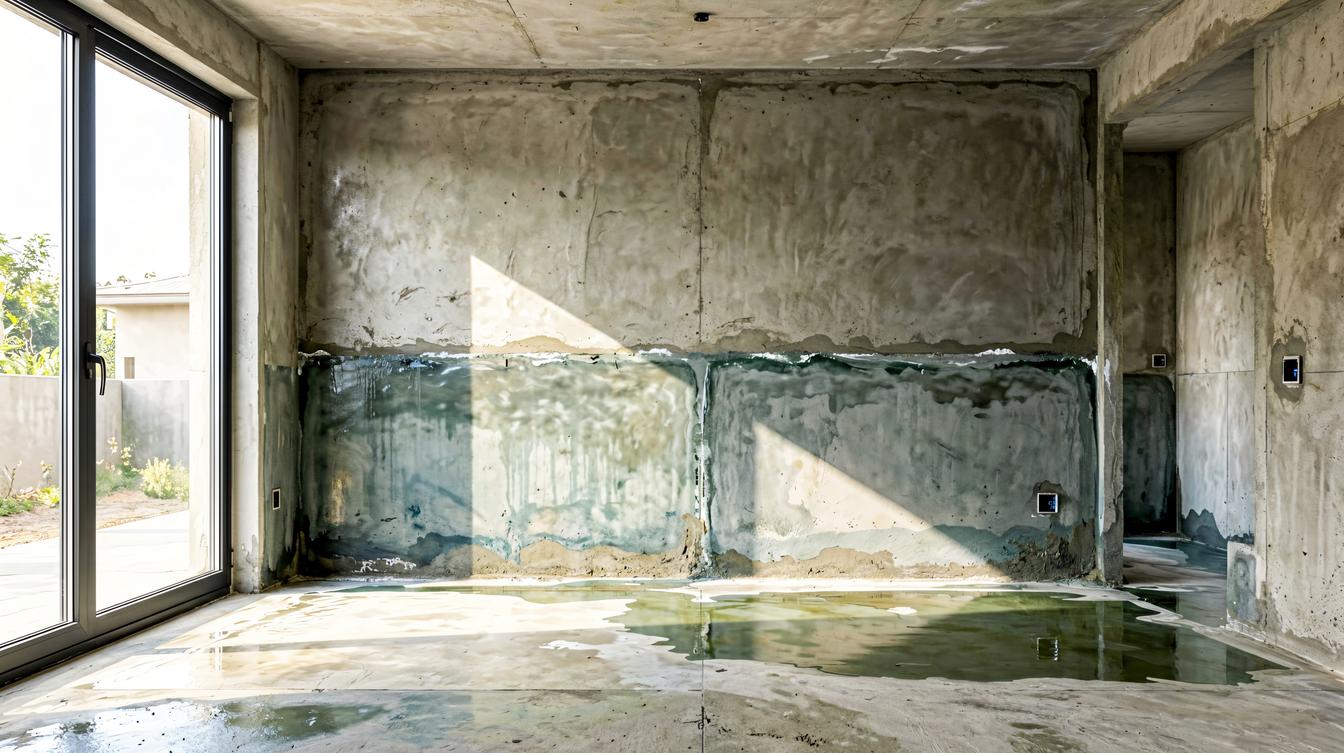
Comparison on identical attributes with dry thickness, overlap, UV tolerance, ponding endurance, movement bridging, and substrate moisture ceiling shows why brand talk misleads, because a sheet lap 100mm heat welded and a liquid lap reinforced 100mm behave differently at a 90 degree junction with bond breaker 10mm. Compare builds, not labels.
Installed cost per sqm range including primer, bands, collars, and labour half day per 6 sqm puts sheets ahead on large flat roofs where speed offsets burner labour, while liquid leads in small bathrooms where sheet cutting wastes 15 percent. Check sizing math via bathroom waterproofing kit cost and coverage so material per sqm reflects delivered 1.0mm, not optimistic wet liters.
| Attribute | Sheet Torch 3 to 4mm | Liquid Acrylic 1.0mm | Cementitious 1.2mm |
|---|---|---|---|
| Dry thickness | 3 to 4mm factory | 1.0mm site gauged | 1.0 to 1.2mm site |
| Overlap and lap | 100mm side, 150mm end, torch welded | 100mm band at junctions, no field lap | No laps, feathered 50mm, band at joints |
| UV and ponding | UV ok with mineral cap, ponding tolerant | Needs topcoat for UV, fails over 48h ponding | Tolerant to damp, poor under prolonged ponding unprotected |
| Movement | Bridges 1 to 2mm heat cycle | Flexible to 0.5mm, needs PU at 10mm joint | Rigid, cracks above 0.4mm unless banded |
| Substrate ceiling | Dry below 6 percent, strong, flat | Below 15 percent with primer | Tolerates damp to 8 percent |
| Installed per sqm | 18 to 28 | 8 to 14 materials plus labour | 5 to 8 plus labour, 3 coats often |
If your leak pattern shows staining along a joint line, suspect a lap. If it shows pinholes at the waste, suspect gauge. The table ties that diagnosis to the build you chose, and for pattern mapping see waterproofing failure leak diagnosis which links ponding time and lap length to symptom.
Decision Trade-offs and When to Call a Pro
Trade-off between seamless fit and calibrated thickness defines the choice, because liquid acrylic seamlessness saves time at pipe cluster with three penetrations within 200mm in a bathroom 6 sqm, while sheet calibrated 3mm saves risk on a balcony 15 sqm exposed to 35C with fall 1.2 percent barely achieved. Choose fit where geometry is tight, choose calibration where exposure is harsh.
Edge case rule with timber substrate deflection over L/300, moisture over 6 percent, or crack actively moving 1mm monthly means no type holds without structural fix and drainage correction to 1 to 2 percent fall, and any applicator who promises a membrane alone there is selling the wrong layer. Fix structure first, then membrane.
Choose sheet torch or peel and stick sheet when the slab is exposed, largely flat, and must tolerate sun and ponding over 48 hours. Choose liquid acrylic when the area is internal, under 8 sqm membrane, with many corners and you can gauge every sqm and pond test 24h. Choose cementitious when water comes from soil or a planter and the substrate is below grade and mostly rigid. For application detail on the path most homeowners take, follow liquid waterproofing membrane application steps and for the big picture system ties, revisit waterproofing systems complete guide to confirm drainage and upstands before you buy thickness. Where structure, plumbing, or compliance is in doubt, consult a licensed applicator, these ranges guide quoting, not replace certification.