
The frustrating part is that a chipped concrete joint can look like a small patch while actually pointing to movement, corrosion, or a failing base. Start by measuring and sounding the damaged area, then choose a repair only after checking its depth, movement, and traffic exposure. Concrete crack repair at control joints is the diagnosis and restoration of damaged joint edges so the slab can move without shedding more concrete.
What a Spalled Concrete Joint Edge Actually Is
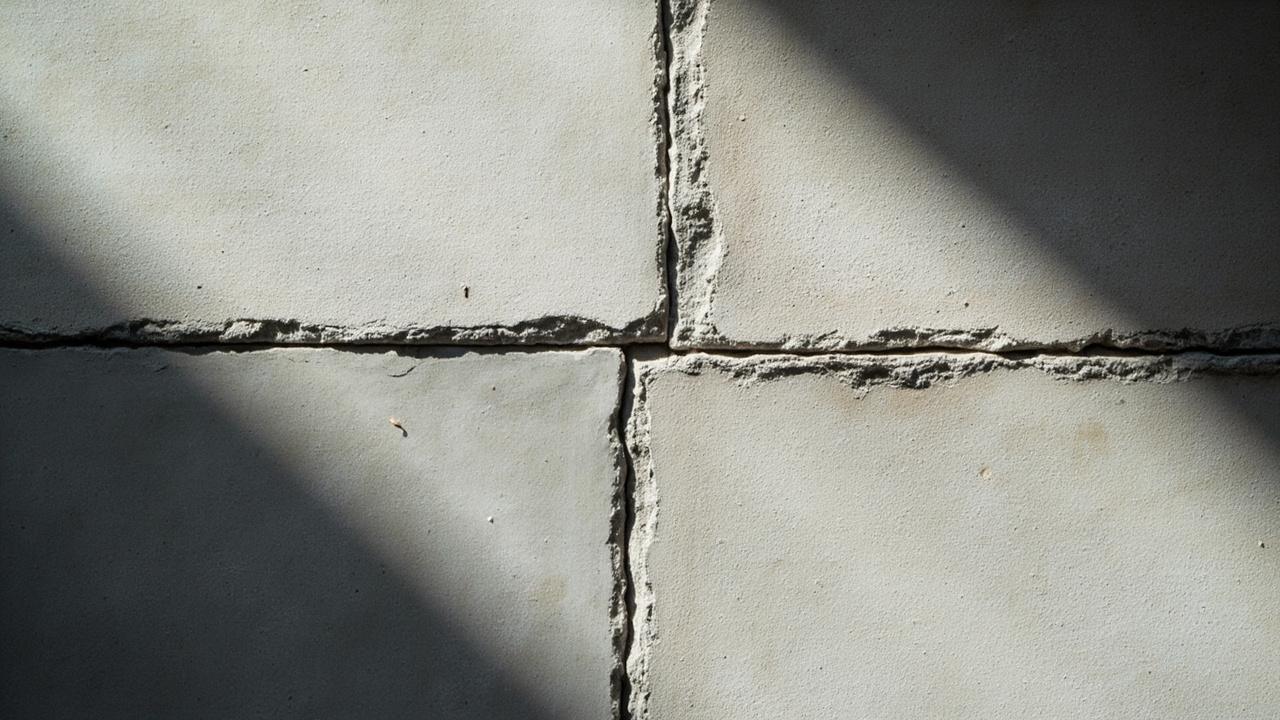
Spalled concrete edge is a broken or flaked concrete boundary beside a control joint, often leaving loose aggregate exposed. Unlike scaling, which spreads across a surface, joint spalling concentrates damage along an edge where the slab can open, close, or curl.
A control joint is a planned break that accommodates shrinkage and movement. Concrete slabs shrink and may curl during their first 12 months, so an undamaged joint gives that movement somewhere to go instead of forcing random cracks through the slab.
Do not confuse joint spalling with scaling, pop-out, pothole, or structural cracking. Scaling covers broad surface areas, a pop-out is a small cone-shaped fragment loss, and a pothole is a cavity in the surface. A structural crack extends through the concrete and may require assessment beyond a joint-edge patch.
Interior slabs and exterior exposed edges fail differently. Interior movement is usually easier to contain, while exterior edges face weather, salt, and repeated freeze-thaw exposure. That context also affects the repair material, so note where the damage occurs before buying a product.
Read the Spall Before You Choose a Repair
Sounding out delamination reveals whether the visible spall extends below the surface. Strike the concrete with a steel rod, ball-peen hammer, or chain; sound concrete gives a clear ring, while deteriorated concrete gives a dull response that marks a larger repair area.
Measure the visible defect next. Do not repair a spall less than 6 inches long and 1.5 inches wide. Small spalls beside a joint or crack generally do not affect ride quality and may need only sealant, according to the FHWA guidance.
Look beyond the chipped edge for clues about the cause. A crack wider than about 1/4 inch, or one side sitting higher than the other, points toward a base problem rather than a simple material defect. Concrete that keeps spalling at the same joint also deserves investigation instead of another surface patch.
Check for exposed rebar corrosion, broken dowels, settlement, drainage leakage, and traffic damage. Corroded steel or a moving joint changes the repair class, while a stable interior edge with sound concrete below may support a limited patch. If the cause affects structure, drainage, or reinforcement, consult a qualified professional before cutting deeper.
Partial-Depth Repair: When It Works and Where It Stops
Partial-depth repair restores localized distress in the upper part of a slab when sound concrete remains below. Choose it when sounding finds a limited area, the slab base appears stable, and required removal does not exceed about one-third of the pavement thickness.
That one-third threshold is a decision limit, not a starting depth. If more chipping is needed to reach sound concrete, or dowel bars become exposed, the repair must change to full-depth replacement. No patch should disguise an uncertain base or damaged reinforcement.
For a shallow repair, use diamond-bladed saws set about 1 to 2 inches deep. Make straight, vertical cuts and extend the repair limits at least 12 inches long and 4 inches wide, then carry the boundary 3 to 4 inches beyond visible spalls or delamination marks.
The removed area needs a clean, vertical edge. Feathered concrete gives repair material little room to bond, while unsound material can leave a weak layer behind. Provide 3/4-inch clearance, or 1.5 times the repair material’s largest aggregate, between steel and surrounding concrete so material can flow around it.
Materials, Tolerances, and the Mistakes That Ruin the Patch
Epoxy mortar patch material suits minor spalls in vertical, overhead, or horizontal configurations. Cementitious repair mortar suits deeper, rigid patches when sound edges and suitable preparation are available; its cure time commonly runs 3 to 7 days depending on depth and temperature.
Match the material to movement instead of treating every crack alike. A dormant crack may accept a rigid repair. A crack that opens and closes with temperature calls for flexible polyurethane sealant over backer rod at a 2:1 width-to-depth ratio, while forklift and hard-wheel traffic favors a semi-rigid filler rated for the joint’s movement.
For cementitious repairs, prepare the concrete in saturated surface dry condition, meaning damp but not visibly wet. Soak the surface for 2 to 24 hours or pressure-jet it for at least 15 minutes. Sandblast exposed faces to remove dust, oil, loose particles, asphalt residue, and other contaminants.
Place repair material in lifts of at least 1/2 inch and no more than 1-1/2 inches, unless the engineered product system permits otherwise. Avoid three-sided adhesion, unsound concrete, and feathered edges, because each creates a weak boundary that can reopen under traffic.
Salt changes the allowable tolerance. ACI 224R lists tolerable crack widths of 0.016 inch in dry air, 0.012 inch in humid air or soil, and 0.007 inch where deicing chemicals are used. Wider cracks can admit water and salt, so recurring edge damage may need joint-sealant work or another underlying correction rather than another rigid patch.
| Repair class | Choose when | Key limit |
|---|---|---|
| Partial-depth repair | Localized spall with sound concrete below | Repair depth must not exceed about one-third of slab thickness |
| Epoxy mortar patch | Minor spall requiring strong bond and rapid return to service | Needs a rigid, clean cavity and sound edges |
| Cementitious repair mortar | Deeper rigid spall or pothole | Longer cure; requires SSD preparation |
| Semi-rigid joint filler | Joint remains functional under traffic or temperature movement | Cannot correct settlement or base failure |
| Full-depth replacement | Deeper damage, exposed dowels, or a base problem | Usually requires contractor design, equipment, and curing time |
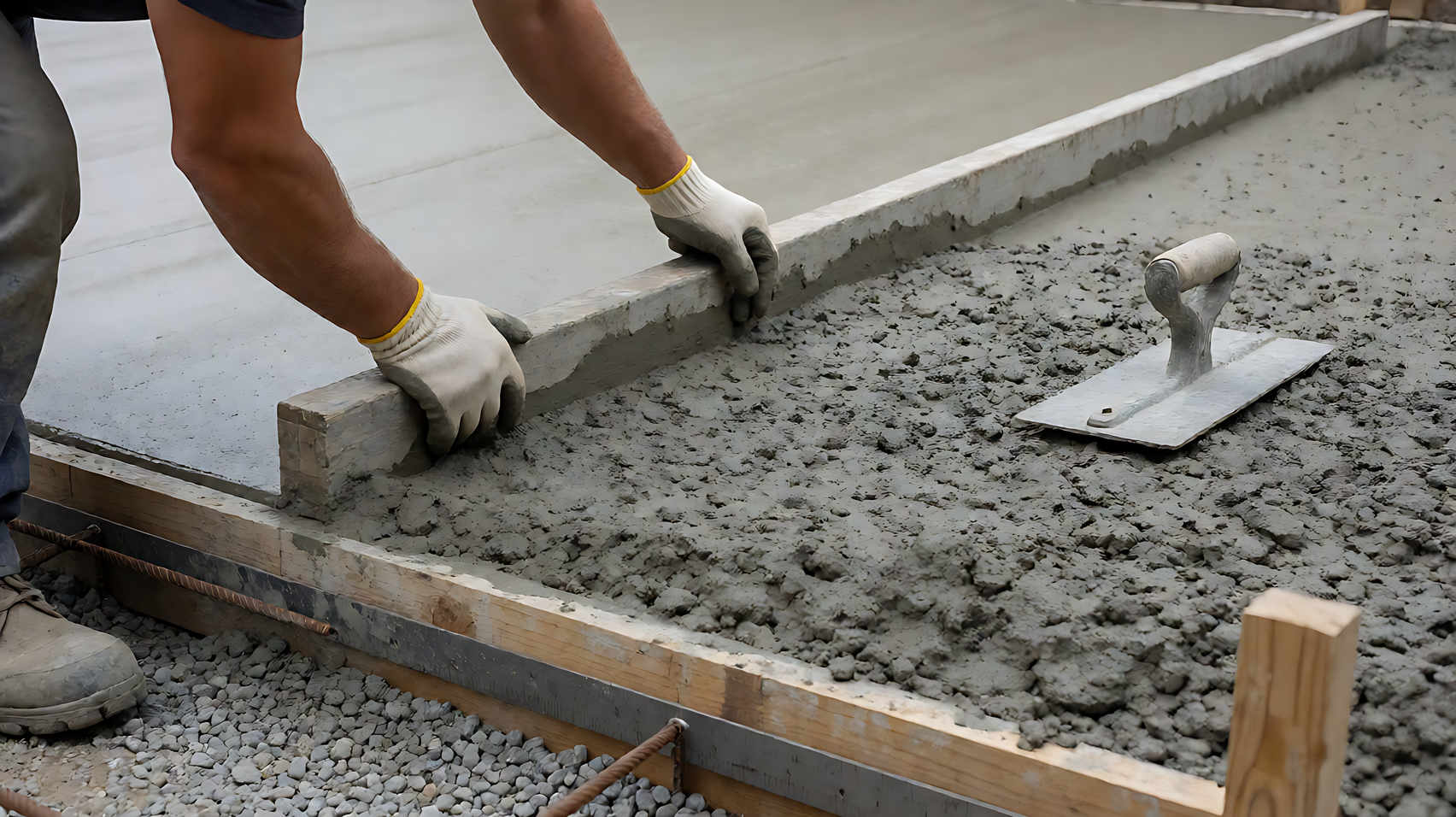
For related slab-preparation decisions, review concrete slab pouring and finishing before judging whether early joint or curing issues contributed to the damage.
What It Costs and When to Call a Contractor
Minor surface spalling typically costs about $20 to $50 per square foot to patch and seal. General spall and pothole patching runs $4 to $12 per square foot, depending on depth and the number of lifts. These are separate market bands, so compare quotes on the same scope rather than averaging them.
When damage reaches exposed, corroded rebar and requires concrete removal, steel treatment, and rebuilding the section, the cost can rise to $50 to $150 per square foot. For narrow cracks, professional epoxy injection is commonly $10 to $30 per linear foot, including ports and resin.
A DIY patch is reasonable when the defect is minor, the base appears stable, no reinforcement is exposed, and you can meet the cutting, preparation, lift, and curing tolerances. Full-depth replacement belongs with a contractor when sound concrete cannot be reached, dowels are exposed, movement or settlement continues, or the repair covers a high-traffic interior slab.
Choose a contractor when the spall recurs along the same joint, several patches would be less than 2 feet apart, or more than two spalls affect one transverse joint. In those cases, repairing isolated chips can become repeated maintenance. Consult a professional where the diagnosis suggests structural movement, corrosion, or a failing base.
For another repair involving foundation movement and narrow cracks, see foundation crack injection repair. If the joint sits within a finished interior floor system, understand installing laminate flooring over concrete before selecting a repair with moisture or curing constraints.
Decision Guidance
- Choose sealant or no repair when the spall is less than 6 inches long and 1.5 inches wide, and the surrounding concrete sounds sound.
- Choose a partial-depth repair when sounding reveals limited delamination, the cause is controlled, and the required depth stays within about one-third of the slab thickness.
- Choose epoxy or cementitious repair mortar according to depth, movement, traffic, and required cure time, not simply the size of the visible chip.
- Choose full-depth replacement when sound concrete lies deeper than the partial-depth limit, dowel bars are exposed, or reinforcement and base failure require rebuilding the section.
- Call a professional when cracks move, edges settle, corrosion is present, the base is uncertain, or repeated spalling suggests the joint is not performing as designed.