
You’re reviewing a tunnel or basement waterproofing proposal and the options blur together: membrane, coating, seams, drainage. The decisive attribute is continuity, meaning the system must form an unbroken barrier that handles water pressure and construction movement. Tunnel waterproofing is a coordinated system of membranes, sealants, drainage, and detailing that prevents water from entering an underground structure.
The right choice depends less on the product name than on the exposure, substrate movement, joint pattern, and whether the structure can tolerate a bonded system. A specification that names a membrane without detailing seams, penetrations, and drainage leaves the most important decisions unanswered.
What Tunnel Waterproofing Actually Controls
Waterproofing for tunnels and underground structures controls continuity across the structure and its joints when water pressure, movement, or wet ground may force water through cracks. The decisive attribute is not thickness alone; it is whether every transition remains sealed under the project’s expected conditions.
That distinction changes the work. A complete system may combine a 3 to 4 mm torch – applied membrane with compatible sealants, protection layers, and drainage. The membrane resists direct water entry, while joints and penetrations determine whether that resistance survives movement or settlement.
Start with the failure path. Is the concern groundwater pressure, surface water, condensation, or a rising damp problem? Each source behaves differently, so choosing a product before identifying the water path can hide the wrong issue. The broader waterproofing systems explained here provides useful context without replacing project – specific detailing.
How a Waterproofing Membrane Handles Water
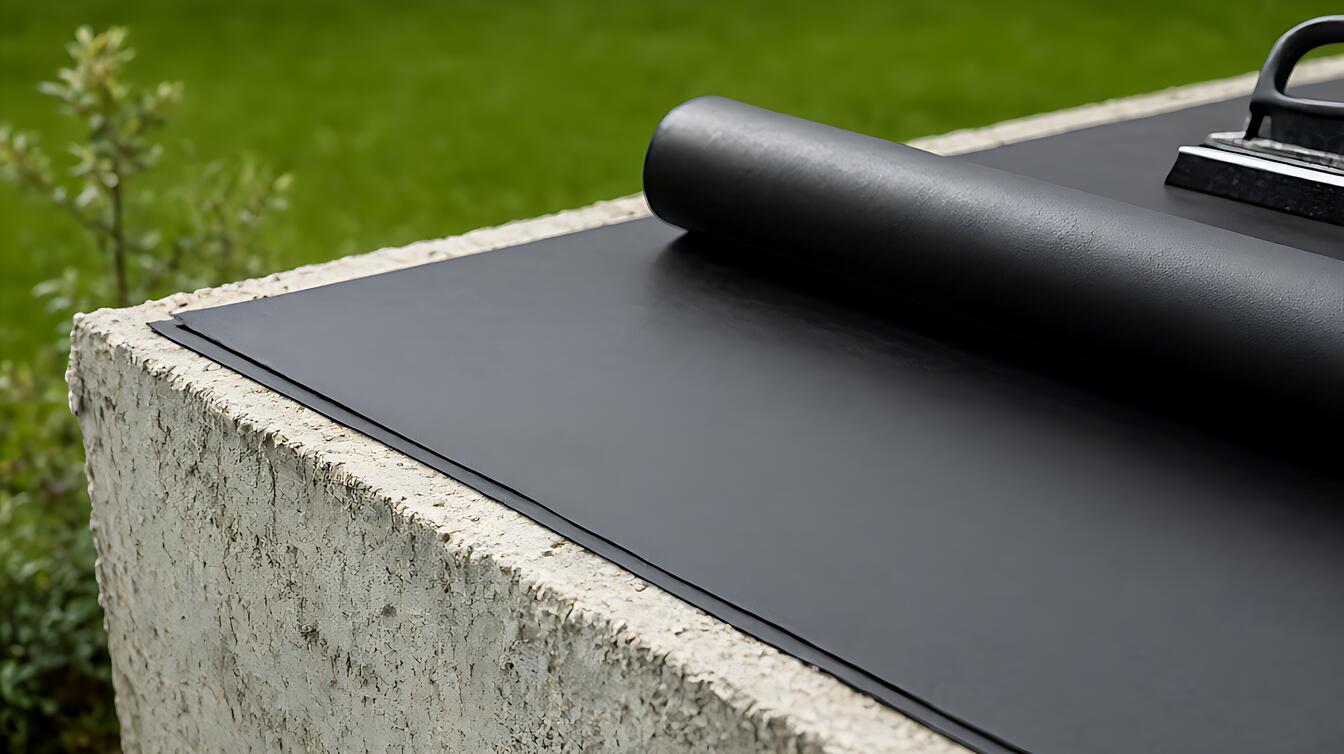
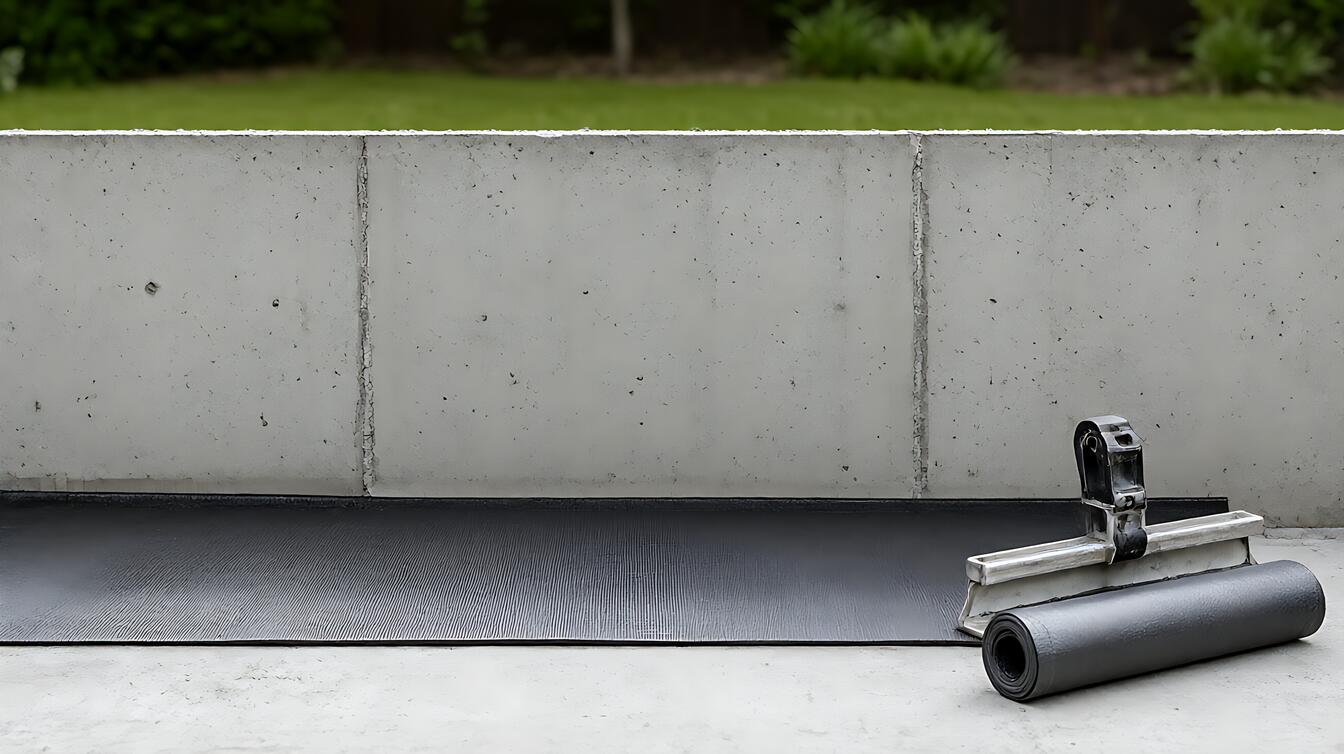
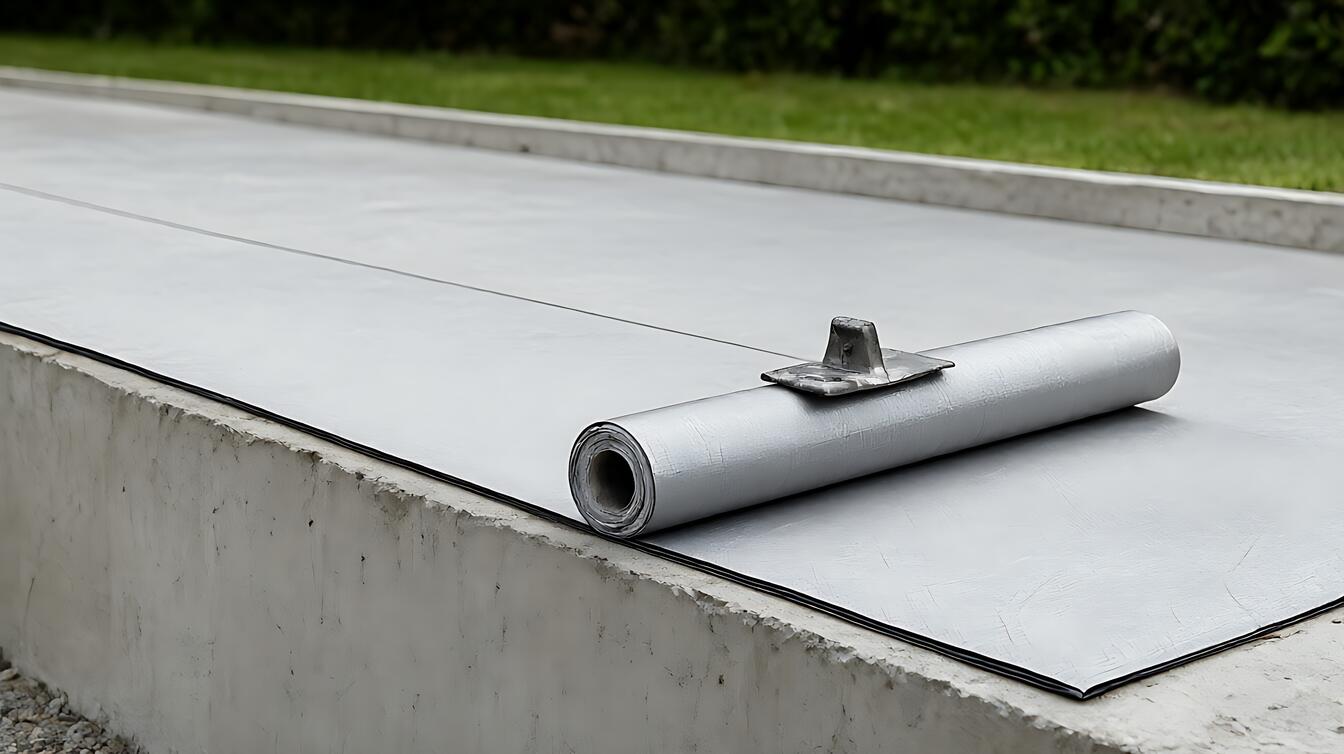
3 to 4 mm torch – applied membrane creates a continuous waterproof layer where heat bonds the sheet to a prepared substrate and welds adjacent sheets together. Under continuous groundwater exposure, that continuity limits water passage while allowing the system to bridge planned joints and construction details.
The critical dimension at seams is not the sheet thickness. A 100 mm overlap gives adjacent sheets sufficient contact for the welding process, provided the surfaces are clean, dry, and prepared as specified by the manufacturer. A nominal overlap does not compensate for contamination, poor adhesion, or an unfinished edge.
Support matters just as much. The membrane needs a sound, even substrate, compatible detailing at corners, penetrations, and changes of material, plus protection where later construction could puncture it. If a surface is too damp for reliable bonding, a compatible acrylic coating may serve as a preparatory treatment only when its product instructions permit that use. It should not be treated as a universal primer.
Learn more about the product limits in the guide to membrane thickness and overlap requirements. That detail matters because the numbers work as a system, not as independent promises.
When to Choose Sheet, Coating, or Cementitious Systems
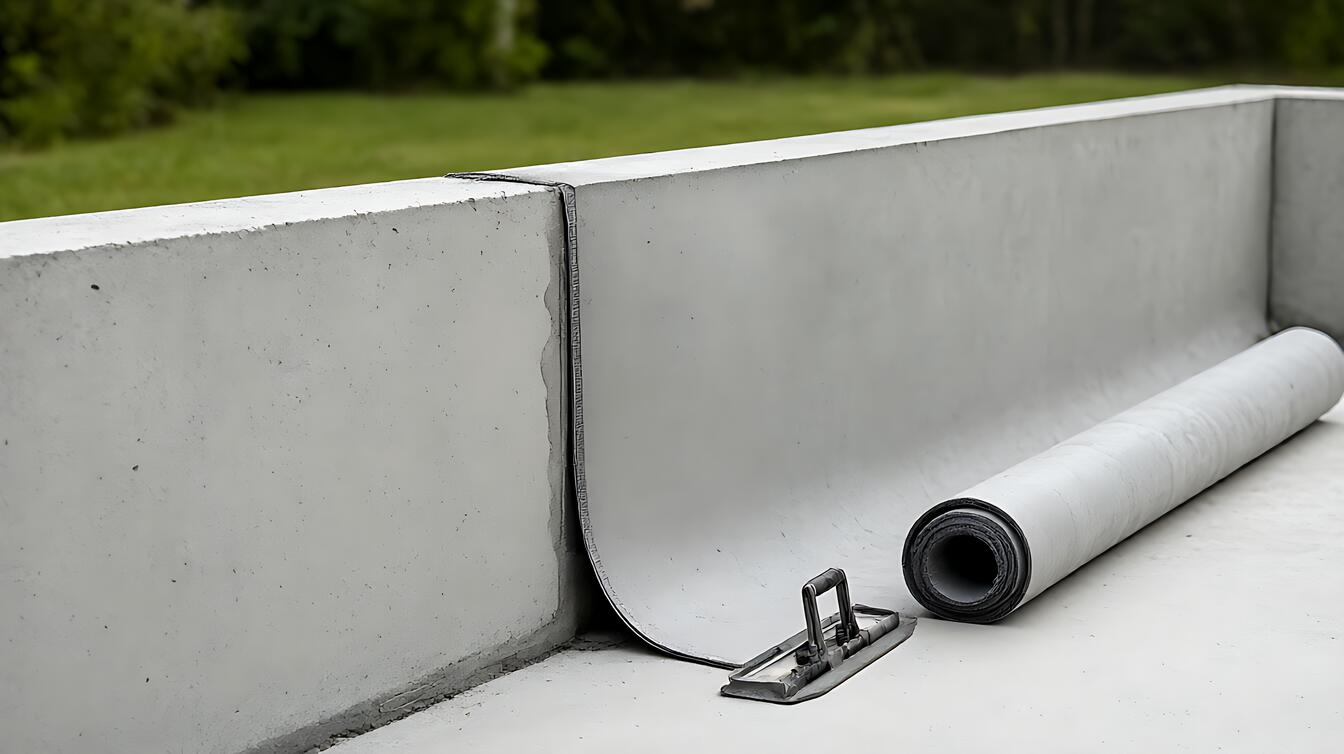
Sheet membrane offers strong continuity and predictable seam welding when the substrate, access, detailing schedule, and protection plan support installation. Choose it when joints require controlled bonding and the crew can achieve clean, even adhesion throughout.
Acrylic coating can suit smaller, simpler areas when the manufacturer permits the application conditions. It is more practical where a complete sheet system would be difficult to install, but it should not be chosen solely because it is easier. Surface preparation, thickness, curing, and exposure limits still determine performance.
Cementitious coating can work over suitable masonry or concrete where a rigid or semi-rigid coating suits the expected movement. It generally offers less accommodation for difficult detailing than a properly detailed sheet membrane. Where movement, complex penetrations, or high water pressure dominates, the detailing plan deserves more attention than the broad product category.
| System | Best fit | Key limitation |
|---|---|---|
| Torch – applied sheet membrane | Large underground areas with controlled detailing | Requires suitable substrate, welding, and protection |
| Acrylic coating | Simpler areas where the approved system allows it | Application and curing conditions constrain use |
| Cementitious coating | Suitable masonry or concrete substrates | Movement and complex detailing can limit suitability |
The honest trade – off is control versus simplicity. A sheet membrane can create a strong, inspectable seam system, but it demands careful preparation and sequencing. A coating may simplify access, yet its suitability depends more heavily on the exact formulation and application instructions.
How Waterproofing Performs on the Job Site
24 – hour ponding test can help check a completed waterproofing area before it is concealed, when the test protocol permits and the substrate can safely hold water. A test can reveal obvious omissions, but it cannot prove performance under long – term groundwater pressure or movement at joints.
Consider a below – grade room where a damp ceiling appears only after heavy rain. The visible stain may be indirect leakage through a wall joint, an adjacent pipe penetration, or poorly sealed penetrations rather than a failed membrane. Mapping the water path before selecting another membrane prevents repeated work over the wrong location.
Real installation control depends on sequencing. Waterproofing cannot protect the structure until surfaces are prepared, details are formed, and each stage is inspected before concealment. The adjacent guide to liquid membrane application covers that broader workflow, while site diagnosis belongs with the waterproofing leak diagnosis guide.
For a tunnel or occupied basement, drainage must also be evaluated as part of the design. A 1 to 2 percent drainage slope can direct water toward an outlet in suitable applications, but it cannot replace waterproofing. Blocked or absent drainage can turn a minor installation defect into visible leakage and recurring moisture.
Drainage design and structural loading should be reviewed by the responsible professional. Underground work may involve excavation, structural movement, electrical clearances, and pressure from water or soil.
Limits, Edge Cases, and the Next Decision
Groundwater pressure changes the specification because a barrier that handles surface rain may not remain dependable under sustained pressure. Movement joints, construction joints, tie holes, pipe penetrations, and transitions between materials also need compatible details rather than surface patches.
Choose a sheet membrane when controlled seam bonding, broad – area continuity, and planned protection fit the installation conditions. Choose an acrylic coating when the manufacturer approves it for the substrate and the geometry is simple enough that its application limits can be met. Choose a cementitious system when its rigidity suits the substrate and movement expectations.
Call for a qualified waterproofing specialist when groundwater pressure is substantial, the structure may move, multiple penetrations crowd the area, or a failure would affect occupied space or critical infrastructure. The designer or installer should confirm compatibility, protection, drainage, and testing requirements. “Waterproof” is not a system property on its own; it is the result of compatible layers working together.
Before approving the work, confirm the membrane type and thickness, the 100 mm seam overlap, substrate preparation, joint and penetration details, protection, drainage provisions, and any required 24 – hour ponding test. For a wider review, compare the main approaches in sheet, liquid, and cementitious waterproofing types.
Decision Guidance
- Choose a 3 to 4 mm torch – applied membrane when the substrate is suitable, seam welding is practical, and the project needs controlled continuity across larger underground areas.
- Choose an acrylic coating when its approved application conditions fit the substrate, exposure, geometry, and installation schedule.
- Choose a cementitious coating when the substrate and expected movement suit a rigid or semi-rigid system.
- Consult a waterproofing professional when pressure, movement, penetrations, structural loading, or occupied – space consequences make system compatibility difficult to verify.