
Constantly digging to the back of a deep cabinet and losing half the shelf? Fixed shelves waste vertical space and hide what you bought. Pull out pantry systems are full extension slide assemblies that bring tall, narrow cabinet bays out into the aisle so every item stays visible and reachable without kneeling or stacking.
What Pull-Out Pantry Systems Are and How They Reclaim Space
Pull out pantry systems are tall pull out frames with full extension soft close slides rated at 60 to 100 kg per unit that replace fixed shelves inside a cabinet box plywood 15 to 18 mm when installed at 150 to 600 mm bay widths. They turn dead depth into usable tiers, so a 400 mm wide bay gains 30 to 40 percent more accessible volume compared with two fixed shelves.
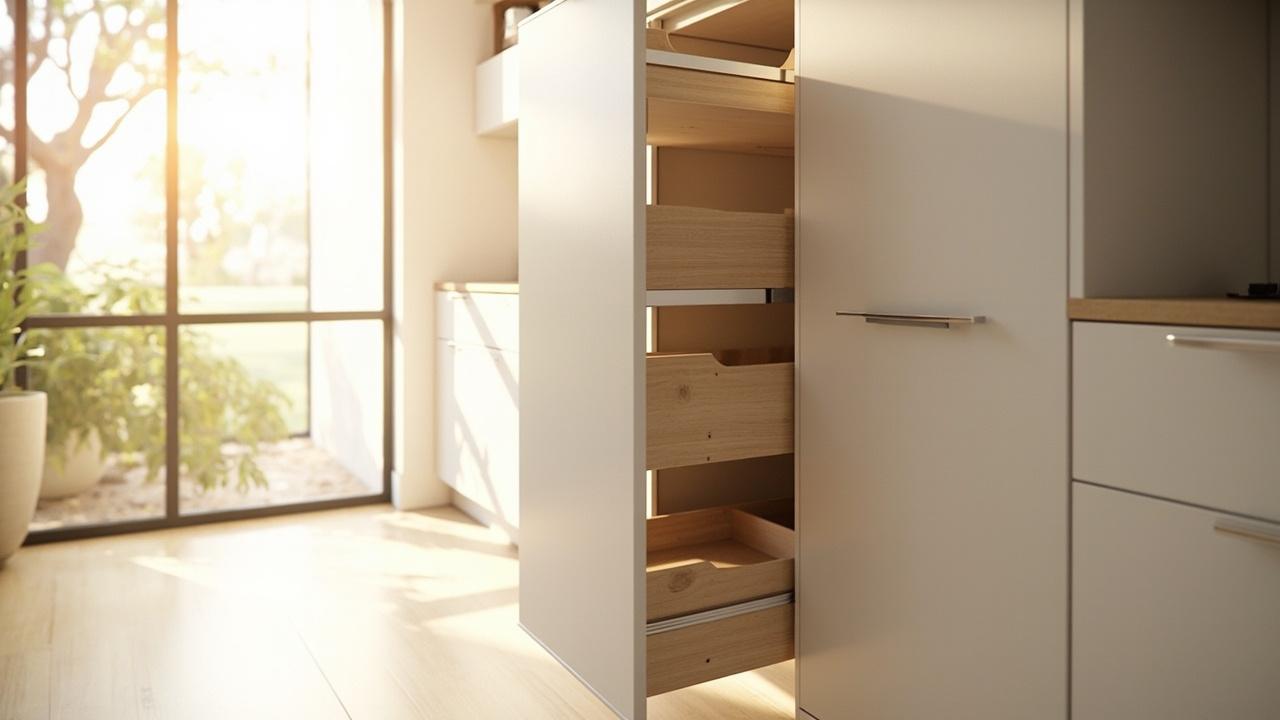
Each system has a steel frame, basket or solid tiers, and a slide pair anchored to the cabinet sides and base, not to the back panel alone. Full extension means the tier clears the face frame completely, so jars at the back do not hide behind the door, while soft close prevents slam damage to brackets and countertop load 50 lb per sq ft margins elsewhere.
The HSSE anchor matters here. A plywood side at 18 mm holds screws under dynamic load, while 16 mm particleboard strips under repeated full loads, especially in high humidity, so the same pantry kit lasts twice as long in a sealed plywood box with a 5 mm ventilation gap at the toe kick.
Think of it as a drawer turned vertical. The frame carries the load, the slides carry the motion, and the cabinet carries the anchor, so weakness in any of the three shows up as lean or rattle within months.
How Pull-Out Pantry Systems Work: Slides, Loads, and Anchoring
Slide mechanism in pull out pantry systems uses ball bearing full extension slides with 80 to 100 kg dynamic rating per pair and a 3 mm side gap per side that tolerates 75 to 85 percent humidity when slides are zinc plated and screws hit plywood. Tiers spaced 180 to 280 mm handle bottles and boxes without toppling, and a 10 mm back lip keeps items from tipping during the pull.
Load math guides width. A 300 mm wide tall unit at 1800 mm height with four tiers safely holds 60 to 70 kg total, with about 15 to 18 kg per tier, so canned goods go low and snacks go high. A 450 to 600 mm wide unit needs 100 kg slides and a base anchor plus a top guide at the header, otherwise the frame leans when half extended.
Anchoring details separate lasting installs from callbacks. Fix slides with 4 by 16 mm pan head screws every 80 to 100 mm into cabinet box plywood 15 to 18 mm, not into thin backing, and tie the tall frame head to the top rail or soffit so lateral pull does not pry the cabinet off the wall. For quartz 15 to 20 mm tops nearby, keep a 15 mm clearance to the adjacent base so the pantry door does not rub stone when the floor settles.
One more nuance, door mounting. A frame that carries its own door needs synchronized slides at top and bottom, while a cabinet door that pulls the frame needs a solid connector at mid height to stop flex that eventually cracks HPL edges.
Choosing the Right Pantry System for Your Cabinet Bay
Selection logic for pull out pantry systems sorts by bay width, door style, and humidity rather than brand, since plywood versus aluminum versus solid wood boxes change screw hold and waterproofing needs when the kitchen is used hard. A narrow spice bay and a wide tall larder want different slide ratings even if the catalog look is similar.
| Criteria | Slim Pull-Out (150 to 300 mm) | Mid Tall Pantry (350 to 450 mm) | Wide Larder Pull-Out (500 to 600 mm) |
|---|---|---|---|
| Best use | Oils, spices, slim bottles | Daily pantry, mixed dry goods | Bulk storage, appliances, heavy cans |
| Slide rating needed | 45 to 60 kg pair, single base plus guide | 80 kg full extension soft close | 100 kg plus top and bottom synchronization |
| Tier count and spacing | 5 to 6 tiers at 180 to 220 mm | 4 to 5 tiers at 220 to 280 mm | 3 to 4 tiers at 250 to 320 mm, heavy base |
| Typical cost per unit installed | 90 to 160 dollars | 150 to 260 dollars | 240 to 380 dollars with top guide |
| Humidity note | Any box if sealed, keep vent gap | Plywood preferred, seal edges yearly | Plywood or aluminum frame, check slides twice yearly |
For a 600 mm wide tall cabinet in a humid home, pair a plywood box with zinc slides and add a top guide, for a 200 mm filler next to the stove, choose a two tier slim on 60 kg slides and keep it 100 mm from the heat source. Price comparison that includes structure context appears in kitchen renovation guide, where shell and frame costs set the real budget before any pantry kit is added.
Field example, a 400 mm bay with four tiers at 250 mm spacing holds 16 standard spice jars per tier on the slim side and 12 medium cans per tier on the grocery side, so a family of four reclaims roughly one full shelf of hidden depth that previously required stacking and re stacking every cooking session.
Installation Steps and Mistakes That Bind the Slide
Install sequence for pull out pantry systems sets cabinet plumb within 2 mm per meter before any slide goes in, then fixes slides parallel within 1 mm over the full height when the floor is level to 3 mm over 2 m. A racked cabinet binds even the best slides, and shimming after the fact twists the frame.
Level the base first. Shim the cabinet to a laser datum, screw the base to the floor or adjoining boxes every 30 cm, and verify plumb on both sides before marking slide holes. Mount the slide pairs at the same height left and right, using the jig or a story stick so all tiers share one plane, then hang the frame and check extension without load, it should glide and soft close without rub.
Load test before stocking. Pull fully and push 20 times empty, then add half load and repeat, any catch indicates a screw proud of the slide channel or a side gap tighter than 3 mm. Adjust, not force, and replace any screw that stripped in particleboard with a through bolt plus oversized washer into a plywood reinforcer.
Common traps repeat. Anchoring slides to the thin back panel alone pulls out under 60 kg, mixing a humid solid wood box without sealing swells the stile and pinches the slide in wet months, and omitting the top guide on a 1800 mm tall frame lets it sway and scar the adjacent quartz edge. Keep a 5 mm ventilation gap at the toe kick and seal every cut edge.
Limits, Trade Offs, and Next Steps for Real Kitchens
Tier limits for pull out pantry systems cap at 100 kg per frame for domestic slides and favor aluminum or heavy plywood frames with top guides when the bay exceeds 500 mm width or the kitchen sees high humidity above 80 percent without mechanical ventilation. Beyond that rating, the cabinet side, not the slide, becomes the weak link.
Trade offs are honest. Slim pull outs excel for narrow fillers and keep circulation at 900 mm minimum in a galley, but they need precise plumb or they rub. Mid tall units offer the best cost per visible tier and suit most families, yet they block view of deep corners if the aisle is tight. Wide larders hold bulk and small appliances at floor level, but they need synchronized top and bottom hardware and a reinforced header, which adds 60 to 90 dollars.
For kitchens that also fight moisture, coordinate the pantry with stone and frame choices covered in kitchen countertop installation cost guide, since quartz versus granite edge clearance and base support change how close a tall door can sit to the worktop. For full height planning across walls, the system overview in kitchen cabinet materials compared clarifies when plywood, aluminum, or solid wood boxes best hold a loaded pantry over time.
Choose slim pull out if the filler is 150 to 300 mm and you store bottles, choose mid tall pantry if the bay is 350 to 450 mm and the box is sealed plywood on a level base, choose wide larder with top guide if the bay is 500 to 600 mm or loads exceed 70 kg and the header can take the tie. If slides still bind after plumb correction, or the cabinet side flexes under hand pressure, call a pro before loading, a reinforced side costs far less than a collapsed full pantry.