
Choosing between plywood cabinets and aluminum kitchens and unsure which survives steam, oil, and daily use? Both promise durability, but they fail in different ways. Kitchen cabinet comparison here means plywood with HPL faces versus aluminum frame with panel infill, judged on the same criteria: moisture, heat, span, cost, and maintenance.
What We Are Comparing , Two Cabinet Systems
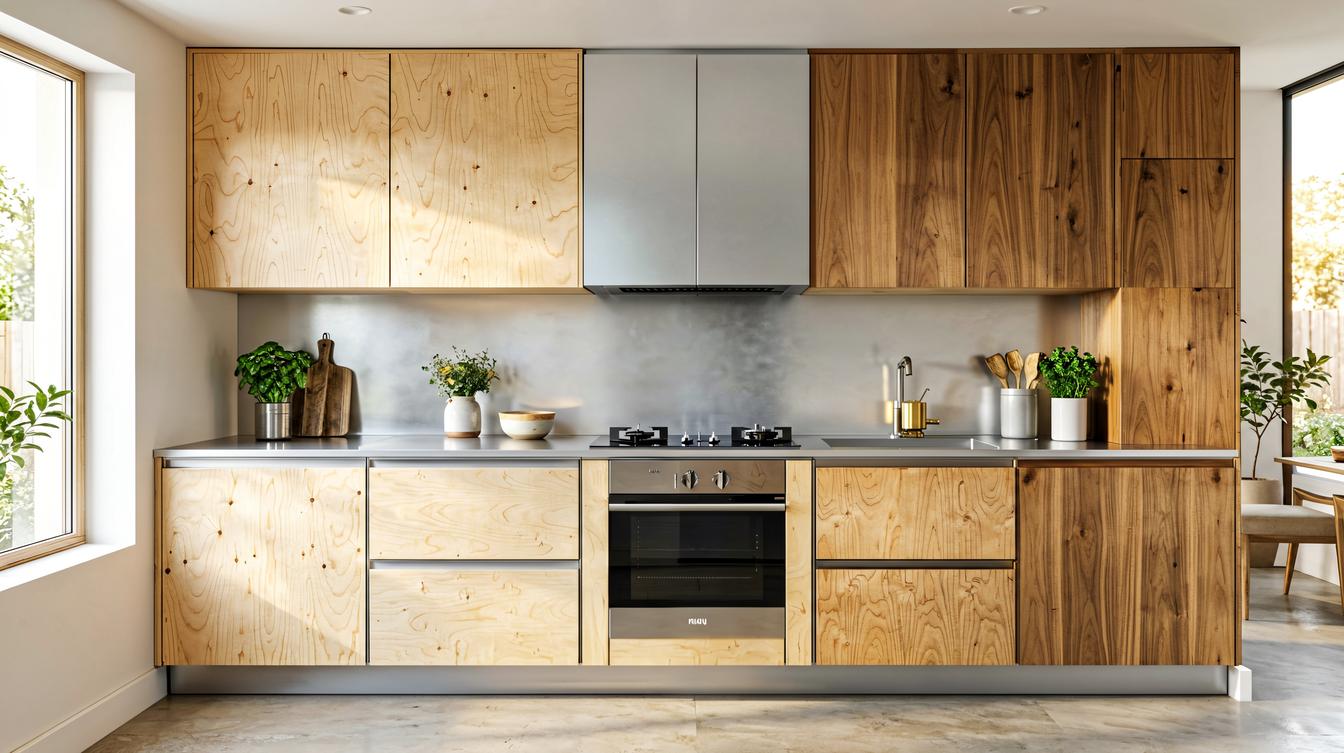
Plywood cabinets use multi-layer plywood (often 15-18 mm) finished with HPL or melamine, joined with screws and dowels, and supported by a hollow steel frame or direct wall rail. They feel warm, accept screws well, and repair easily.
Aluminum kitchen cabinets use extruded aluminum frame with infill panels , ACP, glass, or HPL on thin board , and connect with corner brackets. They resist water, termites, and warping, but conduct heat and can dent.
Countertop pairing matters. Both systems can carry laminate, quartz, or granite, yet the frame beneath decides if a 20 mm stone stays flat across an island.
Price range sets expectations. Plywood + HPL cabinets sit at $90-140 per linear meter, aluminum frame systems at $110-170, before stone tops and hollow frame leveling.
Tap and look. Plywood thuds solid, aluminum rings light. Both are fine , the difference is how they handle steam traps.
How Each System Handles Moisture, Heat, and Movement
Humidity is the first test. Plywood swells slowly if its edge is unsealed, while aluminum itself never swells but its infill panel may if it is particleboard. Sealed edges decide more than material name.
That is why edge sealing and ventilation gaps matter for both. A 5 mm gap behind the backsplash and under the toe kick releases trapped steam in either system.
Heat tells a different story. Plywood insulates better, so a solid surface top over an oven stays cooler on a plywood base. Aluminum conducts heat, so the same oven needs a 15 mm air gap and a reflective shield to prevent panel discoloration.
Thermal movement is similar , 2-3 mm over 3 m , but absorbed differently. Plywood frames flex slightly, aluminum joints stay rigid, so both still need a 2-3 mm tolerance gap at walls to avoid pushing and cracking.
Fixing strength favors plywood for screws. It holds hinges firmly for years. Aluminum relies on brackets and rivets; over-tightening strips them, so hinge plates need factory pre-drilling.
Short check. Bring a sample and leave it near a kettle for a week. Watch edges, not faces.
Where Each System Fits Best
For a stable, air-conditioned apartment kitchen at 24-26°C with good ventilation, plywood cabinets win on warmth, cost, and easy hardware replacement. Weight stays low and finish options are widest.
For a wet area near the sink, a semi-outdoor kitchen, or a home with termite history, aluminum kitchens are safer. They shrug off splash and do not feed termites, even if the look is cooler and harder.
Hot, oily open kitchens with gas stoves need careful detailing in either case. Pair 20 mm quartz or granite with sealed plywood and 30 cm frame spacing, or with aluminum and sealed infill. Oil mist penetrates any unsealed edge regardless of brand.
Rentals and phased upgrades lean to aluminum or freestanding. They move and reinstall cleaner than bonded plywood runs.
Quick guide. Dry and stable → plywood. Wet or termite-prone → aluminum. Hot and long span → either, but upgrade frame to 30 cm centers.
Measure wall flatness. Out-of-plumb more than 5 mm per 2 m hurts aluminum infill alignment faster than plywood scribing.
Head-to-Head Comparison , Honest Trade-Offs
Neither system is universally better. The table below uses the same lenses so the trade-offs are visible without marketing gloss.
| Criteria | Plywood Cabinets (HPL) | Aluminum Frame Kitchens |
|---|---|---|
| Moisture Resistance | Good if edges sealed + vent gap; swells if neglected | Frame never swells; infill depends on panel choice |
| Heat Near Stove/Oven | Insulates well; lower scorch risk | Conducts heat; needs shield + air gap |
| Screw & Hinge Hold | Excellent , wood holds screws long-term | Good if pre-drilled; weak if over-torqued |
| Weight & Install | Light, easy to level and repair | Light frame, but panels can rattle if loose |
| Look & Feel | Warm, wood-like, wide HPL options | Cool, modern, glass-friendly |
| Cost per Linear Meter | $90-140 | $110-170 |
| Lifespan (Installed Right) | 10-15 years | 12-18 years for frame; panels vary |
The cost nuance is leveling. Plywood hides wall unevenness with scribing, aluminum needs a true hollow frame so gaps do not show. Cheap aluminum quotes often omit that frame labor.
Choose by failure mode you fear most. Fear swelling and termites → aluminum. Fear heat marks and hinge loosening → plywood.
Either way, calculate 3-year cycle cost (cabinet + frame + top + rework), not panel price alone.
Costs, Maintenance, and When to Call a Professional
All-in, expect $140-220 per m² installed with hollow frame, including 20 mm stone top, trim, and sealing. Plywood saves $15-25 per m² on cabinet itself, aluminum saves on anti-termite treatment. Add 10-15% for tall ceilings or premium HPL grains.
Always ask for split billing , cabinet versus frame and top. Hidden frame margins inflate both systems equally.
Care is similar. Wipe interiors with dry microfiber monthly, keep toe-kick ventilation clear, and keep sink cabinets dry overnight.
For tops, seal granite yearly, wipe quartz damp, never let laminate edges stay wet. If a door binds after rain, realign hinges rather than forcing.
Photograph corners and measure the longest span before ordering. Bring photos, not memory, and ask if warranty covers sealing and frame or just doors.
Above 3.5 m, with a leaking slab above, or when removing a wall for an island, consult a professional. Correct labor beats a rebuild.
Choose plywood + HPL if the kitchen is dry, stable, and you value warmth and screw hold, choose aluminum frame if the area is wet, termite-exposed, or you prioritize water immunity over warmth.
Explore the broader kitchen renovation guide for system logic on tolerance and moisture control, and the kitchen storage systems guide to match cabinets with islands and overhead storage. Those two map directly to the choice above.