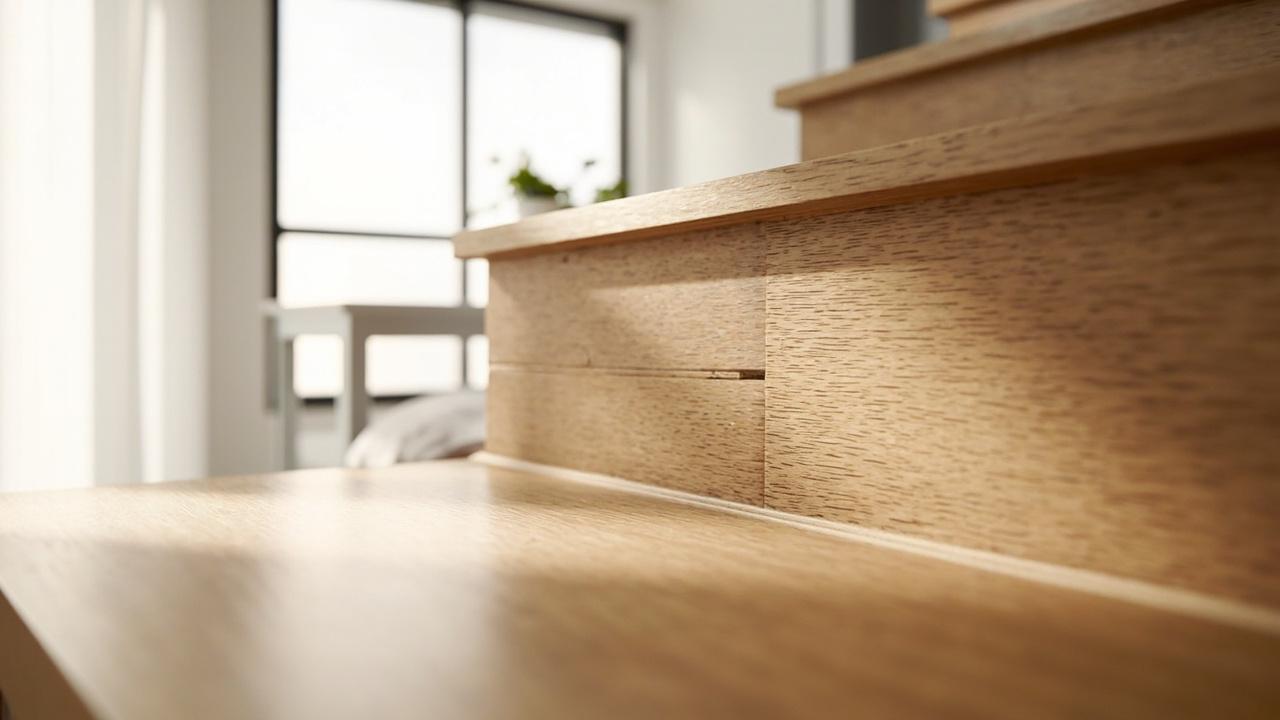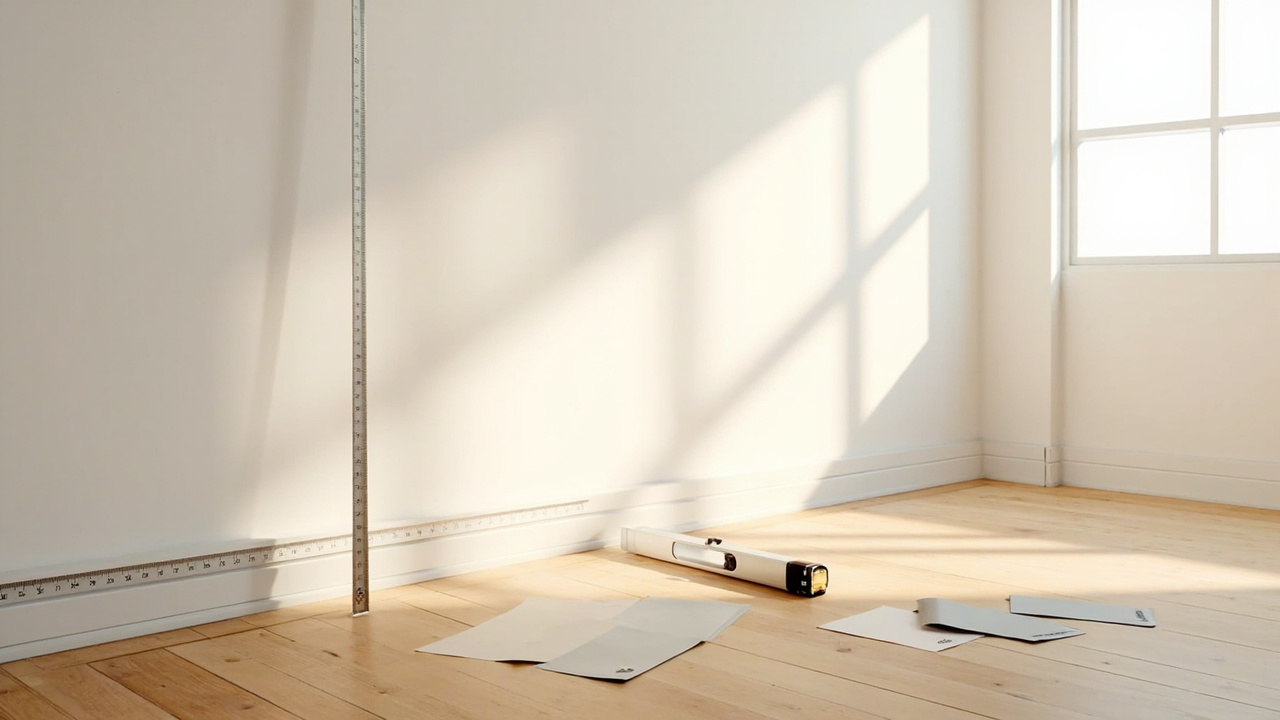


You walk across your laminate floor and hear a hollow pop. Or you notice a 10mm gap running down the hallway that was not there last month. Before you order a full replacement, understand the root cause. Most gap and buckling issues in laminate flooring are expansion gap problems, not plank failures. The fix is usually a baseboard removal and re-gapping, not a full tear-out. Here is how to diagnose what is happening under your floor and apply the right repair.

Why Laminate Floors Gap and Buckle: The Expansion Mechanism
Laminate flooring is a floating floor. It does not attach to the subfloor. Instead, planks lock together and expand and contract as temperature and humidity change. Every manufacturer specifies an expansion gap, typically 10 to 12mm, around the perimeter of the room. If this gap is covered by baseboards or filled with debris, the floor has nowhere to expand. Pressure builds. Planks push up at the joints (buckling) or pull apart at the long edges (gapping). Both symptoms share one root cause: restricted expansion. The underlay also plays a role. A moisture barrier underlay protects against ground moisture, but if the subfloor itself is damp or uneven, the planks will telegraph that stress to the surface. For concrete subfloors, the laminate on concrete guide covers moisture testing and barrier installation in detail.
Diagnose the Problem: Cosmetic Gap vs Structural Buckle
Not all gaps are equal. IF the gap is under 3mm and seasonal, wait for humidity to normalize. IF the gap is 5mm or more, the expansion gap is blocked and you need to re-gap the perimeter. IF buckling is localized to one joint with a peak under 25mm high, re-gap the perimeter and dehumidify the room for 48 hours. IF buckling is widespread across multiple planks, call a pro for subfloor assessment. Use this decision matrix to confirm your fix:
| Symptom | Width/Height | Root Cause | Fix |
|---|---|---|---|
| Long-edge gap | 1 to 3mm | Seasonal humidity drop | Wait for humidity to normalize; cosmetic if under 3mm |
| Long-edge gap | 5mm or more | No expansion gap, planks pushed apart | Remove baseboards, re-gap perimeter, tap planks back with tapping block and pull bar |
| Buckling (peak at joint) | Up to 25mm high | Perimeter expansion gap blocked | Re-gap perimeter, dehumidify room 48 hours, weight down buckled section |
| Buckling across multiple planks | Widespread lift | Subfloor moisture or adhesive failure | Call a pro for subfloor assessment |
DIY Repair: How to Re-gap and Flatten Without Replacing Planks
For a perimeter-restricted buckle, the repair is straightforward. Remove the baseboards and quarter-round molding along the affected wall. Inspect the expansion gap. If it is less than 5mm or fully closed, you need to re-gap. Use a pull bar and a hammer to tap the planks back toward the wall, re-establishing the 10 to 12mm gap. Work in small sections. If the floor has peaked in the center, place heavy objects on the buckled area after re-gapping and let the room normalize at 40 to 60% relative humidity for 48 hours. Most peaks will flatten on their own once the pressure is released. Do not force planks down with adhesive because this restricts future expansion and causes the problem to return.
Prevention and Maintenance: Stop It From Happening Again
Prevention starts before installation. Laminate planks must acclimate in the room for 48 hours before laying. Room temperature should be 18 to 25°C, humidity 40 to 60%. Use a moisture barrier underlay over concrete subfloors. Maintain the expansion gap at every wall, doorway, and fixed object. Do not nail baseboards through the floor. Attach them to the wall only. For doorways, use a T-molding transition that allows lateral movement. In dry winter months, use a humidifier to keep relative humidity above 40%. In wet seasons, a dehumidifier prevents the planks from absorbing moisture and swelling. Consistent humidity is the single most important factor in preventing both gapping and buckling. The underlay and moisture barrier guide explains which barrier types work for each subfloor type.
When to Call a Professional and What to Expect
Call a flooring professional if the buckling is widespread, if you see moisture coming from the subfloor, or if the damage includes broken locks on the planks. A broken lock means the tongue or groove has fractured, and that plank section must be replaced. Replacing a section of a floating floor requires disassembling planks from the nearest wall to the damage point. It is labor-intensive but far cheaper than a full replacement. A pro will also check the subfloor for levelness (tolerance 3mm over 1m) and moisture content (below 4% for concrete). If the subfloor fails, no floor repair will hold until the substrate is fixed. If your floor is older and you are weighing repair against replacement, the laminate vs vinyl comparison helps evaluate whether newer materials would better handle your room conditions.